Owner’s manual
 Error Codes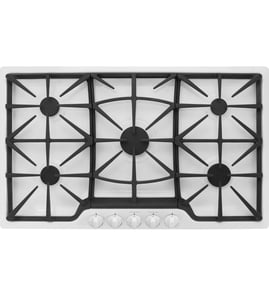

Where can I find the gas cooktop model number?
On the Kenmore gas cooktop model 91132385100, the model number and serial number label is located under the cooktop unit. Use the model number exactly as shown on that label when ordering parts or checking specifications in the 91132385100 owner's manual.
Where to look on the cooktop
Check these common spots underneath the unit:
- The underside of the cooktop chassis (you may need a flashlight)
- Near the gas inlet or pressure regulator area
- Along the metal frame rail under the burner box
- On a rating label attached to the bottom panel
Tips to find it quickly (and safely)
We recommend these steps before you start searching:
- Turn all burner knobs to OFF and let the cooktop cool completely
- Use a flashlight and look for a silver or white rating label
- Write down both the model number and serial number
- If the cooktop is installed in a countertop cutout, look from inside the cabinet below
- Avoid pulling the cooktop out unless you can shut off the gas supply and have help
What the label information is used for
| Label item | What we use it for | Example |
|---|---|---|
| Model number | Matches the correct parts list and diagrams | 91132385100 |
| Serial number | Helps confirm production details for some parts | Varies |
Why it matters
Kenmore cooktops often have similar-looking burner grates, igniters, and gas components across multiple models. Using the exact model number prevents ordering the wrong burner grate, electrode, or regulator for your cooktop.
Last updated: January 2026
How much is gas cooktop replacement?
Replacing a 30-inch gas cooktop like Kenmore model 91132385100 typically costs about $500 to $1,000 installed, with many homeowners landing near the mid-range when basic gas and electrical connections are straightforward. Your final price mainly depends on labor, any countertop modifications, and gas-line work.
What’s included in a typical replacement cost
Most replacement quotes combine the cooktop price plus installation labor. Common line items include:
- Removing and disposing of the old cooktop
- Setting the new cooktop in place and sealing the perimeter
- Connecting the gas supply and checking for leaks
- Verifying ignition and burner flame quality
- Minor electrical hookup for spark ignition (if required)
Cost drivers that change the price the most
A few factors can move the total up or down quickly:
- Countertop cutout changes (stone or laminate resizing)
- Gas shutoff or connector updates (bringing the hookup up to current standards)
- LP conversion needs: this cooktop ships set up for natural gas; LP use requires proper conversion steps per the 91132385100 owner’s manual
- Ventilation upgrades (adding or improving a hood)
- Access issues (tight cabinetry, stuck mounting hardware)
Quick cost breakdown (typical ranges)
| Cost item | Typical range | Notes |
|---|---|---|
| Installation labor | $200 to $600 | Varies by region and complexity |
| Countertop modification | $0 to $500+ | Depends on material and amount of cutting |
| Gas connector or shutoff updates | $25 to $200+ | Parts plus labor |
| Cooktop price (unit itself) | Varies widely | Based on brand, features, and finish |
Why it matters
Gas cooktop replacement is not just a “swap”; correct installation affects safety, burner performance, and proper flame color (a steady blue flame indicates better combustion). Following the manufacturer’s guidance helps prevent high flames, poor cooking results, and avoidable service calls.
Last updated: January 2026
What are standard sizes for gas cooktops?
Most gas cooktops are built to fit common base cabinet widths, with 30-inch and 36-inch models being the standard. Your Kenmore 91132385100 is a 30-inch sealed gas cooktop, so it’s designed around the most common cutout and countertop footprint for residential kitchens; confirm exact cutout requirements in the 91132385100 owner's manual.
Common gas cooktop width categories
These are the sizes we see most often when customers are replacing a cooktop or planning a countertop cutout:
- 12 to 15 inches: compact, small kitchens, secondary prep areas
- 24 inches: apartment and smaller cabinet runs
- 30 inches: most common standard size (matches your Kenmore 91132385100 class)
- 36 inches: common “upgrade” size with more spacing or higher output burners
- 45 to 48 inches: specialty and pro-style layouts
What “30-inch cooktop” usually means
A “30-inch” label is a category, not a guarantee that every measurement is exactly 30 inches. For any cooktop, we recommend checking three measurements before ordering or cutting countertops:
- Overall cooktop width and depth (top flange)
- Countertop cutout width and depth
- Clearance requirements to cabinets, walls, and overhead ventilation
| Measurement to verify | Why it matters | Where to find it |
|---|---|---|
| Overall width | Ensures the cooktop covers the opening | 91132385100 owner's manual |
| Cutout size | Prevents a too-large or too-small opening | 91132385100 owner's manual |
| Clearances | Helps avoid heat damage and code issues | 91132385100 owner's manual |
Why it matters
Cooktop sizing affects more than fit. The right size helps ensure proper burner-to-pan alignment, safe clearances, and a clean seal to the countertop so spills do not leak below the burner box.
Last updated: January 2026
How to measure for replacement cooktop?
To replace a Kenmore 91132385100 30-inch gas cooktop, we measure the countertop cutout (width and depth), the clearance to the back wall and front edge, and the cabinet depth below. Then we compare those numbers to the new cooktop’s required cutout and clearance specs in the 91132385100 owner's manual.
What to measure (write everything down)
- Cutout width: left-to-right opening in the countertop
- Cutout depth: front-to-back opening in the countertop
- Back clearance: distance from the cutout’s back edge to the backsplash or wall
- Front clearance: distance from the cutout’s front edge to the countertop front
- Cabinet depth and obstructions: drawers, braces, gas line routing, and electrical outlet location
Quick measuring tips that prevent fit problems
- Measure in at least 3 spots (front, middle, back); use the smallest number.
- Confirm the countertop is square; older cutouts can be slightly trapezoid-shaped.
- Check for heat-sensitive surfaces (backsplash, laminate edges) that may need extra clearance.
- Verify you have room to lift off burner grates, burner caps, and burner heads for cleaning and service.
What to compare your measurements against
Use the new cooktop’s spec sheet and compare these items side-by-side:
| Item to match | Your kitchen measurement | New cooktop requirement |
|---|---|---|
| Cutout width | ____ in. | ____ in. |
| Cutout depth | ____ in. | ____ in. |
| Back clearance | ____ in. | ____ in. |
| Front clearance | ____ in. | ____ in. |
Why it matters
A cooktop can be labeled “30-inch,” but the cutout size and required clearances vary by model. Measuring the cutout and clearances first helps avoid gaps, countertop modifications, and burner or control knob interference.
Last updated: January 2026