
Do you leave the filter in a wet dry vac when vacuuming water?
For the Craftsman 113179241 wet/dry vacuum, we remove the dry paper/cartridge filter and any dust bag before vacuuming water. For wet pickup, use a foam sleeve (wet filter) if your vac uses one; it protects the motor while allowing airflow.
What to do before vacuuming water
- Unplug the wet/dry vac.
- Remove the paper/cartridge filter (and any fine-dust bag).
- Install the foam sleeve wet filter if your setup includes one.
- Confirm the tank is empty and the lid is seated evenly.
- Use a wet-rated hose/nozzle and keep the intake above large debris.
Why you should not use the paper filter for wet pickup
A paper or cartridge filter is designed for dry debris. When it gets wet, it can:
- Restrict airflow and reduce suction
- Tear or deform
- Hold moisture that leads to odor and mildew
- Send damp debris into the motor area
Quick guide: wet vs. dry setup
| Pickup type | Filter setup | Bag setup |
|---|---|---|
| Dry debris (sawdust, drywall dust) | Paper/cartridge filter installed | Optional (if your vac supports it) |
| Wet pickup (water, spills) | Foam sleeve wet filter or no filter (model-dependent) | No bag |
| Mixed mess (damp debris) | Foam sleeve wet filter | No bag |
After you finish wet pickup
- Empty the tank promptly.
- Rinse and air-dry the tank, hose, and any foam sleeve completely.
- Let the motor head and gasket area dry before reassembling.
Why it matters
Using the correct filter setup prevents clogs, protects airflow, and helps avoid moisture-related odors inside the wet/dry vacuum.
Related DIY help: are diy appliance repairs safe
Last updated: February 2026
Where to find model number on CRAFTSMAN Wet Dry Vac?
On a Craftsman wet/dry vacuum like model 113179241, the model number is printed on the rating label (model and serial tag) attached to the vacuum body. Most often, you will find it on the upper tank area near the handle, cord wrap, or where the hose connects.
Where to look first
Check these common label locations on Craftsman wet/dry vacuums:
- On the outside of the upper tank (powerhead area), near the carry handle
- Near the cord wrap or power switch area
- Around the hose inlet port (where the hose plugs in)
- On the back side of the tank, close to the latches
- On the underside of the powerhead (unplug first and lift it off the tank)
What the label looks like
The tag is usually a small sticker or metal plate that includes the model number and serial number.
| What you see on the label | What it’s used for |
|---|---|
| Model number (example: 113179241) | Matching the correct parts list and diagrams |
| Serial number | Identifying production run details (sometimes needed for service) |
| Electrical rating (amps/volts) | Confirming power requirements and troubleshooting |
Why it matters
Using the exact model number (including all digits) prevents ordering the wrong filter, hose, switch, motor, or latch parts. Craftsman wet/dry vacuums can look similar across different model series, but internal parts and tank fitment often vary.
If the label is missing or unreadable
Use these practical options to identify the vacuum:
- Look for an imprint or “shadow” where the label used to be on the tank
- Check the underside of the powerhead for a second label
- Search by the vacuum’s key features (tank size, hose diameter, latch style) after confirming the closest match
- Use our guide: how to find your appliance model number (and what it means for parts)
Last updated: February 2026
What is the list of vacuum cleaner parts?
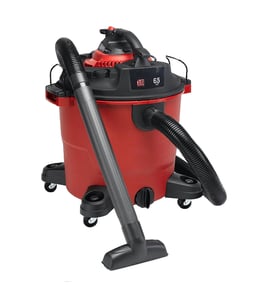
For the Craftsman wet/dry vacuum model 113179241, the parts list is the set of components that create suction, capture debris, and route airflow. Most wet/dry vacs include a motor and fan assembly, a tank (canister), filtration parts, hoses, and seals, plus casters and latches that keep everything airtight.
Common wet/dry vacuum parts you will see
A typical wet/dry vacuum parts breakdown includes:
- Motor and fan (impeller): generates airflow and suction
- Power switch and cord: supplies and controls power
- Tank/canister: holds dry debris or liquid pickup
- Lid/motor head: houses the motor, switch, and exhaust path
- Filter and filter cage: protects the motor from dust (filter type varies by use)
- Float or shutoff: helps prevent overfilling during wet pickup
- Hose and hose cuffs: carries debris-laden air to the tank
- Wands and nozzles: direct suction for floors, crevices, and upholstery
- Seals, gaskets, and latches: prevent air leaks that reduce suction
- Casters/wheels: allow the vacuum to roll smoothly
How to match the “parts list” to what you need
Use this quick guide to identify the right section to troubleshoot or replace.
| Symptom | Most likely parts involved | What to check first |
|---|---|---|
| Low suction | Filter, hose, gaskets, lid seal | Clogs and air leaks |
| Won’t turn on | Switch, cord, motor | Outlet, cord damage, switch feel |
| Dust blowing out | Filter, filter cage, lid seal | Correct filter installed and seated |
| Shuts off during wet pickup | Float/shutoff, tank level | Empty tank, free the float |
Why the parts list matters
Wet/dry vacuums rely on an airtight airflow path. A small issue like a cracked hose cuff, missing gasket, or wrong filter can drop suction dramatically and make the vacuum seem “weak” even when the motor is fine.
Helpful DIY reference
Last updated: February 2026
Why is my CRAFTSMAN vacuum not suctioning?
Reduced suction on your Craftsman 113179241 wet/dry vacuum is usually caused by a clogged filter, a blockage in the hose or inlet, a poor seal at the lid or drum, or using the wrong filter setup for wet pickup. Restoring airflow almost always fixes it.
Quick checks that fix most no-suction problems
- Unplug the vacuum and empty the drum; an overfilled tank kills airflow.
- Remove the hose and check for a clog (rag, drywall dust, pet hair) from end to end.
- Inspect the inlet port and any wand or nozzle for packed debris.
- Check the filter; if it is caked with fine dust, clean it or replace it.
- Confirm the lid is seated evenly and the latches are fully engaged.
- Look for cracks or loose connections in the hose that can leak air.
Filter and pickup setup (dry vs. wet)
Wet/dry vacuums lose suction fast when the filter is restricted or the wrong setup is used.
| Situation | What to do | What you should see |
|---|---|---|
| Dry pickup (dust, debris) | Use the correct dry filter and keep it clean | Strong, steady suction |
| Fine dust (drywall, ash-like dust) | Clean the filter more often; avoid overfilling | Suction returns after cleaning |
| Wet pickup (water) | Use the proper wet pickup configuration for your vacuum | No filter restriction, normal airflow |
Why it matters
Suction depends on airflow. Any restriction (clogged filter, blocked hose) or air leak (bad lid seal, cracked hose) reduces airflow, which makes the vacuum feel weak even if the motor is running.
Helpful DIY reference
If you need help with basic electrical checks (for example, the motor runs intermittently or seems weak), use our guide: how to use a multimeter to test electrical parts video.
Last updated: February 2026