Owner’s manual
 Error Codes



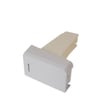
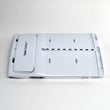
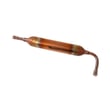
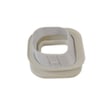
Can I replace fridge parts myself?
Yes. On the Samsung RF263TEAESR refrigerator, we can safely replace many non-sealed-system parts ourselves (bins, shelves, gaskets, some ice maker components) with basic tools; unplug the refrigerator first and follow the steps in the RF263TEAESR owner's manual.
Good DIY replacements vs. pro-only repairs
Many repairs are straightforward, but anything involving refrigerant lines or complex electrical diagnosis should be handled by a technician.
- Good DIY: door bins, shelves, drawer parts, door gasket, ice container
- Often DIY (with care): ice maker components, sensors, condenser fan motor
- Pro-only: sealed system work (compressor, evaporator, refrigerant leaks)
- Always first: unplug power, protect floors, use cut-resistant gloves
| Repair type | Typical difficulty | Why it matters |
|---|---|---|
| Door gasket replacement | Easy to moderate | Stops warm air leaks that cause frost and poor cooling |
| Ice maker troubleshooting | Moderate | Restores ice production and prevents clogs/freezing |
| Compressor or evaporator repair | Pro-only | Involves refrigerant and specialized tools |
Parts on this model that customers commonly replace
If your symptoms match, these are examples of parts we often see replaced on RF263TEAESR units:
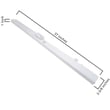
- Samsung refrigerator door gasket DA63-06542A for air leaks, frost, or sweating around the door
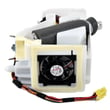
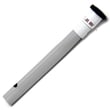
- Refrigerator condenser fan motor assembly DA97-15765C for warm temperatures and poor airflow at the back
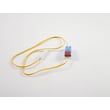
- Refrigerator temperature sensor DA32-10104V for temperature swings or incorrect readings
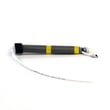
- Refrigerator ice maker fill tube and heater DA97-00209Z for fill tube freezing and ice maker fill issues
DIY checklist before you order parts
These quick checks prevent wrong-part orders and repeat failures.
- Confirm the full model number on the rating label: RF263TEAESR
- Note the symptom and location (fresh food section, freezer, ice room)
- Inspect for obvious issues: torn gasket, heavy frost, blocked vents
- Clean condenser area and verify the condenser fan runs when the compressor runs
- Use the troubleshooting steps in the RF263TEAESR owner's manual before replacing electronics
Why it matters
Replacing the right refrigerator parts restores proper airflow, temperature control, and ice production; it also helps prevent food spoilage and reduces strain on the compressor.
Last updated: February 2026
How many cubic feet is the Samsung RF263TEAESR?
The Samsung RF263TEAESR refrigerator has 24.6 cubic feet of total capacity. This is the combined storage space of the fresh food (refrigerator) compartment and the bottom freezer, and it helps you compare usable space across similar Samsung bottom-mount models.
What “24.6 cu. ft.” means
Capacity is a volume rating, not a guarantee of how much you can fit once shelves, bins, the ice maker, and drawers are installed.
Typical space users notice inside a 24 to 25 cu. ft. French door bottom-mount refrigerator:
- Full-width shelves and door bins reduce “open” space but improve organization
- The ice room and ice container take up some upper-right refrigerator space
- Crisper and pantry drawers trade open volume for better food separation
- Tall items fit best when you adjust shelf positions
Quick comparison (shopping and planning)
| Capacity class | Typical fit for | Notes |
|---|---|---|
| 21 to 23 cu. ft. | Smaller households | Less door-bin and drawer space |
| 24 to 25 cu. ft. | Most families | Strong balance of storage and footprint |
| 26+ cu. ft. | Large households | Often wider or deeper cabinets |
Where to confirm the spec for your exact configuration
We recommend checking the capacity listing and feature breakdown in the RF263TEAESR owner's manual.
Why it matters
Knowing the cubic feet helps you:
- Compare refrigerators fairly across brands like Samsung, Kenmore, and GE
- Plan grocery storage (especially freezer baskets and pantry drawer use)
- Estimate how much space the ice maker setup will consume in the fresh food section
Last updated: February 2026
How to turn off Samsung ice maker RF263TEAESR?
To turn off the ice maker on your Samsung RF263TEAESR refrigerator, press and hold the Ice Maker button for more than 3 seconds until the ice maker turns off. For the exact button location and indicator behavior, follow the steps in the RF263TEAESR owner's manual.
Quick steps (what we recommend)
- Close the freezer drawer fully so the control panel responds normally.
- Press and hold Ice Maker for 3+ seconds.
- Confirm the ice maker shows OFF (or the indicator changes state).
- Wait a few minutes and verify the ice maker stops cycling.
- Empty the ice bin if you want to prevent clumping from leftover ice.
If it will not turn off
These checks solve most “button does nothing” situations on Samsung bottom-mount models:
- Control lock is on: turn off Child Lock/Control Lock, then try again.
- Panel is not registering touches: wipe moisture off the panel and try with a dry finger.
- Door or drawer is ajar: fully close the freezer drawer and doors.
- Power glitch: unplug the refrigerator for 2 minutes, plug back in, then retry.
What to expect after turning it off
| What you see | What it means | What to do |
|---|---|---|
| Ice maker shows OFF | Ice production is disabled | Normal; no new ice will be made |
| Ice still drops briefly | Residual water/ice finishing a cycle | Wait 1 to 2 hours |
| Ice maker keeps running | Control or ice maker issue | Use the troubleshooting below |
Why it matters
Turning the ice maker off helps prevent ice clumps, reduces nuisance freezing in the ice room, and is a smart first step when diagnosing low ice production or ice maker noise. For deeper troubleshooting, use why your Samsung fridge stopped making ice and how to fix it.
Last updated: February 2026
What is the most common problem with Samsung refrigerators?
The most common problem we see with Samsung refrigerators like model RF263TEAESR is a cooling issue caused by airflow restriction from frost or ice buildup around the evaporator area; this often shows up as a warm fresh food section while the freezer still seems cold. Confirm your model’s recommended settings and basic checks in the RF263TEAESR owner's manual.
Most common symptoms customers report
- Fresh food section warms up, freezer temperature looks normal
- Frost or a solid ice sheet on the back wall inside the refrigerator
- Fan noise changes (rattling, buzzing) or the fan gets quiet because it is hitting ice
- Temperature swings, food freezing in the refrigerator section, or both
- Ice maker slows down or stops when airflow and temperatures are unstable
What usually causes it (and what to check first)
Cooling complaints typically trace back to the defrost and airflow system. Start with these practical checks before replacing parts:
- Make sure vents inside the refrigerator are not blocked by food packages
- Check door closure and gasket sealing; a small air leak drives frost buildup
- Look for heavy frost behind the interior rear panel (a strong clue of a defrost problem)
- Verify the condenser area is clean and the unit has proper clearance for airflow
- If the refrigerator is warm and you hear no airflow, suspect a fan or ice blockage
Common parts involved
| Problem area | What it affects | Example part for RF263TEAESR |
|---|---|---|
| Temperature sensing | Defrost timing and temperature control | Refrigerator temperature sensor DA32-10104V |
| Condenser airflow | Overall cooling efficiency | Refrigerator condenser fan motor assembly DA97-15765C |
| Sealing | Moisture intrusion and frost | Samsung refrigerator door gasket (model-specific) |
Why ice maker and dispenser issues are also common
On many Samsung French door and bottom-mount designs, the ice maker depends on stable freezer temps and good airflow. When cooling performance drifts, ice production and dispensing problems follow. For targeted troubleshooting steps, use why your Samsung fridge stopped making ice and how to fix it.
Why it matters
A refrigerator that is not defrosting correctly can run longer, waste energy, and still fail to hold safe food temperatures. Catching airflow and frost issues early often prevents bigger repairs like sealed system stress.
Last updated: February 2026
Why is my Samsung fridge not making ice in the bottom freezer?
If your Samsung RF263TEAESR isn’t making ice, the most common causes are restricted water supply, a frozen fill path, or an ice maker/ice room airflow issue. Start with simple checks (water flow, temperature, and ice bin fit) before replacing parts; use the RF263TEAESR owner's manual for the exact control and reset steps.
Quick checks we recommend first
- Confirm the freezer is cold enough; set it to 0°F (typical target for ice production).
- Make sure the ice maker is turned ON and not in a test or off mode.
- Verify the ice container is fully seated; a misaligned bin can stop harvesting.
- Dispense water (if equipped); weak flow points to a supply or filter restriction.
- Check the fill tube area for ice buildup; a frozen fill path prevents refills.
Water supply and fill problems (most common)
Ice makers need steady water pressure and an open water path.
| Symptom | What it usually means | What to do next |
|---|---|---|
| No ice and no water flow | Supply shutoff closed, kinked line, low pressure | Open valve fully; straighten line; confirm household pressure |
| Slow water dispensing | Restriction in filter/housing or supply | Replace filter; inspect housing and lines |
| Ice maker cycles but no water enters | Frozen fill tube or inlet issue | Thaw fill area; check for recurring freeze-up |
If you suspect a cracked or leaking filter mount or internal restriction, the refrigerator water filter housing DA97-12662A is the model-matched housing assembly to consider.
Ice maker and ice room issues
On this style of Samsung bottom-mount/french door design, ice production can stop if the ice room is too warm or the ice maker can’t harvest.
- Look for clumped ice or frost in the ice room; clear it and confirm the door seals well.
- If the ice maker fills but does not eject, the module can be the failure point; the model-matched option is the refrigerator ice maker module DA59-00294B.
- If cubes eject but don’t dispense well, inspect the auger and bin; the refrigerator auger motor assembly DA97-12540G supports ice dispensing.
For a step-by-step diagnostic flow, use why your Samsung fridge stopped making ice and how to fix it.
Why it matters
When ice stops, the cause is usually upstream (water flow or freezing at the fill path) rather than the ice maker itself. Checking temperature, bin alignment, and water flow first prevents unnecessary part replacement and gets ice production back faster.
Last updated: February 2026