Owner’s manual

What is the average lifespan of an air compressor?
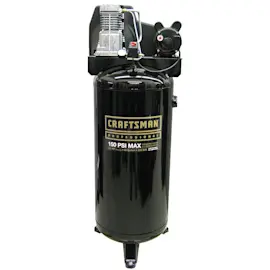
Most homeowner air compressors average about 10 years of service life with normal use and routine maintenance. For the Craftsman 919165570 specifically, keeping the duty cycle around 50% to 75% (no more than 30 to 45 minutes of run time per hour) and following the maintenance schedule in the 919165570 owner's manual helps maximize pump and motor life.
Typical lifespan by compressor type
Lifespan depends heavily on compressor design and how hard it is run.
| Compressor type | Typical lifespan | Notes |
|---|---|---|
| DIY / homeowner portable (pancake, hot dog, small wheeled) | 5 to 10 years | Most common for garages and job sites |
| Prosumer / contractor portable | 8 to 15 years | Better cooling and components, still portable |
| Industrial (rotary screw, large shop systems) | 15 to 20 years | Often rebuilt/overhauled during service life |
What shortens lifespan fastest
These are the most common life-reducers we see with portable units like the Craftsman 919165570:
- Running near-continuous duty cycle (overheats pump and motor)
- Not draining the tank regularly (internal corrosion risk)
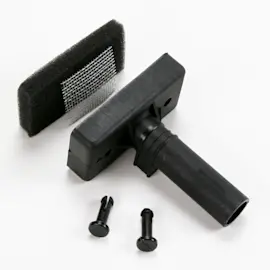
- Dirty or missing air filter (reduced airflow, higher operating temps)
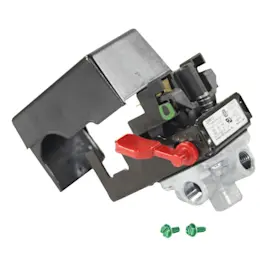
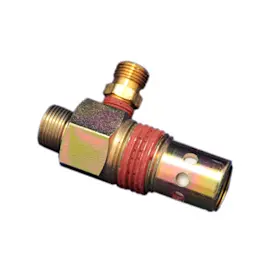
- Air leaks that force frequent cycling (extra wear on pressure switch and check valve)
- Poor power supply (low voltage, undersized extension cords, shared circuits)
Maintenance habits that add years
Use this as a practical baseline; our manual gives the model-specific schedule.
- Before each use: check the safety valve operation
- After each use: drain the tank completely
- Every 40 hours: inspect and clean the air filter (replace if extremely dirty)
- Yearly: have the pump intake and exhaust valves checked by a trained technician
- Anytime performance drops: check for leaks, restricted airflow, or pressure control issues
Why it matters
Air compressors usually fail early from heat, moisture, and over-cycling. Managing run time (duty cycle) and keeping airflow and tank condition in good shape protects high-wear parts like the pump, pressure switch, and check valve.
For troubleshooting that directly impacts longevity, use our DIY guides like air compressor won't build tank pressure and air compressor air leaks. You can also search parts by model number on Sears PartsDirect.
Last updated: February 2026
What is the most common cause of air compressor failure?
For the Craftsman 919165570 air compressor, the most common cause of failure is poor maintenance that leads to moisture-related tank rust, restricted airflow, overheating, and accelerated wear. Draining the tank daily and operating the unit safely prevents many “won’t start” and “won’t build pressure” breakdowns (see the 919165570 owner's manual).
Most common failure drivers (and what we do to prevent them)
- Water left in the tank: condensation causes internal rust and tank thinning; drain daily or after each use.
- Overheating from poor airflow: blocked vents, dirty cooling fins, or running with covers removed can damage components.
- Air leaks: loose fittings, cracked hoses, or leaking valves force longer run times and extra heat.
- Electrical supply issues: incorrect voltage, poor grounding, or weak circuit protection can cause hard starts and motor damage.
- Pressure-control problems: misbehaving pressure switch, unloader valve, or safety valve can create abnormal cycling and stress.
Quick checks when performance drops
- Turn the compressor OFF, then bleed air pressure from the hose and tank before any inspection.
- Drain the tank fully; watch for excessive water or rusty discharge.
- Listen for hissing around fittings, the regulator, and the tank check valve area.
- Confirm the outlet pressure regulator is set correctly and the gauge responds.
- Verify the power source is correct for the unit and the circuit is properly grounded.
Symptoms and the most likely root cause
| What you notice | Most likely cause | What to do first |
|---|---|---|
| Won’t start | Power/grounding issue, pressure switch, unloader not venting | Check power and controls; follow air compressor won't start |
| Won’t build tank pressure | Air leak, valve issue, pump wear | Leak-check and follow air compressor won't build tank pressure |
| Tank won’t hold air | Leak at fittings or tank corrosion | Leak-check; drain daily; replace tank/compressor if tank leaks |
| Safety valve pops | Overpressure control problem | Stop using; inspect pressure controls |
Why it matters
Most “air compressor failure” starts as a small issue (water in the tank, a minor leak, restricted ventilation) that forces longer run times. Longer run times increase heat and stress on the pump and pressure controls, turning a simple maintenance task into a no-start or no-pressure repair.
You can order replacement parts for the Craftsman 919165570 from the model’s parts list, or search by model number on Sears PartsDirect.
Last updated: February 2026
What are the 4 types of compressors?
The four main compressor types are reciprocating (piston), rotary screw, centrifugal, and axial. Your Craftsman air compressor model 919165570 is a shop-style unit that uses a positive-displacement design (most commonly reciprocating) to build tank pressure for air tools and inflators; see the 919165570 owner's manual for operating and safety details.
The 4 compressor types (and where you’ll see them)
- Reciprocating (piston): Uses a piston and cylinder to compress air in strokes; common in portable and garage compressors.
- Rotary screw: Uses two meshing screws for continuous compression; common in commercial shops for steady airflow.
- Centrifugal: Uses a high-speed impeller to add velocity and convert it to pressure; common in large industrial plants.
- Axial: Uses multiple rotating and stationary blade stages; common in turbines and very high-flow applications.
Quick comparison
| Type | Compressor class | Best for | Typical tradeoff |
|---|---|---|---|
| Reciprocating (piston) | Positive displacement | Intermittent use, DIY, portable tanks | Louder, more vibration |
| Rotary screw | Positive displacement | Continuous duty, steady air demand | Higher upfront cost |
| Centrifugal | Dynamic | High volume in industrial settings | Needs stable operating range |
| Axial | Dynamic | Extremely high flow applications | Complex, specialized |
Why it matters when troubleshooting or choosing parts
Compressor type affects what failures look like and what you check first:
- Piston units often show slow pressure build, leaks, or hard restarting.
- Screw units more often involve oil management and air-end wear.
- Dynamic compressors are more sensitive to system restrictions and operating conditions.
Model-specific operating notes we recommend following
From the Craftsman 919165570 guidance, good habits prevent common problems:
- Drain condensation from the tank daily or after each use.
- Keep the unit in a clean, dry, well-ventilated area with about 12 inches of clearance for cooling airflow.
- Use proper electrical supply and extension cord sizing (for example, 12 AWG or larger when an extension cord is needed).
For step-by-step diagnosis when the motor will not run, use our air compressor won't start guide. If you’re shopping by model number, start with the parts list for this unit or search by model at Sears PartsDirect.
Last updated: February 2026
What does 4.0 scfm at 90 PSI mean?
“4.0 SCFM at 90 PSI” means an air tool (or compressor rating) needs or delivers 4 standard cubic feet of air per minute while operating at 90 PSI. You use this number to match tool airflow demand to what your Craftsman 919165570 can supply at working pressure.
What SCFM and PSI tell you
- SCFM is airflow volume (how much air is available).
- PSI is pressure (how hard the air pushes).
- Tools that run continuously need steady SCFM; intermittent tools need less.
- Restrictions (small hoses, quick-connects, dirty filters) reduce usable airflow.
- Leaks make the compressor run more and drop pressure faster.
What it means for Craftsman 919165570
In the specs for Craftsman model 919165570, the compressor is rated at 5.8 SCFM at 90 PSIG and 7.8 SCFM at 40 PSIG, with an approximate cut-in of 120 PSI and cut-out of 150 PSI. A tool requiring 4.0 SCFM at 90 PSI fits within that 90-PSI airflow rating when the regulator is set correctly and the system is leak-free; confirm the rating table in the owner's manual.
Quick comparison: SCFM vs PSI
| Spec on the label | What it helps you decide | If it is too low |
|---|---|---|
| SCFM @ 90 PSI | Whether the compressor can keep up with the tool under load | Tool slows, pressure drops, compressor runs constantly |
| PSI (cut-in/cut-out) | Whether the tank system reaches and maintains needed pressure range | Tool may not hit target pressure or may be inconsistent |
Why it matters
PSI is the push, SCFM is the supply. If a tool’s SCFM demand exceeds the compressor’s SCFM at that pressure, the tank pressure drops during use even if the compressor can reach the PSI when the tool is off.
If performance still seems low
- Set regulated pressure while the tool is flowing air (trigger pulled).
- Check for air leaks at fittings and the regulator.
- Inspect and clean or replace the intake filter.
- If the unit will not build or hold pressure, use the troubleshooting steps in air compressor won't build tank pressure.
You can also search parts by model number on Sears PartsDirect.
Last updated: February 2026