Installation guide
 Owner’s manual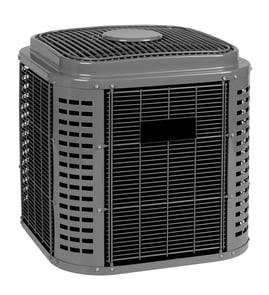

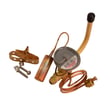
What tonnage is 38YXA030?
Carrier model 38YXA030 is a 2.5-ton unit (about 30,000 BTU/hr of nominal cooling). In Carrier model numbers, “030” commonly indicates 30,000 BTU, and 30,000 BTU divided by 12,000 BTU per ton equals 2.5 tons.
Quick tonnage conversion for “030”
- 1 ton of cooling = 12,000 BTU/hr
- “030” typically means 30,000 BTU/hr
- 30,000 ÷ 12,000 = 2.5 tons
- This is a nominal rating; actual delivered capacity varies with indoor and outdoor conditions
| Model code | Nominal BTU/hr | Nominal tons |
|---|---|---|
| 024 | 24,000 | 2.0 |
| 030 | 30,000 | 2.5 |
| 036 | 36,000 | 3.0 |
| 048 | 48,000 | 4.0 |
| 060 | 60,000 | 5.0 |
Why the tonnage matters
Correct tonnage helps match the outdoor unit to the indoor coil/air handler, refrigerant line sizing, and airflow. A mismatch can cause comfort issues, higher energy use, and reliability problems over time.
Where to confirm it on your system
Use these checks to verify what you have installed:
- Look at the outdoor unit data plate for model and capacity information
- Confirm the indoor coil/air handler model is sized to match
- Review the sizing and installation details in the installation guide
- If you are ordering parts, match by model number 38YXA030 to avoid fit and electrical mismatches
Last updated: February 2026
How many sq ft will a 3 ton AC unit cool?
A 3-ton central AC (about 36,000 BTU/hr) typically cools about 1,500 to 2,000 sq ft in an average home. For a Carrier 38YXA030 system, the right size still depends on insulation, windows, ceiling height, ductwork, and your local climate; confirm sizing details in the installation guide.
Quick sizing range (rule of thumb)
Use these as planning numbers, not a final design:
- 1,500 to 1,800 sq ft: common target for warmer climates, lots of sun exposure, or older insulation
- 1,800 to 2,000 sq ft: common target for moderate climates and average insulation
- Below 1,500 sq ft: likely if ceilings are tall, ducts are leaky, or the home has many large windows
- Above 2,000 sq ft: possible only with excellent insulation, tight construction, and good duct design
| Home/usage factor | What it does | Typical result |
|---|---|---|
| Hotter climate or strong afternoon sun | Raises heat load | Needs more capacity per sq ft |
| Poor insulation or air leaks | Raises heat load | 3-ton covers less area |
| High ceilings (vaulted) | More air volume | 3-ton covers less area |
| Good insulation and tight home | Lowers heat load | 3-ton covers more area |
Why the “sq ft per ton” number can be wrong
Square footage alone misses the real cooling load. Two 1,800 sq ft homes can need very different tonnage based on:
- Window size, type, and shading
- Insulation levels and air sealing
- Duct sizing, leakage, and airflow balance
- Number of occupants and internal heat (cooking, laundry, electronics)
- Humidity levels and ventilation
Why it matters
If a 3-ton unit is too small, it can run nearly nonstop and still struggle on hot days. If it is too large, it can short-cycle, reduce humidity control, and wear parts faster (like the [contactor] that switches the outdoor unit on and off).
Last updated: February 2026
What is the life expectancy of a Carrier air conditioner?
A Carrier central air conditioner or heat pump like model 38YXA030 typically lasts 15 to 20 years. In coastal or harsh climates, lifespan trends shorter unless you keep up with coil washing and regular inspections; consistent maintenance is what most often pushes service life past 20 years.
What most affects lifespan (and what we recommend)
- Maintenance frequency: schedule professional inspection at least yearly (many systems do best twice per year).
- Outdoor coil condition: keep the condenser coil clean; salt air near the ocean requires periodic washing.
- Airflow: replace or clean air filter(s) and keep supply and return registers open.
- Electrical health: have wiring and connections checked during service.
- Level unit support: keep the outdoor unit level; relevel if the pad settles.
Typical lifespan ranges (what to expect)
| Condition | Typical service life | What you’ll notice |
|---|---|---|
| Normal use + annual maintenance | 15 to 20 years | Fewer breakdowns, steadier comfort |
| Heavy use, poor airflow, dirty coils | 10 to 15 years | Higher bills, more service calls |
| Excellent upkeep + mild climate | 20+ years | Runs reliably but may be less efficient |
Signs it’s nearing end of life
- Repairs are becoming frequent (especially electrical or compressor-related)
- Cooling or heating performance drops even after cleaning and tune-ups
- Energy use climbs compared with prior seasons
- Outdoor unit is noisy or vibrates excessively (mounting or grommet wear can contribute)
Why it matters
A well-maintained system runs more efficiently, protects major components (like the compressor and fan motor), and reduces nuisance shutdowns. Your 38YXA030 manual also emphasizes routine checks (disconnects, breakers, airflow, thermostat settings) before requesting service, which helps prevent avoidable wear.
For model-specific maintenance intervals and care steps, follow the owner's manual.
Last updated: February 2026
How much do 3 ton AC units usually cost?
A typical 3-ton central AC or heat pump system like the Carrier 38YXA030 usually costs about $3,000 to $15,000 installed, depending on efficiency level, ductwork and electrical needs, refrigerant line-set work, and local labor rates. Use the installation guide to understand line-set and clearance requirements that can affect installation cost.
What drives the price the most
Installed cost varies because the equipment price is only part of the job. Common cost drivers include:
- Efficiency and features (higher SEER2/HSPF2, variable speed, communicating controls)
- Existing ductwork condition (repairs, resizing, sealing, adding returns)
- Electrical upgrades (disconnect, breaker, wiring, surge protection)
- Refrigerant line-set work (new tubing, long runs, wall/attic routing)
- Pad, roof, or mounting needs (vibration isolation, rooftop platform)
- Permits and code requirements (varies by location)
Model-specific install details that can add labor
For the 38YXA030 installation, the guide calls out items that often change labor time and materials:
- Clearances: 30 in. at the service end, 48 in. above; 6 in. on one side and 12 in. on remaining sides
- Leveling: unit level within about ±2° (about ±3/8 in. per foot)
- Line-set sizing: for size “030”, liquid line is typically 3/8-in. OD and vapor line 3/4-in.
- Long line runs: longer than 50 ft (or large vertical changes) can require additional design steps
Quick reference: typical cost buckets
| Cost item | What it covers | Typical share of total |
|---|---|---|
| Equipment | Outdoor unit plus matched indoor coil/air handler | Medium to high |
| Labor | Removal, setting, piping, wiring, startup | High |
| Modifications | Duct, electrical, line-set, pad/roof work | Low to high |
| Permits | Local inspection and permit fees | Low |
Why it matters
A 3-ton system is sized for the home’s load; installation quality (airflow, refrigerant charge, and clearances) directly affects comfort, energy use, and compressor life. Planning for line-set and site requirements up front helps avoid surprise add-on costs.
Last updated: February 2026
Is it hard to get Carrier parts?
For the Carrier 38YXA030 heat pump, getting the right replacement part is usually straightforward when you match the exact model and the part identifier; the main delays happen when the part is model-specific or requires careful electrical or refrigerant-side diagnosis before ordering. Use the owner's manual to confirm model and serial details before you buy.
What makes Carrier parts feel “hard to get”
Carrier systems often have multiple series and revisions, so the challenge is usually identification, not availability.
- The same outdoor unit family can use different electrical controls by series letter
- Some parts are universal (like many contactors), others are model-specific (like certain control boards)
- Misdiagnosis leads to ordering the wrong component and extra downtime
- Refrigerant-side parts (compressor, accumulator) typically require a licensed technician to replace
- Stock levels vary by part type; common electrical parts are typically easier to source
Parts on this model page that commonly solve “no cool” or “won’t start” symptoms
If your outdoor unit will not run, these are frequent suspects for 38YXA030-STYLE systems:
| Symptom | Common part category | Example on this page |
|---|---|---|
| Outdoor unit silent, no click | Contactor | Contactor (part number HN51KB024) |
| Outdoor fan not spinning | Fan motor | Central air conditioner condenser fan motor HC37GE210 |
| Intermittent hard starting | Start components | Central air conditioner compressor hard start kit KSAHS1501AAA |
| Defrost issues in heating | Control board | Defrost pcb HK32EA008 |
How we recommend you confirm you are ordering the correct part
- Verify the outdoor unit model number is 38YXA030 and record the serial number
- Use the wiring diagram and sequence of operation in the installation guide to pinpoint the failed circuit
- If you suspect an electrical part, test safely with a meter (power off when checking resistance/continuity)
- Match the part by identifier (for example HC37GE210, KSAHS1501AAA, HK32EA008), not by appearance alone
- If the issue involves refrigerant components (compressor or accumulator), schedule service and then order the exact part needed
Why it matters
Carrier heat pumps are reliable, but they are also precise systems; ordering by exact model and part ID prevents repeat failures, protects the compressor, and reduces the chance of installing an incompatible electrical control.
Last updated: February 2026