Installation guide
 Owner’s manual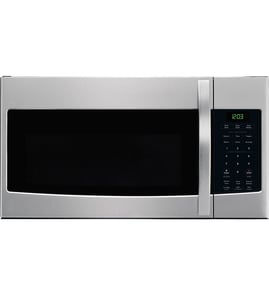



How big is a Kenmore microwave model 40180089700 in inches?
The Kenmore microwave/hood combo model 40180089700 measures 29 7/8 inches wide x 16 13/16 inches high x 16 inches deep (outer dimensions). You can confirm these exact cabinet dimensions in the 40180089700 owner’s manual.
Dimensions at a glance
- Width: 29 7/8 in.
- Height: 16 13/16 in.
- Depth: 16 in.
- Input power (electrical rating): 1,650W
- Net weight: 53.4 lb
Quick reference table
| Measurement | Size (inches) |
|---|---|
| Width | 29 7/8 |
| Height | 16 13/16 |
| Depth | 16 |
Why it matters
These are the outer dimensions you need for cabinet clearance, over-the-range fit, and venting alignment. If you are replacing an older microwave/hood combo, matching width and height helps avoid reworking the mounting bracket, upper cabinet holes, or duct position.
Before you measure your space
- Measure the opening width at the front and back of the cabinet.
- Confirm clearance to adjacent cabinets and backsplash.
- Check that the bottom of the upper cabinet is level.
- Plan for cord routing to the upper cabinet outlet.
- If you are venting outside, verify duct direction and size using the 40180089700 installation guide.
Last updated: January 2026
What are the most common issues with 40180089700?
The most common problems we see with the Kenmore 40180089700 microwave/hood combo are no heat, a dead display or no power, a door that will not start the microwave, and a loud or non-working vent fan or turntable. Use the owner's manual for model-specific operating checks and error guidance.
Common symptoms and what usually causes them
- Runs but does not heat: high-voltage component failure (diode, capacitor, transformer) or an overheat safety opening.
- No power or intermittent power: blown fuse, loose wiring, or a thermal cut-off opening after overheating.
- Starts then stops, or will not start with door closed: door latch or door interlock switch issue.
- Turntable not turning: failed turntable motor or a stuck roller/drive coupling.
- Vent fan loud, weak, or not working: vent fan motor problem, blocked damper, or clogged grease filter.
- Overheats or shuts down during cooking: restricted airflow, dirty filters, or a thermostat/thermal cut-off opening.
Quick checks we recommend first
- Confirm the outlet has power and the breaker is not tripped.
- Make sure the door closes firmly and the latch engages cleanly.
- Clean the grease filter and confirm the vent damper moves freely.
- Test with a cup of water; if it does not heat, stop using the microwave and troubleshoot.
- If the turntable is enabled, verify the tray is seated correctly on the drive.
Parts that commonly relate to these issues (when replacement is needed)
| Symptom | Common part involved | Example part for this model |
|---|---|---|
| Will not start or stops when door moves | Door interlock circuit | Microwave door interlock switch 3405-001034 |
| Door will not latch smoothly | Latch components | Microwave door latch DE64-00760A |
| Turntable not rotating | Turntable drive | Microwave turntable motor DE31-10172A |
| Poor venting or greasy airflow | Vent filtration | Microwave grease filter DE63-00196A |
Why it matters
Microwaves use high voltage internally; “no heat” and “no start” symptoms often involve safety interlocks or high-voltage parts. Correct diagnosis protects the control board, prevents repeat failures, and keeps the microwave/hood combo venting safely.
Last updated: March 2026
How do I find the model number on my 40180089700?
For a Kenmore microwave/hood combo, the model number is printed on the rating label, usually found around the door opening or on the oven frame behind the door. Use the exact model number to match diagrams, manuals, and replacement parts for your unit.
Where to look on Kenmore model 40180089700
Check these common label locations first:
- Open the microwave door and look along the door frame (left, right, top, and bottom edges)
- Look on the front frame behind the door, near the latch area
- Check the inside edge of the control panel side trim (visible with the door open)
- If it is an over-the-range unit, look on the underside near the grease filter area
- As a last step, check behind the vent grille (some labels are placed just behind it)
What the label looks like
The label typically includes the model and serial information together.
| Label field | What it’s used for |
|---|---|
| Model number | Ensures the correct parts list and diagrams for your exact microwave |
| Serial number | Helps identify production version when ordering certain assemblies |
| Electrical ratings | Confirms voltage and wattage requirements for safe installation |
Tips to avoid ordering the wrong parts
Once you find the label, copy the model number exactly as printed.
- Use all digits and any letters; do not shorten the number
- Take a clear photo before the label gets worn or greasy
- Match parts by model first, then confirm the part name in the diagram
- Use the documentation for your unit when removing panels or the vent grille
For model-specific label location notes and diagrams, use the owner's manual.
Why it matters
Microwave/hood combos often have multiple versions that look similar. Using the exact model number (40180089700) keeps you aligned with the correct Kenmore parts, wiring layout, and installation details.
Last updated: March 2026