View engine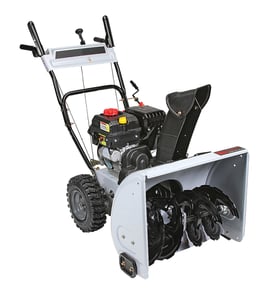



What is the typical lifespan of a gas snowblower?
A gas snowblower like Craftsman model 536884822 typically lasts 10 to 15 years with normal seasonal use and consistent maintenance. The biggest lifespan drivers are fuel care, belt condition, and keeping the auger and drive systems lubricated and adjusted.
What affects lifespan the most
- Fuel habits: fresh gas, correct stabilizer use, and clean carburetor passages
- Oil changes: on schedule, with the correct oil type for cold weather
- Belts and friction drive wear: slipping, glazing, or cracking shortens service life
- Shear bolts doing their job: hitting debris should break shear bolts, not gearcases
- Storage: dry storage and end-of-season prep prevent rust and corrosion
Maintenance checklist that helps you reach 10 to 15 years
- Change engine oil at least once per season (more often with heavy use)
- Check and replace worn belts before they start slipping (common wear items include the snowblower drive belt 1733324SM and auger belt 37X120MA)
- Inspect and replace shear bolts after jams or impacts (use the correct kit such as shearboltkit 1501216MA)
- Lubricate key moving points (auger shaft, wheels, and drive hex shaft)
- Keep skid shoes and scraper blade adjusted so the housing is not grinding on pavement
Quick “wear item” guide
| Item | Typical replacement timing | What you notice first |
|---|---|---|
| Drive belt / auger belt | Every few seasons (sooner with heavy use) | Slipping, squeal, weak throwing or weak drive |
| Shear bolts | As needed | Auger stops turning after hitting debris |
| Friction drive components | Mid-to-late life | Poor traction, inconsistent speeds |
Why it matters
A snowblower usually fails “early” from preventable issues like stale fuel, neglected oil changes, or running with slipping belts. Staying ahead of those items keeps your Craftsman snow thrower reliable and reduces expensive drivetrain wear.
Related DIY help: how to make your snowblower last longer
Last updated: January 2026
How to tell if a snowblower auger belt is bad?
On Craftsman snow thrower model 536884822, a bad auger belt usually shows up as an auger that will not spin (or slips under load) even though the engine runs and the auger control is engaged. Common clues are belt glazing, cracking, fraying, or a burning-rubber smell during use.
Quick symptoms to look for
- Auger does not turn, turns slowly, or stops when snow gets heavy
- Squealing noise when you squeeze the auger lever
- Burning rubber smell or visible smoke near the belt cover
- Belt looks shiny (glazed), cracked, stretched, or has missing chunks
- Belt rides low in the pulley groove or keeps jumping off
Simple inspection you can do at home
- Shut the engine off, remove the key (if equipped), and let all moving parts stop.
- Disconnect the spark plug wire so the engine cannot start accidentally.
- Remove the belt cover and inspect the auger belt for wear and contamination.
- Check belt tension by engaging the auger control; the belt should tighten and drive the pulley without slipping.
If the belt is worn or slipping, replace it with the correct part for this model: auger belt 37X120MA.
What else can mimic a “bad belt”
| What you notice | Likely cause | What to check next |
|---|---|---|
| Auger will not turn at all | Broken shear pins | Inspect and replace shear bolts as needed: shearboltkit 1501216MA |
| Belt looks OK but still slips | Idler pulley or tension issue | Inspect pulley bearing and alignment: idler pulley 1502120MA |
| Auger turns but machine will not move | Ground drive belt issue | Inspect/replace: snowblower drive belt 1733324SM |
Why it matters
A slipping auger belt reduces throwing distance and can overheat, leaving you without auger power mid-storm. Catching belt wear early also helps protect pulleys, idlers, and the auger drive system.
Helpful DIY video
For a step-by-step belt replacement overview, use: how to replace a snowblower belt video.
Last updated: January 2026
How do I tell what year my snowblower is?
For Craftsman snow thrower model 536884822, the most reliable way to estimate the year is to read the engine manufacture date code on the engine itself; that code typically includes the year (and often the exact build date), which closely matches the snowblower’s production timeframe.
Where to find the date information
Look for an engine label or stamped code on common locations:
- Blower housing (recoil starter area)
- Valve cover
- Muffler heat shield area
- Engine shroud near the spark plug
- A metal tag or sticker on the engine block
If the snowblower has had an engine replacement, the engine code will reflect the engine’s build date, not necessarily the original chassis date.
How to decode the engine code (quick guide)
Many small engines use a numeric date code format where the first two digits represent the year.
- Example code: 99011556
- 99 = year
- Remaining digits often represent month and day (format varies by engine maker)
Common outcomes
- If the code starts with 99, the engine was built in 1999.
- If the code starts with 07, the engine was built in 2007.
What to do if you cannot find a readable engine code
Use these practical checks to narrow it down:
- Compare your parts to the model’s parts list (belts, chute parts, controls)
- Check for older-style friction drive components and chute hardware
- Look for a separate ID tag on the frame near the handles or axle area
| What you check | What it tells you | Best use |
|---|---|---|
| Engine date code | Engine build year (often exact date) | Fastest, most accurate |
| Model number 536884822 | Identifies the correct parts diagrams | Parts matching |
| Signs of engine replacement | Whether the engine date matches the machine | Avoid wrong assumptions |
Why it matters
Knowing the approximate year helps us match the correct Craftsman snowblower parts (like belts, pulleys, and chute components) and avoid ordering a part that fits a different production run.
Parts that often vary by production run
Last updated: January 2026
Is a 3 stage snowblower better than a 2 stage?
A 3-stage snowblower is better when you regularly deal with heavy, wet, or packed snow and want faster clearing; a 2-stage is usually the better fit for typical residential driveways because it’s simpler, lighter, and easier to maneuver. For Craftsman model 536884822, “better” depends on your snow conditions and how much traction and throwing power you need.
Key differences (2-stage vs 3-stage)
- 2-stage: An auger pulls snow in, then an impeller throws it out; great all-around performance for most storms.
- 3-stage: Adds an accelerator (a third rotating component) to move snow faster into the impeller; helps in dense, end-of-driveway plow piles.
- Complexity: 3-stage designs typically have more moving parts to maintain.
- Cost and weight: 3-stage units are usually heavier and more expensive.
- Clog resistance: 3-stage can reduce bogging in wet snow, but any machine can clog if the chute is restricted.
How to choose the right stage for your driveway
Use this quick guide:
| Your typical conditions | Best choice | Why |
|---|---|---|
| Light to moderate snow, smaller driveway | 2-stage | Easier handling and plenty of performance |
| Frequent wet, heavy snow or plow berms | 3-stage | Faster intake and better bite into dense snow |
| Tight turns, lots of obstacles | 2-stage | Better maneuverability |
| You prioritize speed over simplicity | 3-stage | Higher throughput in tough snow |
Why it matters for parts and upkeep
More stages usually means more wear points (belts, pulleys, cables). If your snowblower starts slipping, not throwing well, or the auger stops under load, the issue is often in the belt drive or engagement system.
- For drive slipping or no forward movement, check the snowblower drive belt 1733324SM.
- For weak auger engagement or poor throwing, inspect the auger belt 37X120MA.
- If the auger jams on ice or debris, replace broken shear pins with the shearboltkit 1501216MA.
Practical tips to get better performance (any stage)
- Clear in layers during deep snow instead of taking full-width passes.
- Keep engine speed up while throwing; slow ground speed instead.
- Avoid ingesting gravel, newspapers, and ice chunks.
- Maintain traction and control adjustments; cable and chute alignment matter.
For step-by-step belt service, use how to replace a snowblower belt video.
Last updated: January 2026