 Installation guide
 Owner’s manual



What is the average lifespan of a GE dishwasher?
A GE dishwasher typically lasts about 10 years with normal household use. For your GE GDT550PYR0FS, consistent cleaning, correct detergent use, and fixing small issues early are the most reliable ways to reach (or beat) that average; see the owner's manual for model-specific care steps.
What affects dishwasher lifespan most
- Hard water and mineral buildup (can shorten pump, heater, and valve life)
- Routine cleaning of the interior and filters to prevent clogs and odors
- Detergent and rinse aid choices (using dishwasher-approved products helps performance)
- Installation quality (secure mounting, correct drain routing, proper electrical supply)
- How often you run it (heavy daily use wears moving parts faster)
Maintenance checklist we recommend
- Run a monthly cleaning cycle using a dishwasher cleaner or citric acid (per GE care guidance).
- Keep spray arms and the filter area clear of labels, glass, and food debris.
- Use the right amount of detergent for your water hardness to avoid poor cleaning or etching.
- Confirm the wall switch (if used) stays on; allow a few seconds after switching on before pressing Start.
- Make sure the unit remains installable for future service removal; follow the installation guide.
Typical lifespan expectations (what “normal” looks like)
| Dishwasher use pattern | Typical lifespan range | What usually ends it first |
|---|---|---|
| Light (2 to 3 loads/week) | 10 to 12 years | Seals, racks, dispenser wear |
| Average (4 to 7 loads/week) | About 10 years | Drain issues, pump wear |
| Heavy (1 to 2 loads/day) | 7 to 10 years | Pump, heater, control problems |
Why it matters
Knowing the average lifespan helps you decide when maintenance is worth it versus planning for replacement. A well-maintained GE GDT550PYR0FS also cleans and dries better, which reduces re-washing and stress on the motor and pump.
Last updated: February 2026
Can a clogged drain cause an FTD error?
Yes. On the GE GDT550PYR0FS dishwasher, a clogged drain path can trigger drain problems that commonly show up as an FTD-style drain fault; the most frequent causes are a blocked air gap, a clogged filter, a kinked/blocked drain hose, or a disposer connection that is plugged.
What to check first (fast, no tools)
- Cancel the cycle and wait a minute, then try a Drain/Cancel again.
- Check the sink: if the kitchen sink drains slowly, the dishwasher often will not drain well either.
- If you have an air gap, clean it (food debris here is a top cause of poor draining).
- Run the garbage disposer (if the dishwasher drains into it) to clear the disposer inlet.
- Pull out the bottom rack and clean the ultra-fine filter assembly.
Step-by-step: clear the most common clogs
- Air gap (if installed): Lift the cover, remove the cap, and clear debris with a toothpick; reinstall when clean.
- Ultra-fine filter: Remove the bottom rack, twist the filter assembly counterclockwise, lift out, then rinse with warm soapy water and gently scrub stuck particles.
- Drain hose and high loop: Look for kinks, pinches, or a sagging hose; confirm the drain line is routed with a proper high drain loop or air gap.
Drain setup checklist (what “correct” looks like)
| Item | What you want | What it prevents |
|---|---|---|
| Air gap (if used) | Clear and not clogged | Backflow when the drain clogs |
| High drain loop | Hose rises up under the counter | Sink water backing into the tub |
| Disposer inlet | Knockout plug removed (new disposer) | Immediate no-drain symptoms |
Why it matters
A restricted drain can leave water standing in the bottom of the tub, end cycles early, and cause repeated drain faults. Clearing the filter, air gap, and drain routing restores normal pump-out and helps prevent odors.
For model-specific drain routing and requirements, follow the GDT550PYR0FS installation guide. For cleaning steps and troubleshooting symptoms like standing water, use the GDT550PYR0FS owner’s manual.
Last updated: February 2026
Can I replace dishwasher parts myself?
Yes, for the GE GDT550PYR0FS dishwasher, we recommend DIY replacement only for basic, low-risk items (filters, spray arms, rack hardware, door gasket). For electrical wiring, grounding, or internal electrical parts, we recommend using a qualified technician and following the installation guide.
Good DIY repairs vs. technician repairs
Many dishwasher repairs are straightforward once power and water are safely shut off.
- Good DIY: cleaning/replacing the filter, clearing a clogged air gap, replacing a spray arm, replacing rack clips/rollers, replacing a door gasket
- Usually technician: hard-wiring, grounding corrections, control board or user interface diagnosis, motor/pump electrical testing, leak repairs that require pulling the dishwasher
- Stop and call for service: the Start light flashes in a repeating sequence (a critical fault condition)
Safety steps we follow before any repair
The manual emphasizes disconnecting power before maintenance and avoiding repairs not specifically recommended.
- Turn off power at the breaker (and wall switch if your installation uses one)
- Shut off the water supply under the sink
- Let the heating element cool; do not touch it during or right after a cycle
- Keep small parts (rack clips, screws) away from children (choking hazard)
- If you are unsure about grounding or wiring, use a qualified electrician
Quick decision table
| Task | DIY difficulty | Risk level | Notes |
|---|---|---|---|
| Clean filter and sump area | Easy | Low | Helps with poor cleaning and draining symptoms |
| Clear a clogged air gap / check high drain loop | Easy | Low | Common cause of water standing in the tub |
| Replace spray arm or rack hardware | Easy | Low | Mostly mechanical, minimal disassembly |
| Diagnose “won’t run” (breaker, wall switch, control lock) | Easy | Low | Often a settings or power supply issue |
| Electrical repairs (wiring, grounding, control components) | Hard | High | Follow the GDT550PYR0FS owner’s manual and use a technician when needed |
Why it matters
Dishwashers combine water, heat, and electricity. Doing simple mechanical repairs yourself can save time and money, but wiring and grounding mistakes can create shock or fire risk, so those jobs belong with a qualified pro.
You can also use our troubleshooting resources for faster diagnosis: GE electronic dishwasher error codes and GE dishwasher error codes.
Last updated: February 2026
What is the most common problem with GE dishwashers?
The most common problems we see on GE dishwashers like model GDT550PYR0FS are drainage problems, leaks, and won’t start/control issues. Many are caused by loading or detergent mistakes, a dirty filter area, or a door that is not latching fully; the GDT550PYR0FS owner’s manual helps confirm the right operating steps.
Most common issues and what they usually point to
- Not draining: food debris in the filter/sump area, a blocked drain hose, or a drain pump problem
- Leaks: door seal wear, a misaligned door, or oversudsing from the wrong detergent
- Won’t start or stops mid-cycle: door latch not fully engaged, control lock/settings, or an electronic control issue
- Poor cleaning: spray arm blockage, overloaded racks, or detergent dispenser being blocked by tall dishes
- Suds/foam in the tub: using non-dishwasher detergent (hand soap) or too much detergent
Quick checks we recommend first (fast, no tools)
- Confirm the detergent is correct: use only automatic dishwasher detergent; hand dish soap causes heavy suds and poor wash performance.
- Check for a blocked detergent cup: large or tall dishware can prevent the dispenser from opening.
- Reset the cycle (if needed): cancel/drain and restart a normal cycle.
- Verify loading: keep items from interfering with the spray arms and dispenser.
- Clean and deodorize: periodic cleaning helps reduce mineral film and odors.
Symptoms to likely cause guide
| Symptom | Most likely cause | Best first action |
|---|---|---|
| Water left in bottom | Drain path restriction | Clear filter/sump area; check drain hose routing |
| Soap left in cup | Dispenser blocked by dishes | Reload so the cup door can open |
| Lots of suds | Wrong detergent | Stop cycle, let suds dissipate, then pump out |
| Cloudy glassware | Too much detergent (often with soft water) | Reduce detergent; use shorter cycle |
Why it matters
Drainage, leaks, and starting problems can look like “bad parts,” but they are often caused by setup and use issues (detergent type, loading, and routine cleaning). Fixing those first prevents repeat failures and improves wash results.
Helpful troubleshooting resources
Last updated: February 2026
What are the commonly replaced parts in a dishwasher?
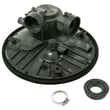
In a GE dishwasher like model GDT550PYR0FS, the most commonly replaced parts are the wash and drain components (spray arms, pumps, inlet valve), door sealing and latching parts, and heating and control items. These parts typically fail from wear, clogs, leaks, or electrical issues.
Most common dishwasher parts that get replaced
- Spray arms and spray arm supports: clog with debris or crack, causing poor cleaning.
- Filters and sump covers: clogging leads to weak wash pressure and drainage problems.
- Water inlet valve: fails electrically or sticks, causing no fill or slow fill.
- Drain pump or drain hose: blockage or pump failure causes standing water.
- Circulation (wash) pump and motor: noisy operation, weak spray, or no wash action.
- Door latch and door switch: dishwasher will not start or stops mid-cycle.
- Door gasket and bottom door seal: leaks at the corners or along the bottom.
Quick symptom-to-part cheat sheet
| Symptom | Most likely parts to check first | What we do next |
|---|---|---|
| Not cleaning well | Spray arms, filter, circulation pump | Clean filter and spray arm holes; then test wash action |
| Not draining | Drain pump, drain hose, filter/sump | Clear blockage; verify pump runs during drain |
| Leaking | Door gasket, bottom seal, inlet valve | Inspect for tears and mineral tracks; check fill level |
| Won’t start | Door latch/switch, control, power supply | Confirm door closes firmly; then check power and controls |
| Not drying | Heating circuit, venting, rinse aid system | Verify heat options; confirm safe handling around heater |
Why these parts fail (and how to prevent repeat problems)
Many failures start with restricted water flow (dirty filter, clogged spray arm) or drain restrictions (food debris in the sump or hose). Regular maintenance helps reduce strain on the circulation pump, drain pump, and inlet valve.
- Clean the filter area routinely and remove labels, glass, and food debris.
- Keep spray arm holes clear so wash pressure stays strong.
- Use the correct detergent amount and rinse aid to reduce residue buildup.
- Avoid overloading; blocked spray paths mimic pump problems.
Safety notes before replacing parts
Our GE documentation emphasizes disconnecting power before maintenance and avoiding contact with the heating element during or right after use. Use the safety and service guidance in the GDT550PYR0FS owner’s manual.
Helpful troubleshooting resources
- Use GE electronic dishwasher error codes to match a displayed code to likely failed components.
- Use GE dishwasher error codes if your control style lists codes differently.
Last updated: February 2026
Is GE Profile considered high end?
Yes. GE Profile is GE’s higher-end mainstream line; it typically adds more premium features, upgraded finishes, and more advanced controls than standard GE models. Your GE dishwasher model GDT550PYR0FS is a standard GE model (not GE Profile); confirm its exact features in the GDT550PYR0FS owner’s manual.
Where GE Profile fits in GE’s lineup
GE Profile generally sits above standard GE in features and styling, but below ultra-premium lines.
- More cycle and option choices (including specialty wash options)
- More advanced electronic controls and indicators
- Quieter designs (added insulation and sound management)
- More premium rack adjustability and convenience features
- More design-forward finishes and handle styling
Quick comparison (typical)
| Line | Positioning | What you usually get |
|---|---|---|
| Standard GE | Value to mid-range | Core cleaning and drying features |
| GE Profile | Upper mainstream | More features, quieter operation, upgraded design |
How to identify what you own (GDT550PYR0FS)
Use the model number and the control panel options to verify the exact configuration for your dishwasher.
- Match the model tag to GDT550PYR0FS (door edge or tub frame area)
- Review the cycle and option list shown for your control panel in the GDT550PYR0FS owner’s manual
- Use the manual’s troubleshooting section to interpret indicator lights and operating behavior
- If you see an error code or unusual beeps, use GE electronic dishwasher error codes for code meanings and next steps
Why it matters
Knowing the correct product line helps set expectations for noise level, cycle length, and feature behavior; it also ensures you use the right troubleshooting steps and documentation for GDT550PYR0FS.
Last updated: February 2026





