Installation guide
 Owner’s manual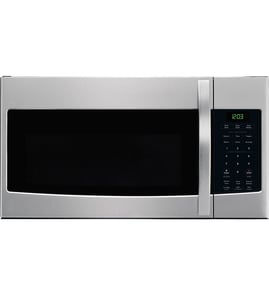


What is the average lifespan of a Whirlpool microwave?
A Whirlpool microwave typically lasts 7 to 10 years with normal household use. For your Whirlpool MH1170XSS6 microwave/hood combo, lifespan depends most on daily run time, keeping airflow clear (filters and venting), and avoiding overheating events; consistent care can push service life toward the high end.
Typical lifespan and what affects it
Most over-the-range microwave/hood combos wear out from heat stress, door-safety wear, or electrical failures rather than from cosmetic aging.
- Heavy daily use (multiple long cook cycles) shortens lifespan
- Grease buildup and restricted venting raise internal temperatures
- Slamming the door accelerates interlock wear
- Power surges and repeated breaker trips stress the control and high-voltage circuit
- Running the microwave empty can damage internal components
Signs your microwave is nearing end of life
If you see these symptoms repeatedly, it is usually time to troubleshoot and decide whether a repair makes sense.
- Food heats unevenly or takes much longer than normal
- The unit runs but does not heat (fan and light work, no warming)
- The display/keypad becomes intermittent
- The microwave shuts off mid-cycle or blows a fuse
- Loud humming, buzzing, or burning smell during heating
Common repair areas (and parts that often relate)
Some failures are straightforward; others involve high-voltage components that require extra caution.
| Symptom | Common area to check | Example part for MH1170XSS6 |
|---|---|---|
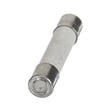
| Dead, no display | Line fuse, power supply path | Microwave fuse W11707984 |
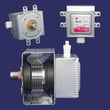
| Runs but no heat | High-voltage circuit | Diode W11256462 or microwave magnetron W10754299 |
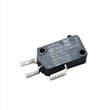
| Starts then stops when door moves | Door safety/interlock system | Microwave door interlock switch W10269458 |
Why it matters
Knowing the typical 7 to 10 year lifespan helps you decide whether to invest in a repair (like a fuse or door interlock switch) or plan for replacement, especially if multiple symptoms show up at once.
For model-specific operating and care guidance (including troubleshooting steps), use the MH1170XSS6 owner's manual.
Last updated: February 2026
How do I know what wattage my Whirlpool microwave is?
For your Whirlpool MH1170XSS6 microwave/hood combo, the most reliable way to confirm wattage is to check the rating information listed in the MH1170XSS6 owner's manual and compare it to the model and serial label located behind the door on the front-facing frame of the microwave opening.
Where to look (fastest options)
- Owner’s manual: Look for “specifications,” “electrical requirements,” or “rating” sections in the MH1170XSS6 owner's manual.
- Model and serial label: Open the door and check the front-facing frame behind the door (the manual notes the model and serial number are located there).
- Cooking performance check (quick sanity check): Heat 1 cup of cold water for 2 minutes at 100% power; if it heats normally, the microwave is generally producing expected output for its design.
What “wattage” can mean
Microwave wattage is commonly discussed in two ways. Use this table to match what you are trying to confirm:
| What you’re trying to find | What it describes | Where it’s usually listed |
|---|---|---|
| Cooking power (output watts) | Heating power used for cooking | Often in the manual or product specs |
| Electrical power (input watts/amps) | What the unit draws from the outlet | Rating label and electrical specs in the manual |
Why it matters
Knowing the correct wattage helps us set accurate cook times, choose the right cookware and settings, and troubleshoot heating complaints. If cook times suddenly seem longer, it can also point to a heating-system issue (not just a settings problem).
If you are checking wattage because it is not heating well
These are common causes on over-the-range microwaves like the MH1170XSS6:
- Incorrect power level selected (not set to 100%)
- Door not closing firmly (interlock system not engaging)
- A blown fuse or failed high-voltage component
- Venting or airflow issues causing overheating protection to trip
If you are troubleshooting a no-heat symptom, our why is my microwave not heating guide walks through the most common checks and likely parts involved.
Last updated: February 2026
What is the difference between 1.7 and 1.9 cu ft microwave?
A 1.9 cu. ft. microwave gives you about 0.2 cu. ft. more usable cavity space than a 1.7 cu. ft. model, so it fits wider or taller cookware more comfortably. For over-the-range units like Whirlpool MH1170XSS6, exterior fit is often similar, but you should confirm clearances and cabinet cutouts in the installation guide.
What changes in real-world use
That extra capacity mainly affects what you can heat without rotating, tilting, or switching to a smaller dish.
- Fits larger casserole dishes and taller microwave-safe containers more easily
- More room for splatter covers and steam bags without touching the ceiling
- Less chance of food sitting too close to the door or side walls
- Better for families or frequent reheating of full-size plates
What usually does not change (but verify)
Many 1.7 and 1.9 cu. ft. over-the-range microwaves share similar outside width (commonly around 30 inches) and mount in similar locations, but the exact mounting plate position, upper-cabinet bolt locations, and venting layout can differ by model.
| Feature | 1.7 cu. ft. (typical) | 1.9 cu. ft. (typical) |
|---|---|---|
| Interior capacity | Smaller | Larger |
| Exterior fit | Often similar | Often similar |
| Cooking flexibility | Good | Better for larger dishes |
| Venting and mounting | Model-specific | Model-specific |
Why it matters for an over-the-range microwave
Capacity is only half the decision. Installation details drive whether a replacement is truly “drop-in.” For microwave/hood combos, we match the cabinet opening, wall stud mounting, and venting path (roof, wall, or recirculating) to avoid rework.
Quick checklist before choosing 1.7 vs 1.9
- Measure your largest dish (diameter and height) and compare to the cavity size
- Confirm your cabinet opening width and depth
- Check venting type (roof venting, wall venting, or recirculation)
- Verify mounting requirements (stud location and hardware)
- Review electrical requirements and outlet location
Last updated: February 2026
What are common problems with Whirlpool microwaves?
Common problems we see with the Whirlpool MH1170XSS6 microwave/hood combo include the microwave not operating at all (no start), not heating, lights not working, vent fan or airflow issues, and door-related problems that prevent safe operation. Many “dead” or “won’t start” symptoms trace back to power supply, door interlocks, or a blown fuse.
Quick checks first (safe, no disassembly)
- Confirm the unit is plugged into a grounded 3-prong outlet.
- Check the household fuse/circuit breaker and reset if tripped.
- Firmly close the door; a slightly open door can stop operation.
- Run a simple heat test: 1 cup (250 mL) of water for 1 to 2 minutes at 100% power (use the steps in the owner's manual).
- Test the hood functions separately: turn on the vent fan and cooktop light.
Most common symptom-to-cause map
| Symptom | Most likely area | Common parts involved (examples) |
|---|---|---|
| Won’t run at all | Power supply, door safety circuit | Microwave fuse W11707984, door interlock switches, interlock components |
| Runs but does not heat | High-voltage heating circuit | Microwave magnetron W10754299, diode W11256462, microwave high-voltage capacitor W10850446 |
| Starts then stops | Overheat protection, airflow | Thermostat, venting/air guide issues |
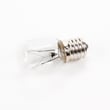
| Light out | Bulb/assembly or cover | Lamp assembly 8206232A |
| Door won’t latch or acts “open” | Door latch/interlock alignment | Interlock switch, actuator, interlock |
Parts that commonly fix these issues on MH1170XSS6
- No power or intermittent power: Microwave fuse W11707984
- No heat: Microwave magnetron W10754299, diode W11256462, microwave high-voltage capacitor W10850446
- Door-related no-start: Microwave door interlock switch W10269458 (your model may use more than one interlock switch)
- Cooktop light not working: Lamp assembly 8206232A
Why it matters
Microwave “no heat” problems often involve the high-voltage circuit (magnetron, diode, capacitor). Those components can be dangerous to handle incorrectly, so we recommend sticking to external checks and using the owner's manual troubleshooting steps before planning a repair.
Last updated: February 2026