



How to find out how old a snowblower is?
To estimate the age of your Craftsman snow blower model 536884420, start by locating the product label and recording the serial number and any date/DOM (date of manufacture) printed on it. If no date is shown, the serial number format often provides the best clue.
Check these common label locations on most Craftsman snowblowers:
- Rear of the frame near the wheels
- Side of the engine shroud or recoil starter housing
- Under the handle panel or near the chute base
- On the auger housing (side panel)
- Near the belt cover area
If the label is dirty or faded, wipe it with a damp rag and use a flashlight to read stamped characters.
Many snowblower manufacturers embed a build date into the serial number, but the exact pattern depends on who built the machine for Craftsman.
- Some Husqvarna-built units use the first 6 digits as a date in MMDDYY format.
- Other builders use YYWW (year/week) or a letter-coded date.
| Serial pattern you see | What it usually means | Example | Interprets as |
|---|---|---|---|
| MMDDYY | Month/Day/Year | 120915 | Dec 09, 2015 |
| YYWW | Year/Week | 2410 | 10th week of 2024 |
| Printed DOM | Direct date | DOM 01/2018 | January 2018 |
Knowing the build date helps us match the correct parts and revisions for wear items like belts, chute components, and auger hardware, especially when a model had mid-run changes.
- Write down the full model number (536884420) and the full serial number exactly as shown.
- Compare your machine’s wear parts to what is listed for your model, such as the belt 325890MA or chute deflector 762222MA.
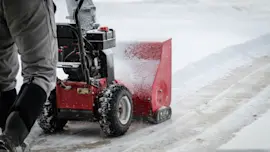
- If you are already doing maintenance, follow a proven checklist like how to make your snowblower last longer.
Last updated: January 2026
How to find snowblower model number?
For a Craftsman snow blower, the model number is printed on the product identification label; on model 536884420, it’s most often found on the rear of the unit near the wheel area or on the frame behind the engine. Use that exact number when ordering parts.
Check these common label locations first:
- Rear of the snowblower between the wheels (most common)
- Frame rail near the axle or wheel housing
- Behind the engine on the main frame
- Near the chute base or control panel area
- Under the handlebar cross brace (less common)
Most Craftsman snowblower ID labels include a model number and often a serial number. The model number is usually the clearest, boldest line and may be preceded by “Model” or “M/N”.
| You see on the label | What to do with it |
|---|---|
| Model number (example: 536884420) | Use it to match diagrams and order the correct parts |
| Serial number | Keep it for service history and warranty records |
| Engine numbers | Use for engine-specific parts (carburetor, ignition), not the snowblower frame |
Craftsman snowblowers can look similar across years, but parts like the auger, chute components, and drive belt vary by model. Using the exact model number helps us match the correct parts the first time.
If the label is damaged, clean the area and look for a stamped number on the frame. If you’re troubleshooting a specific system while you search, start with common wear items like the belt 325890MA and confirm fit by model.
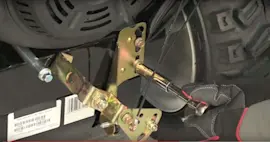
For a visual walkthrough of typical label locations, use how to assemble a snowblower video (it shows common frame areas where identification labels are placed during assembly).
Last updated: January 2026
Is a 2 stage or 3 stage snowblower better?
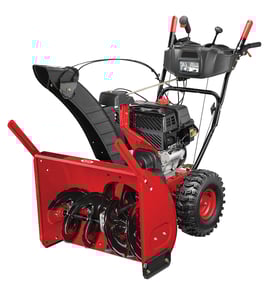
A 3-stage snow blower is better for extreme conditions because it clears faster and breaks up deep, heavy, or plowed-in snow more aggressively; a 2-stage is the better value for most driveways and typical winter storms. For Craftsman model 536884420, the “better” choice depends on your snow depth, surface, and how often you clear.
| Feature | 2-stage snow blower | 3-stage snow blower |
|---|---|---|
| Best for | Most residential driveways | Deep, dense, plowed-in snowbanks |
| Clearing speed | Fast | Faster |
| Snow handling | Auger feeds impeller | Accelerator feeds auger/impeller |
| Cost and complexity | Lower | Higher |
| Typical tradeoffs | Great all-around | Heavier, more parts to maintain |
- Choose 2-stage if you usually get moderate snowfall and want strong performance with simpler maintenance.
- Choose 3-stage if you regularly deal with heavy, wet snow, end-of-driveway plow piles, or frequent icing.
- If storage space is tight, a 2-stage is typically easier to maneuver and park.
- If you want maximum throughput and less “bogging,” 3-stage is the upgrade that targets that problem.
Stage design affects how the machine feeds snow into the impeller. In tough conditions, faster feeding reduces clogging and improves throw consistency, but it also adds moving components that can wear and need adjustment.
Even the best stage design will struggle if wear parts are tired. For model 536884420, these are common performance-related items to keep in mind:
- Worn or stretched drive/auger belt: consider replacing the belt 325890MA
- Chute control issues that limit aiming or distance: inspect the chute deflector 762222MA
- Auger damage or imbalance that reduces intake: check the auger 327072MA
For maintenance steps that help any stage design work its best, follow how to make your snowblower last longer.
Last updated: January 2026