Owner’s manual

What company makes Craftsman air compressors?
Craftsman is a brand name, so the company that actually built a Craftsman air compressor can vary by model and production year. For Craftsman model 921152100, the best way to identify the original manufacturer is to use the identification and parts information in the owner's manual.
How to identify who built your Craftsman 921152100
On many Craftsman compressors, the most reliable identifier is the data plate or label on the tank or frame. Use these checks:
- Confirm the model number is 921152100 (sometimes shown as 921.152100)
- Look for a manufacturing code, date code, or a prefix on the label
- Match the label information to the parts list and diagrams in the manual
- Record the motor and pump markings (useful when comparing replacement components)
- Keep the purchase date handy because documentation and parts can vary by production run
What we can confirm from the manual for this model
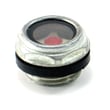
The manual for this unit identifies it as a Craftsman air compressor, 2-gallon, 1.5 HP (peak), oil lubricated, model 921.152100. It also includes a parts list with internal component identifiers (for example, items like the oil fill cap and quick connect are listed by reference). See the owner's manual for the full parts list and safety information.
| Item in documentation | What it tells you | Why it helps |
|---|---|---|
| Model number (921.152100) | Exact unit family | Confirms you are looking up the right compressor |
| Manual issue date (06/05/2002) | Approximate era | Helps narrow down likely OEM and parts variations |
| Parts list and reference numbers | Component breakdown | Helps match pump, regulator, and fittings |
Why it matters
Knowing the actual builder (OEM) helps when you are troubleshooting issues like a pressure switch problem, a regulator/gauge issue, or a pump rebuild decision because designs and part styles can differ even under the same Craftsman branding.
If your compressor will not start or will not build pressure, use our DIY troubleshooting content such as air compressor won't start to narrow the failure to the pressure switch, check valve, capacitor, or pump.
Last updated: February 2026
Are air compressor parts interchangeable?
Most air compressor parts are not interchangeable across brands or even across different models from the same brand. For the Craftsman 921152100, internal pump and control parts must match the exact design and pressure ratings shown in the owner's manual to fit correctly and operate safely.
What’s usually interchangeable (and what isn’t)
Some connection hardware is standardized, but many “same-looking” parts differ by thread type, pressure range, or mounting style.
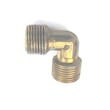
- Sometimes interchangeable: quick-connect couplers, plugs, some hose fittings (when thread and style match)
- Usually not interchangeable: pressure switch, regulator, check valve, safety valve, gauges
- Not interchangeable (internal pump parts): piston, rings, valve plate, reed valves, gaskets, cylinder head
- Model-specific by design: motor components (capacitor, centrifugal switch), shrouds and covers
How to confirm compatibility on model 921152100
Use the parts list and diagrams in the owner's manual and match by description and reference number.
- Match the exact model number: 921152100
- Match the part description (example: “Gauge regulator”, “Quick connect”)
- Confirm pressure rating (PSI range) for switches, regulators, gauges, and safety valves
- Confirm thread type and size (common shop fittings are often NPT, but size varies)
- Confirm mounting orientation (manifold vs. tank port vs. inline)
Quick compatibility guide
| Part type | Can you swap a “universal” one? | What must match |
|---|---|---|
| Quick connect / coupler | Sometimes | Thread size/type, airflow needs, sealing method |
| Regulator | Sometimes | Port size, pressure range, mounting style |
| Pressure switch | Rarely | Cut-in/cut-out range, port size, electrical rating |
| Check valve | Sometimes | Tank port thread, tube size, flow direction |
| Pump internals | No | Exact pump design for 921152100 |
Why it matters
Using a near-match part can cause air leaks, incorrect cut-in/cut-out operation, poor pressure control, or repeated tripping. The manual also notes that the regulator assembly must be attached correctly to prevent leaks and injury, and that the unit should be off, unplugged, and depressurized before service.
Last updated: February 2026
Is it worth it to repair a compressor?
Yes, it’s usually worth repairing a Craftsman air compressor like model 921152100 when the problem is a serviceable part (pressure switch, check valve, pump seals, or gaskets) and the tank is sound. If the air tank is leaking at the body or welds, it’s not worth repairing because the tank must be taken out of service (do not modify or attempt to repair it). See the 921152100 owner's manual for safety and troubleshooting guidance.
Quick decision checklist
- Repair it when the issue is electrical or a replaceable component (won’t start, won’t build pressure, leaks at fittings).
- Do not repair it when air leaks come from the tank body or tank welds.
- Repair it when maintenance is overdue (dirty filter, low oil, worn pump gaskets).
- Replace it when repair cost approaches the price of a comparable new unit.
- Replace it when multiple major issues stack up (motor + pump + controls).
What the manual says about “not worth repairing”
The manual’s troubleshooting guidance is clear: never drill into, weld, or otherwise modify the air tank. If the tank itself leaks (especially at welds), the compressor should be discontinued from use rather than repaired.
Common “repairable” problems (and typical fixes)
- Won’t start: check power supply, dedicated circuit, and extension cord limits.
- Won’t build tank pressure: inspect for air leaks, check valve issues, or pump valve/gasket wear.
- Moisture in air lines: drain the tank after each use; consider an in-line water filter.
A good next step is our DIY guide: air compressor won't start.
Cost and effort comparison (practical guide)
| Situation | Typical outcome | Best choice |
|---|---|---|
| Leak at fitting, regulator, hose, or drain valve | Low-cost parts, quick labor | Repair |
| Pressure switch or check valve problem | Moderate cost, moderate labor | Repair |
| Pump performance low (valves, rings, gaskets) | Higher labor, parts vary | Repair if overall condition is good |
| Tank leak at weld/body | Unsafe to continue | Replace |
Why it matters
A compressor tank stores high-pressure air; tank integrity is the safety line. Repairing normal wear items can restore performance, but a compromised tank is a stop-use condition.
Last updated: February 2026
What is the most common cause of air compressor failure?
The most common cause of failure on a Craftsman 921152100 air compressor is poor maintenance that leads to overheating and accelerated wear. Dirty cooling surfaces, restricted airflow, moisture left in the tank, and running the compressor beyond its duty cycle commonly damage valves, seals, and the motor.
What “poor maintenance” usually looks like
- Not draining the tank after use, which leaves water to corrode components and contaminate air output
- Operating with restricted ventilation (tight corner, blocked shroud, dusty area)
- Ignoring small air leaks until the pump runs longer and hotter than normal
- Using the wrong power setup (undersized extension cord or weak circuit), which can overheat the motor
- Skipping basic inspections (loose fasteners, damaged guards, worn fittings)
Quick checks that prevent most failures
Follow the safety and maintenance steps in the owner's manual before servicing.
- Unplug the compressor; bleed all air from the tank; let the pump and outlet tube cool
- Drain condensation from the tank after each use
- Listen for hissing at fittings, the regulator, and the check valve area after shutdown
- Confirm power supply is solid (dedicated 15 amp circuit; avoid long or undersized extension cords)
- Keep covers and guards installed during operation to protect moving parts and airflow paths
Common failure symptoms and what they usually point to
| Symptom | Most common cause | What to do first |
|---|---|---|
| Won’t start | Power supply issue, pressure switch problem, motor overload | Verify circuit, cord gauge/length, and reset protection if equipped |
| Won’t build tank pressure | Air leak, reed valve/valve plate issue, check valve issue | Check for leaks; inspect check valve and pump components |
| Runs hot or trips breaker | Poor ventilation, long run time, electrical drop | Improve airflow; reduce duty cycle; correct power setup |
| Moisture in air line | Normal condensation, not a pump failure | Drain tank; add an in-line water filter |
Why it matters
Overheating and moisture are “multiplier” problems: they make the pump run longer, raise operating temperature, and speed up wear on internal parts like valves, gaskets, and piston rings. Keeping airflow clear and draining the tank routinely prevents many no-start and low-pressure complaints.
For step-by-step troubleshooting by symptom, use our air compressor won't start guide.
Last updated: February 2026