Owner’s manual
 View engine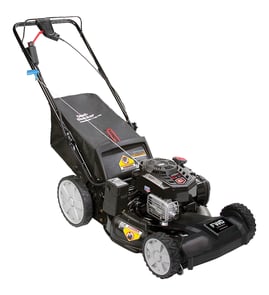



Should I use 87 or 89 gas for lawn mower?
For the Craftsman rotary lawn mower model 917387440, use fresh, clean regular unleaded gasoline with a minimum of 87 octane. Using 89 octane will not improve performance in normal mowing; the key is using fresh fuel and storing it correctly (see the owner's manual).
What to use (and what to avoid)
- Use: Regular unleaded 87 octane or higher
- Buy small amounts: Fuel you can use within 30 days
- Do not mix oil and gas: This is a 4-cycle engine setup
- Avoid long storage with fuel in the system: Old fuel can cause hard starting
- Be cautious with alcohol-blended fuels: They can attract moisture during storage
Quick comparison: 87 vs 89 for this mower
| Fuel choice | OK to use? | What you should expect |
|---|---|---|
| 87 octane (regular) | Yes (recommended) | Normal starting and power when fuel is fresh |
| 89 octane (mid-grade) | Yes | No meaningful performance gain for typical small-engine mowing |
Why it matters
Octane is mainly about preventing knock under high compression. Most walk-behind mower engines are designed to run properly on regular 87 octane, so fuel freshness and clean storage practices have a bigger impact than stepping up to 89.
Fueling and storage tips that prevent no-start problems
- Let the engine cool before refueling
- Fill the tank outdoors and wipe up spills before starting
- If the mower will sit 30 days or longer, run the fuel system dry or drain the tank
- Don’t carry fuel over from one season to the next
- Replace rusty fuel cans; rust and dirt cause fuel system issues
Last updated: February 2026
How do you tell if a mower is commercial or residential?
A mower is considered residential or commercial mainly by how it’s intended to be used and supported, not just by speed. For Craftsman model 917387440, the owner's manual warranty language clearly separates homeowner use from commercial or rental use.
Quick ways to tell
We use these practical checks to classify most walk-behind mowers:
- Warranty terms: Residential mowers typically have a longer warranty; commercial or rental use usually shortens coverage.
- Duty cycle: Commercial mowers are built for all-day mowing; residential mowers are built for weekly lawn care.
- Deck and frame build: Commercial units usually have heavier-gauge decks, stronger handle mounts, and more robust wheel hardware.
- Engine and driveline: Commercial models often have higher-hour engines and heavier transmissions (on self-propelled units).
- Serviceability: Commercial designs tend to have easier access to wear parts and more frequent maintenance intervals.
What the 917387440 manual tells us
The Craftsman 917387440 manual includes a limited warranty that applies differently depending on use:
| Use type | What it means in practice | What to look for |
|---|---|---|
| Residential (homeowner) | Normal household lawn maintenance | Longer warranty term, standard wear schedule |
| Commercial or rental | Business use, frequent jobs, or rented out | Shorter warranty term, faster wear on blade and controls |
This is one of the most reliable indicators because it reflects the manufacturer’s intended use category.
Why “faster blade tip speed” is not the best test
Blade tip speed and ground speed can vary by design, but they do not reliably define commercial vs residential. A residential mower can still cut thick grass well if the blade is sharp and the deck is kept clean.
If you’re evaluating cut quality on your 917387440, start with the wear items that most affect performance:
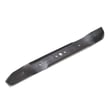
- Inspect and sharpen or replace the blade (example replacement: lawn mower blade 532406713)
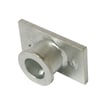
- Check the blade mounting stack (example: lawn mower blade adapter 581547901)
- Verify the operator presence and zone control system moves freely (example: husqvarna poulan lawn mower zone control cable 532168552)
Why it matters
Using a residential mower like a commercial unit (long run times, heavy grass, frequent jobs) accelerates wear on expendable parts such as blades and blade adapters, and it increases the need for routine tune-ups and safety checks.
Last updated: February 2026
What model number is a Craftsman 6.75 lawn mower?
Craftsman “6.75” is an engine power rating used on many walk-behind mowers, not a single model number. For the mower on this page, the model number is 917.387440 (often written without the dot as 917387440); you’ll find it listed on the 917387440 owner’s manual.
How to find the correct model number on your mower
Use the model number from the mower’s ID label, not the engine horsepower.
- Look for a sticker or metal tag on the rear deck, near the height adjusters, or at the handle mounting area
- Record the full model number exactly as shown (for this unit: 917.387440)
- If the label is worn, check the manual’s cover page for the model format
- Don’t use “6.75” alone; it won’t match parts diagrams reliably
- If you’re matching engine parts, also note the engine model (this mower uses a Craftsman engine model 143.006200 per the manual)
“6.75” vs. mower model number: what’s the difference?
| What you see | What it means | Best use |
|---|---|---|
| 6.75 (HP rating) | General engine power class | Comparing mower capability |
| 917.387440 | Craftsman mower model number | Ordering the correct mower parts |
| 143.006200 | Engine model number | Ordering engine-specific parts |
Why it matters
Parts like the blade, blade adapter, and control cable are selected by the mower model number, not horsepower. Using the correct model number helps you avoid ordering the wrong cutting parts or hardware.
If you’re replacing common wear items on this Craftsman rotary lawn mower, match parts by model 917.387440; for example, the lawn mower blade 532406713 and lawn mower blade adapter 581547901 are listed for this model.
Last updated: February 2026
What year is my Craftsman mower serial number lookup?
On Craftsman rotary lawn mower model 917387440, the serial number identifies your mower’s production date, but the exact format varies by the decal and engine family. We use the date-code examples and the serial-number location shown in the 917387440 owner's manual to match your serial number to a year.
Where to find the serial number on model 917387440
The model and serial number are typically printed on a decal attached to the rear of the mower housing.
- Look at the back of the deck (rear housing area)
- Clean the decal gently so all digits are readable
- Write down the model number (917387440) and the full serial number
- Record the date of purchase too (helpful for age and maintenance history)
How Craftsman serial date codes are commonly formatted
Many Craftsman mower serial/date codes use a month-day-year pattern, often as six digits.
- First 2 digits: month (01 to 12)
- Next 2 digits: day (01 to 31)
- Last 2 digits: year (for example, 11 = 2011)
Quick examples
| Serial/date code | Reads as | Year |
|---|---|---|
| 072811 | July 28, 2011 | 2011 |
| 041520 | April 15, 2020 | 2020 |
| 110305 | November 3, 2005 | 2005 |
If your serial number is longer than 6 digits
Some decals include extra characters before or after the date code. In that case, we match the most date-like 6-digit block (MMDDYY) within the serial string.
- Scan for a 6-digit run that looks like a real calendar date
- If you see multiple 6-digit groups, use the one closest to “SERIAL” on the decal
- If the code ends in 00 to 26, it typically maps to 2000 to 2026
Why it matters
Knowing the year helps us pick the right Craftsman parts and maintenance specs for your mower, including items that wear out regularly like the blade and blade adapter.
- Blade fit and bolt torque specs matter for safe cutting
- Cable and handle hardware can change across production runs
- Correct parts reduce vibration, poor cut quality, and repeat repairs
Last updated: February 2026
What are the common problems with Craftsman lawn mowers?
Common problems on the Craftsman 917387440 rotary lawn mower include no-start conditions (stale fuel, dirty air filter, disconnected spark plug wire, bad spark plug), loss of power from airflow or deck buildup, and poor or uneven cutting from a worn or loose blade or a damaged blade adapter. See the 917387440 owner's manual for the troubleshooting chart and maintenance schedule.
Most common symptoms and what usually causes them
- Engine will not start: dirty air filter, out of fuel, stale fuel, water in fuel, spark plug wire disconnected, bad spark plug, control bar released
- Loss of power: heavy grass load, cutting too much at once, dirty air filter, grass and debris buildup under the deck, too much oil, walking speed too fast
- Poor or uneven cut: worn or bent blade, wheel height set unevenly, deck packed with clippings
- Vibration or clunking: loose blade hardware or a broken blade adapter
- Hard to pull starter rope: blade hitting packed debris under the deck or a mechanical bind
Quick checks we recommend first (fast, high-impact)
- Confirm the control bar is held fully against the handle while starting.
- Check fuel quality: drain old fuel and refill with fresh gasoline; water or stale fuel is a top no-start cause.
- Inspect the air filter and clean or replace if dirty.
- Verify spark plug wire connection is fully seated.
- Look under the deck (engine off, spark plug wire removed): clear grass and debris buildup.
When to suspect a blade or blade adapter problem
The manual calls out a loose blade or broken blade adapter as a no-start cause and a common source of vibration. If the blade is damaged or the mower suddenly cuts poorly, inspect and replace worn parts.
| Symptom | What to inspect | Common fix |
|---|---|---|
| Uneven cut | Blade edge, wheel height | Sharpen/replace blade; set wheels evenly |
| Vibration | Blade tightness, adapter condition | Tighten hardware; replace adapter if cracked |
| Won’t start but has fuel | Air filter, spark plug, control bar | Service air filter/spark plug; verify controls |
Helpful model-matched parts from this page include the lawn mower blade 532406713 and the lawn mower blade adapter 581547901.
Why it matters
Most “mower problems” trace back to fuel, airflow, or cutting system issues. Fixing those basics first prevents repeat no-starts, protects the crankshaft from impact damage, and improves cut quality.
Last updated: February 2026