Owner’s manual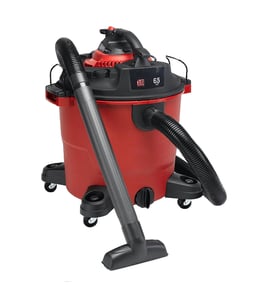

Where to find model number on Craftsman Shop Vac?
On the Craftsman wet/dry vacuum model 338179350, the model number is typically printed on a rating label (often a gray sticker) on the lid/top cover or on the rear of the tank near the power cord. Look for a line labeled “MOD” or “Model” and copy the full number exactly.
Where to check first (fastest spots)
- Top lid or motor head (lift-off power head area)
- Rear of the tank near the cord wrap or switch
- Underside of the lid (around the handle or latch area)
- Side of the tank near the hose port
- On the carton or paperwork if you still have it
What the label usually looks like
Most Craftsman shop vac labels include a few key fields. Use the model field for parts lookup.
| Label field | What it means | What to write down |
|---|---|---|
| MOD / Model | The vacuum’s model identifier | The full model number (example: 338179350) |
| Serial / S/N | Production identifier | Optional, helpful for support |
| Volts / Amps | Electrical rating | Not used for parts lookup |
Tips if the sticker is worn or missing
- Wipe the label gently with a damp cloth; dust can hide the print.
- Shine a flashlight across the label at an angle to make faint text readable.
- If the label is damaged, check your 338179350 owner’s manual for model identification and label location guidance.
Why it matters
Using the exact model number helps us match the correct Craftsman wet/dry vacuum parts (filters, hose connections, switches, and motor components) and avoid ordering look-alike parts that do not fit.
Last updated: February 2026
Why do shop vacuums lose suction?
Shop vacuums like the Craftsman 338179350 usually lose suction because airflow is restricted somewhere in the system: a clogged filter, a blockage in the hose or nozzle, a poor seal at the lid or tank, or a full collection tank. Start with the filter and hose checks in the Craftsman 338179350 owner's manual.
Most common causes (and what to check first)
- Clogged or saturated filter: fine dust and wet pickup can quickly load the filter and choke airflow.
- Hose or wand blockage: debris often jams at bends, cuffs, or the nozzle.
- Full tank or bag: once the tank is full, airflow drops sharply.
- Air leaks: a loose lid, cracked hose, or missing gasket lets air in and reduces suction at the nozzle.
- Wrong setup for wet pickup: using a dry filter for wet pickup (or vice versa) can reduce performance and create clogs.
Quick diagnostic checklist (5 to 10 minutes)
- Unplug the vacuum.
- Empty the tank; remove any bag if your setup uses one.
- Remove the filter; clean it per the manual and confirm it is seated correctly.
- Inspect the hose end-to-end; clear clogs with a broom handle or by back-flushing with air.
- Reinstall everything and test suction at the hose inlet (strong there but weak at the nozzle usually means a hose/tool restriction).
What the symptoms usually mean
| Symptom | Most likely cause | Best next step |
|---|---|---|
| Weak everywhere | Filter clogged, tank full, air leak | Clean/replace filter; check lid seal |
| Strong at inlet, weak at nozzle | Hose/wand/tool blockage | Clear hose and attachments |
| Works briefly then fades | Filter loading quickly, overheating protection | Clean filter; let motor cool; improve airflow |
Why it matters
Low suction is almost always an airflow problem. Restoring airflow protects the suction motor, improves pickup, and prevents fine dust from bypassing seals and re-entering the air.
Related DIY help
If you want a broader troubleshooting path, use our vacuum symptoms landing page to match your exact symptom to the most likely fixes.
Last updated: February 2026
Why is my shop vac blowing instead of vacuuming?
If your Craftsman wet/dry vacuum model 338179350 is blowing dust or air out instead of picking it up, the airflow is usually being routed incorrectly or restricted: the hose is connected to the blower port, the filter is missing/loose/clogged, or the tank lid or hose has an air leak.
Quick checks (most fixes take 5 minutes)
- Confirm the hose is connected to the suction (inlet) port, not the blower/exhaust port.
- Make sure the filter is installed and seated evenly; a loose filter lets fine dust bypass and blow out.
- Clean or replace a clogged filter (loss of airflow can make dust swirl and exit the exhaust).
- Check the lid gasket and latches; a poor seal reduces suction dramatically.
- Inspect the hose and wand for a clog (wet debris, sawdust clumps, or a rag).
- If you used it for liquids, verify the float/shutoff is not stuck in the “closed” position.
What to do based on what you see
| Symptom | Most likely cause | What we recommend |
|---|---|---|
| Strong air coming from the hose | Hose on blower port | Move hose to suction port; verify port labeling in the 338179350 owner's manual |
| Dust misting from exhaust | Filter missing, loose, torn, or too dirty | Reseat filter; clean or replace it; use the correct filter type for fine dust |
| Motor sounds normal but weak pickup | Clog or air leak | Clear hose/tank inlet; check lid seal and accessories for cracks |
| Stops picking up after wet use | Float shutoff engaged | Empty tank; free the float; let parts dry before reuse |
Why it matters
A wet/dry vacuum depends on a sealed airflow path through the tank and filter. When the filter is compromised or the hose is on the wrong port, the vacuum cannot create stable suction and debris can be pushed out through the exhaust.
Helpful DIY guidance
For general troubleshooting steps that apply to most vacuums, use our vacuum symptoms landing page.
Last updated: February 2026
What is the list of vacuum cleaner parts?
Most vacuum cleaners, including the Craftsman 338179350 wet/dry vacuum, are built from a few core systems: suction (motor and airflow path), filtration (filters and seals), collection (tank or bag), and controls (switches and cords). Knowing the main parts helps you diagnose low suction, leaks, and overheating faster.
Common vacuum parts (and what they do)
- Motor and fan: Creates airflow (suction) through the hose and tank.
- Collection tank or dust bin (wet/dry vac canister): Holds debris and liquids.
- Filter(s) (cartridge, foam sleeve, or bag style depending on setup): Traps fine dust and protects the motor.
- Float/cage assembly (wet pickup safety): Helps prevent liquid from reaching the motor.
- Hose: Main airflow path; cracks or clogs cause weak suction.
- Wands and nozzles: Direct suction to floors, corners, and tight spaces.
- Seals and gaskets (lid seal, hose port seal): Prevent air leaks that reduce performance.
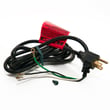
- Power cord and switch: Supplies power and controls on/off.
Quick “parts list” by system
| System | Parts you will usually see | Common symptom when it fails |
|---|---|---|
| Suction/airflow | Motor, fan/impeller, hose, inlet/outlet ports | Won’t pick up, loud noise, poor airflow |
| Filtration | Filter, filter cage, filter nut/retainer, exhaust filter (some models) | Dust blowing out, overheating, odor |
| Collection | Tank/canister, lid, latches, drain cap (some models) | Leaks, messy emptying |
| Safety/sealing | Float, gaskets, clamps/latches | Shuts off on wet pickup, suction loss |
How we recommend using this list for troubleshooting
- Check filters first; a clogged filter is the most common cause of low suction.
- Inspect the hose and attachments for clogs, splits, or loose connections.
- Confirm the lid is seated and seals are clean and not pinched.
- For wet pickup, verify the float moves freely and the tank is not overfilled.
- If the motor runs hot or shuts off, clean filters and check for blocked airflow.
Why it matters
Wet/dry vacuums rely on an airtight airflow path. A small air leak at a gasket or a partially clogged filter can drop suction dramatically and make the motor run hotter than it should.
For model-specific diagrams and part naming used for the Craftsman 338179350, use the Craftsman 338179350 owner’s manual.
Last updated: February 2026