Owner’s manual
 Error Codes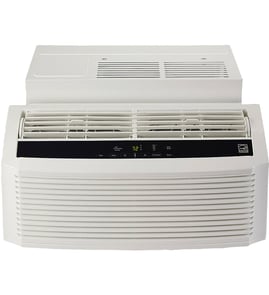



How big of a room will a 10,000 BTU portable air conditioner cool?
A 10,000 BTU portable air conditioner typically cools about 300 to 450 square feet in average conditions. For the Kenmore 25374106300 room air conditioner, the best match depends on your room’s square footage plus heat and humidity load, because higher load makes the unit run longer to maintain your set temperature (see the 25374106300 owner's manual).
Use your room’s square footage first, then adjust for conditions.
- Measure length x width (in feet) to get square feet
- If the room is very sunny, add about 10% more capacity
- If the room is humid or you cook often nearby, add about 10% more capacity
- If doors are frequently opened, treat it like a larger space
- If the room has high ceilings (over 8 ft), size up
| Room size (sq. ft.) | Typical BTU range | What you’ll notice if undersized |
|---|---|---|
| 200 to 300 | 7,000 to 8,000 | Runs constantly, struggles on hot days |
| 300 to 450 | 9,000 to 10,000 | Cools slowly during peak heat |
| 450 to 550 | 11,000 to 12,000 | Temperature never reaches set point |
Your air conditioner’s cooling capacity has to overcome the room’s heat and humidity load. The manual explains that when heat or humidity is above normal, the unit must run longer and more often, and in heavy heat it may run constantly to hold the temperature you selected.
- Keep the air filter clean so airflow stays strong
- Close doors, windows, and nearby registers while cooling
- Keep the front of the unit clear of furniture and drapes
- Use a higher fan speed to circulate air faster
- If the coil ices up, switch to FAN ONLY on the fastest fan setting to defrost
Last updated: January 2026
Is there a portable AC that doesn't need a window?
A true portable air conditioner still must vent hot air somewhere; without a window (or another vent path), it cannot cool effectively. For a room with no window access, the practical options are an evaporative cooler (best in dry climates) or venting a portable AC through a wall, drop ceiling, or door kit; see the 25374106300 owner's manual for safe electrical and airflow guidance.
Most products marketed as “windowless AC” fall into one of these categories:
- Evaporative cooler (swamp cooler): Uses water evaporation; no exhaust hose.
- Portable AC (compressor type): Needs an exhaust hose to dump heat outside.
- Personal air cooler/fan: Moves air; does not lower room temperature like an AC.
| Situation | Best choice | What to expect |
|---|---|---|
| Hot, dry climate | Evaporative cooler | Noticeable cooling; adds humidity |
| Hot, humid climate | Vented portable AC | Strongest cooling; requires exhaust path |
| Small spot cooling | Fan/personal cooler | Comfort boost; limited temperature drop |
A compressor-based portable AC must exhaust heat. If you cannot use a window, these venting methods work:
- Vent through a wall sleeve or wall vent (best long-term solution)
- Vent into a drop ceiling only if it truly leads outdoors (not into an attic space)
- Use a door vent kit (temporary, less efficient)
- Avoid venting into another room; it just moves heat around
Air conditioners remove heat from the room and must reject that heat outside. If the exhaust stays indoors, the unit runs longer, cooling performance drops, and you can create airflow problems. Our Kenmore room air conditioner guidance also emphasizes not blocking airflow and using proper electrical power (no extension cords).
- If you are sizing cooling for a room, use how to figure out which room air conditioner you need.
Last updated: January 2026
What size AC do I need for a 250 sq ft room?
For a 250 sq ft room, we typically recommend a room air conditioner in the 6,000 to 7,000 BTU range. Choosing the right capacity matters because the Kenmore 25374106300 (like any window AC) cools best when the unit size matches the room size; an oversized unit can short-cycle and feel clammy.
Use this as a practical starting point, then fine-tune for sun exposure, ceiling height, and heat sources.
- Base recommendation: 6,000 to 7,000 BTU for ~250 sq ft
- Sunny room or west-facing windows: add about 10%
- High ceilings (over ~8 ft): add about 10%
- Kitchen or heavy heat loads (cooking, many people, electronics): add about 10%
- Shaded room: you can often stay near the lower end of the range
| Room size | Typical BTU range | Best fit notes |
|---|---|---|
| 200 to 250 sq ft | 6,000 to 7,000 | Most bedrooms, offices |
| 250 to 300 sq ft | 7,000 to 8,000 | Sunny rooms, open doorways |
Your Kenmore 25374106300 is designed to run longer when heat and humidity are high, which is normal. When the capacity fits the room, you get steadier temperatures, better moisture removal, and efficient operation. Oversizing can reduce dehumidification and comfort.
We recommend these basics before assuming you need a bigger unit:
- Install on the shady side when possible
- Keep airflow clear inside (curtains, furniture) and outside (shrubs, enclosures)
- Keep doors and windows closed; close fireplace dampers and registers
- Clean the air filter regularly (a dirty filter reduces cooling)
- If the indoor coil ices up in cool outdoor weather, use FAN ONLY on high to defrost
For model-specific operating guidance and cooling tips, follow the 25374106300 owner's manual.
Last updated: January 2026