Installation guide
 Owner’s manual
 Error Codes



Where to find part number on GE dryer?
On the GE DBVH512GF1WW gas dryer, the model and serial tag is located at the top inside of the door opening. That tag is what you use to identify the correct replacement parts for your exact dryer.
What to look for on the ID tag
- Model number (for this dryer: DBVH512GF1WW)
- Serial number (helps date the unit and confirm production run)
- Electrical rating information (sometimes listed)
- Gas type or other compliance markings (varies by unit)
Quick steps to find it
- Open the dryer door.
- Look along the top edge inside the door opening.
- Write down the model and serial exactly as shown.
- Use that information with the DBVH512GF1WW owner's manual when ordering parts or troubleshooting.
Model number vs. part number (common mix-up)
| Item | What it identifies | Example for this dryer |
|---|---|---|
| Model number | The whole dryer | DBVH512GF1WW |
| Serial number | Your specific unit | Varies |
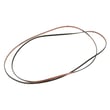
| Part number / part ID | A replaceable component | Drive belt WE03X29897 |
If you are trying to identify a specific replacement part (not the dryer model), match the failed component to a parts listing. For example, a broken belt is commonly replaced with the drive belt WE03X29897.
Why it matters
GE often uses similar-looking parts across multiple dryer series. Using the exact model number from the door-opening tag helps ensure the part (such as a door switch, igniter, or belt) fits and works correctly.
Last updated: February 2026
What's the life expectancy of a GE dryer?
A GE dryer typically lasts about 10 years with normal household use. For your GE DBVH512GF1WW gas dryer, consistent airflow maintenance (lint filter and venting) and prompt repair of wear parts usually make the biggest difference in reaching that lifespan.
Typical lifespan and what affects it most
Most dryers fail early due to heat and airflow stress, or due to drum support wear.
- Clean the lint filter every load; restricted airflow overheats components.
- Keep the exhaust duct clear; the manual recommends having the interior and exhaust duct connection cleaned at least once a year by a qualified technician.
- Use the correct venting materials and lengths for best performance.
- Avoid overloading; it strains the drive belt, idler pulley, and drum glides.
- Address squealing, thumping, or burning smells quickly.
Quick maintenance checklist (DBVH512GF1WW)
Use these as your baseline habits; they are the most cost-effective way to extend dryer life.
| Task | How often | Why it helps |
|---|---|---|
| Clean lint screen | Every load | Improves airflow and drying time |
| Check vent hood flap opens freely | Monthly | Prevents backpressure and long dry times |
| Clean vent duct and inside duct connection | Yearly | Reduces overheating and wear |
| Listen for new noises (squeal, scrape, thump) | Ongoing | Catches belt and drum support issues early |
For model-specific safety, operation, and care details, follow the DBVH512GF1WW owner's manual.
Parts that commonly limit dryer life
When a dryer still heats but gets noisy or stops tumbling, these wear items are common on many GE dryers.
- Drive belt WE03X29897 (drum will not turn, or belt snaps)
- Idler pulley WE12X83 (squealing, belt slipping)
- Dryer drum front glide pad WE03X37318 (scraping, thumping, drum drag)
Why it matters
A dryer that is struggling to move air runs hotter and longer; that extra heat shortens the life of ignition and control components and can also accelerate drum wear. Proper venting and routine cleaning are the simplest ways to protect performance and longevity.
Last updated: February 2026
What is the most common problem with a GE electric dryer?
On GE dryers, the most common complaint is no heat or long dry times caused by restricted airflow (lint buildup or a venting issue) or a failed heating component. If the drum will not tumble, a worn belt or idler system is a top mechanical cause. For model DBVH512GF1WW, use the DBVH512GF1WW owner's manual troubleshooting chart to match symptoms to the right checks.
Most common symptoms and what they usually point to
- Runs but no heat: ignition or gas burner system issue on gas models, or airflow restriction causing safety devices to open
- Takes too long to dry: clogged lint screen, crushed/kinked duct, long vent run, dirty internal ducting
- Won’t start: tripped breaker, control panel asleep, door switch not closing
- Drum won’t turn: belt slipped/broken, idler pulley seized, drum glides worn
- Unusual squeal or scraping: worn drum glides, felt seal wear, idler pulley noise
Quick checks we recommend first (fast, no parts)
- Reset power correctly: the manual notes that pressing Start/Stop/Power does not disconnect power; reset at the breaker before service.
- Confirm airflow: make sure the exhaust duct is not crushed, kinked, or collapsed; keep the run as short as practical.
- Clean lint and venting: clean the lint filter every load; have the interior and exhaust duct connection inside the dryer cleaned at least yearly by a qualified technician.
Common parts involved (when the drum won’t tumble)
If DBVH512GF1WW runs but the drum does not turn, these are frequent wear items:
| Symptom | Likely wear item | Example part for this model |
|---|---|---|
| Drum not turning, motor runs | Belt slipped/broken | Drive belt WE03X29897 |
| Thumping or squeal, poor tumbling | Idler pulley worn | Idler pulley WE12X83 |
| Scraping, rough drum support | Front glides worn | Dryer drum front glide pad WE03X37318 |
Why it matters
Airflow problems can cause overheating, nuisance shutdowns, and poor drying performance. Mechanical wear (belt, glides, idler) can progress from noise to a no-tumble failure, leaving clothes wet and increasing cycle time.
For error displays on GE dryer control panels, we also use the GE gfd model series error codes reference to interpret codes and narrow the repair.
Last updated: February 2026