Error Codes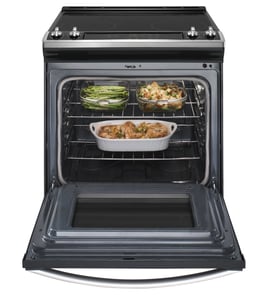





How do I find the right GE part number?
For your GE JXDS44 electric range, the right part number comes from matching the exact model number (JXDS44) to the correct part in the parts diagram or parts list, then confirming the part’s ID and manufacturer part number before ordering.
Step-by-step: how we match the correct part
- Find the model number tag and confirm it reads JXDS44 (not a similar-looking model).
- Use the model number to narrow results to parts made for your exact GE electric range configuration.
- Identify the part by location and description (for example, cooktop hardware vs. pan components).
- Confirm the part ID and manufacturer part number before checkout.
- If multiple versions appear, match by finish, size, and where it installs on the range.
What “part ID” vs. “part number” means
| What you see | Example on this model page | What it’s used for |
|---|---|---|
| Part name | Cooktop screw | Describes the part |
| Part ID | WB1K5122 | Sears PartsDirect identifier for the part page |
| Manufacturer part number | WB1X5355 | GE’s part number used for compatibility |
Quick example using common JXDS44 parts
If you are replacing a missing or stripped fastener on the cooktop, start with a model-matched hardware listing such as the cooktop screw WB1K5122. For a damaged drip pan style component, compare the shape and mounting points to the pan unit WB49X5523.
Why it matters
GE ranges often have multiple revisions that look similar, and ordering by appliance type alone (for example, “GE electric range screw”) can lead to the wrong thread size, length, or finish. Matching by model number first prevents returns and delays.
Last updated: February 2026
How to order GE appliance parts?
To order parts for your GE JXDS44 electric range, use the complete model number and serial number to match the correct replacement part, then order by the exact part ID. If you need help choosing a part or finding an alternative, contact Sears PartsDirect support.
What to have ready before you order
Having the right details prevents wrong-part returns and delays.
- Complete model number: JXDS44
- Serial number (from the rating label)
- Part ID (example: WB49X5523) and part name
- A quick description of the symptom (for troubleshooting-based part selection)
- Photos of the part and how it mounts (helpful for screws and panels)
How we recommend ordering (best practice)
- Confirm the appliance is GE model JXDS44.
- Identify the part by part ID, not just the description.
- Order the exact match when available, for example: pan unit WB49X5523.
Example parts you can order for JXDS44
| What you need | Use case | Example part (ID) |
|---|---|---|
| Pan unit | Damaged or missing pan assembly | WB49X5523 |
| Cooktop screw | Loose cooktop hardware | WB1K5122 |
| Screw | General fastener replacement | WB1X536 |
| Plate | Damaged plate component | WB62X5404 |
If the part is out of stock
When a part is unavailable, we recommend checking for a manufacturer substitution, a compatible replacement, or ordering the same part by its exact ID. Sears PartsDirect support can also help you confirm the best option for your JXDS44.
Why it matters
GE ranges often use similar-looking hardware and assemblies across model families. Ordering by the exact JXDS44 model and the correct part ID helps ensure proper fit, safe installation, and correct performance.
Last updated: March 2026
What are the most common stove parts to replace?
On the GE JXDS44 electric range, the most commonly replaced parts are the ones that take the most heat and handling: surface heating components, oven heating components, and small hardware that secures panels and trim. Replacing the worn part typically restores normal heating, stability, and safe operation.
Most common parts customers replace
These are the frequent “wear-and-tear” items on electric ranges like the GE JXDS44:
- Surface heating components (elements, switches, indicator circuits) when a burner will not heat or cycles erratically
- Oven heating components (bake or broil circuits) when the oven will not heat or heats unevenly
- Temperature sensor/probe when temperatures drift or you see overheating symptoms
- Control knobs and bezels when cracked, loose, or slipping on the shaft
- Door gasket when heat leaks, cooking is uneven, or preheat takes longer
- Racks and rack supports when warped, rusted, or not sliding smoothly
Parts on this model we see replaced often
For the GE JXDS44, these model-specific parts are commonly purchased when panels or cooktop areas are serviced:
Quick symptom-to-part guide
| Symptom | Most likely part area | What to check first |
|---|---|---|
| Surface burner will not heat | Surface element or surface switch | Try a different burner position (if applicable), then inspect wiring and switch |
| Oven will not heat | Bake/broil heating circuit | Look for visible damage, then test for power at the element terminals |
| Oven temperature is off | Temperature sensor | Compare set temp vs. actual with an oven thermometer |
| Heat leaking around door | Door gasket/hinges | Check gasket for gaps, tears, or flattening |
Why it matters
A weak heating circuit or a leaking door gasket forces longer cook times and can cause uneven baking. Replacing the correct part helps the range heat predictably, protects nearby components from excess heat, and reduces repeat failures.
Helpful DIY references
Last updated: February 2026
What is the life expectancy of a GE electric oven?
A GE electric oven typically lasts 12 to 15 years with normal household use and basic care. For the GE JXDS44 electric range, lifespan depends most on heating-element wear, control reliability, and how well the oven cavity and door seal are maintained.
Typical lifespan and what affects it
Most electric ranges fall into a predictable lifespan range, but day-to-day conditions can move that number up or down.
- Usage frequency: daily high-heat baking and broiling shortens element life
- Self-clean habits: frequent high-heat cleaning stresses wiring, sensors, and controls
- Power quality: surges and loose connections can damage electronic controls
- Ventilation and spills: heavy boilovers can corrode terminals and switches
- Door seal condition: heat loss forces longer run times and more cycling
What “end of life” usually looks like
These are the most common symptoms we see as an electric oven ages.
| Symptom | Most common cause | What to check first |
|---|---|---|
| Oven will not heat | Failed bake/broil circuit, control issue | Breaker, wiring connections, element continuity |
| Slow preheat or uneven baking | Weak bake element, sensor drift | Temperature calibration, sensor resistance |
| Error code or beeping | Control or sensor fault | Use GE freestanding range error codes |
| Surface cooking issues | Switch, element, or wiring | Element terminals, switch operation |
How to help your GE JXDS44 last longer
We recommend these practical steps to reduce heat stress and prevent avoidable failures.
- Keep the oven cleaned regularly (wipe spills after the oven cools)
- Use bake for most cooking; limit broil to shorter bursts when possible
- Avoid slamming the door; it damages hinges and can compromise the seal
- If you use self-clean, run it only when necessary and remove heavy soil first
- Confirm the range is on a dedicated, correctly sized circuit and the cord/terminal block is tight
Why it matters
A range that is nearing the end of its expected life often costs more in repeat service calls than a targeted repair. When symptoms point to a specific failure, replacing the correct component (and the mounting hardware, when needed) can restore safe, consistent heating.
Last updated: February 2026