Owner’s manual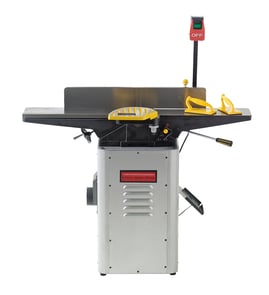

Can I use my jointer as a planer?
No. On the Craftsman 351217130 13" jointer/planer, the jointer function is for flattening one face (and straightening an edge), while the planer function is for making the opposite face parallel and bringing the board to a consistent thickness. Use each mode for its intended job.
What each tool does (and why it matters)
A jointer and a thickness planer solve different problems, and swapping roles usually creates unsafe cuts and inaccurate results.
| Function | What it produces | Typical use case |
|---|---|---|
| Jointer | One flat face (or one straight edge) | Remove twist, cup, or bow on one face before planing |
| Thickness planer | Two parallel faces at a set thickness | Bring lumber to final thickness after one face is flat |
Why it matters
If you try to “plane” on the jointer, you can end up with a board that is smooth but still not parallel in thickness. That leads to poor joinery, rocking parts, and extra sanding.
The correct workflow for flat, parallel lumber
We recommend this sequence for most boards:
- Joint one face until it is flat.
- Joint one edge square to the flattened face (if you need a straight reference edge).
- Plane the opposite face in light passes until it is parallel.
- Alternate faces when removing a lot of material to help keep the board stable.
- Make a test cut and verify thickness before running your “good” stock.
The operating limits and safety steps for planing (including unplugging before adjustments and avoiding overly deep cuts) are covered in the owner's manual.
Planer-specific limits to follow on this model
From the Craftsman 351217130 planer guidance, stay within these common constraints to reduce kickback and blade damage:
- Do not plane boards shorter than 15 inches.
- Keep stock within the machine’s capacity (up to 13 inches wide).
- Use lighter cuts on wide boards and hardwoods.
- Do not plane dirty lumber; grit and small stones dull blades fast.
- Remove nails and staples before planing.
Quick troubleshooting if results look “wavy” or uneven
If the planer output is not consistent, check these basics first:
- Feed direction with the grain (tear-out often looks like chatter).
- Depth of cut (too deep can stall the feed and overheat the motor).
- Blade alignment and secure mounting.
- Clean, waxed base cover (non-silicone) for smoother feeding.
Last updated: February 2026
Is a planer worth it without a jointer?
Yes. A planer is still worth owning without a jointer, but it will not flatten a twisted or cupped board by itself. With your Craftsman 351217130 13" jointer/planer, you get the best results when you first create one flat face (jointer or a sled method) and then plane the opposite face parallel. See the owner's manual for safe feeding direction and setup.
What a planer can and cannot do
A thickness planer is designed to make boards uniform thickness; it references the face riding on the bed.
- Can do: make the top face parallel to the bottom face
- Can do: clean up rough-sawn lumber in light passes
- Cannot do: reliably remove twist, cup, or bow without a flat reference face
- Cannot do: safely handle severely warped stock that can jam or kick back
If you do not have a jointer: practical options
You can still get flat, stable stock by creating a flat reference face first.
- Use a planer sled with shims/hot glue to support the board, then plane one face flat
- Use a hand plane to knock down high spots, then plane to thickness
- Use a router flattening jig for wide slabs, then plane for finish passes
- Start with S4S lumber (already surfaced) and use the planer for final thicknessing
Setup and safety notes that matter on the 351217130
Our manual guidance is consistent with standard planer safety: feed against cutter rotation, feed with the grain when possible, and avoid short stock.
| Item | What we recommend | Why it matters |
|---|---|---|
| Board condition | At least one reasonably flat face before planing | Reduces snipe, chatter, and jamming risk |
| Cut depth | Light passes | Protects blades and improves finish |
| Minimum length | Do not plane boards under 15 inches | Helps prevent splitting and kickback |
| Feed technique | Let the rollers pull the board; do not push/pull | Prevents binding and uneven cuts |
Why it matters
A jointer (or a sled method) establishes the first flat face; the planer then makes the second face flat and parallel. That two-step process is what turns rough lumber into straight, glue-ready stock.
Last updated: February 2026
Is there a jointer planer combo?
Yes. A jointer-planer combo is a single woodworking machine that combines a jointer (to flatten and square an edge/face) with a thickness planer (to bring boards to a consistent thickness). Your Craftsman model 351217130 is a 13-inch thickness planer; many shops pair a planer with a separate jointer, or choose a true combo machine to save space.
What a combo machine does (and why it is different)
A true jointer-planer combo gives you both operations in one footprint. Your Craftsman 351217130 is designed for thickness planing only; the manual notes that a thickness planer works best when lumber already has at least one flat face, which is typically created with a jointer or surface planer first (see the owner's manual).
- Jointer function: flattens one face and squares one edge
- Planer function: makes the opposite face parallel and brings stock to final thickness
- Combo benefit: one machine, shared cutterhead, less floor space
- Tradeoff: changeover time between jointer and planer modes
How to decide: combo vs separate machines
Use this quick comparison to match your workflow.
| If you mostly need... | Best fit | Why |
|---|---|---|
| Consistent thickness from already-flat stock | Thickness planer (like 351217130) | Fast, straightforward thicknessing |
| Flattening warped/twisted boards first | Jointer (or jointer-planer combo) | Creates the reference flat face |
| Space savings in a small shop | Jointer-planer combo | One footprint for both tasks |
| Maximum convenience with no changeover | Separate jointer + planer | No switching between modes |
Practical tips if you keep your 351217130 and add a jointer
The manual guidance for this planer aligns with standard milling practice: flatten first, then thickness.
- Joint one face flat, then joint one edge square
- Plane with the jointed face down to make the top face parallel
- Feed with the grain when possible to reduce tear-out
- Avoid dirty lumber and remove nails or staples to protect blades
- Do not stand directly in line with the board to reduce kickback risk
Why it matters
A planer alone cannot reliably “flatten” a twisted board; it tends to follow the existing warp. Starting with a flat reference face (from a jointer or combo machine) helps your Craftsman 351217130 produce accurate thickness and a better surface finish.
Last updated: February 2026
What is a jointer called in the UK?
In the UK, a woodworking tool that North American woodworkers call a jointer is most commonly called a planer (often “surface planer”). On your Craftsman 351217130 13" jointer/planer, that term refers to the function that flattens one face and squares an edge before thickness planing.
Quick terminology guide (UK vs North America)
- UK “planer” / “surface planer”: North American jointer (flattens a face, straightens an edge)
- UK “thicknesser”: North American thickness planer (makes boards a consistent thickness)
- “Jointer/planer” combo: A machine that can do both surface planing and thickness planing
| Task you are doing | Common UK term | Common North America term |
|---|---|---|
| Flatten one face of a board | Surface planing | Jointing |
| Straighten and square an edge | Edge jointing | Jointing |
| Make board uniformly thick | Thicknessing | Thickness planing |
Why the name difference matters
Using the right term helps you match the correct setup and safety steps. For example, the thickness planing function on the Craftsman 351217130 relies on automatic feed; we recommend letting the feed rollers pull the board through rather than pushing or pulling it.
Safety reminders for either term
These basics apply whether you call it a planer, surface planer, jointer, or thicknesser:
- Turn the switch off and unplug the tool before adjusting or replacing parts.
- Keep guards installed and secure; keep hands clear of moving parts.
- Let the cutterhead come to full speed before cutting.
- Feed with the grain when possible; avoid dirty boards, nails, and staples.
- Stand out of the line of feed to reduce kickback risk.
For model-specific operating limits and setup details (including minimum board length guidance and depth-of-cut cautions), use the 351217130 owner's manual.
Last updated: February 2026