Installation guide
 Owner’s manual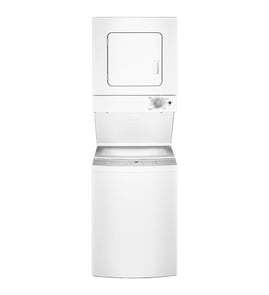


How many years should a GE washing machine last?
A GE washer typically lasts 10 to 14 years. For the washer in your GE GUD27GSSM0WW stacked laundry center, regular care like using the right detergent amount, keeping loads balanced, and replacing water hoses every 5 years helps you reach that expected lifespan (or longer). See the GUD27GSSM0WW owner's manual for model-specific care steps.
What affects washer lifespan the most
These factors have the biggest impact on how long a GE washer lasts:
- Load size and balance: frequent overloading increases wear on the drive system and tub support
- Detergent use: too much detergent (especially with soft water) can cause residue and extra strain
- Water supply hoses: aging hoses can leak; GE recommends replacing them every 5 years
- Moisture control: leaving the lid open after washing helps the interior dry out
- Usage frequency: multiple loads per day shortens life compared to light weekly use
Maintenance checklist we recommend (simple, high impact)
Use this routine to protect the washer portion of the GUD27GSSM0WW laundry center:
- Replace fill hoses on a 5-year schedule
- Turn off water faucets when not in use (helps reduce leak risk)
- Measure detergent carefully; reduce detergent for soft water or small loads
- Wipe spills promptly and clean the basket with a soft cloth and mild detergent
- Leave the lid open after cycles so moisture can evaporate
Quick reference: lifespan expectations
| Item | Typical lifespan | What usually ends it early |
|---|---|---|
| GE top-load washer (like many laundry centers) | 10 to 14 years | overloading, poor leveling, excess detergent, neglected hoses |
| Water supply hoses | 5 years | age-related cracking, bulging, leaks |
Why it matters
A washer that is maintained well runs more efficiently, leaks less often, and avoids premature wear on high-cost components like the drive system and control board. Small habits (detergent, hoses, ventilation) make the biggest difference.
Last updated: February 2026
How to determine GE washer model?
For the GE GUD27GSSM0WW stacked laundry center, the model and serial tag is located inside the dryer door opening. Open the dryer door and look around the door frame area for the rating label; write down the model and serial exactly as shown.
Where to look on this laundry center
- Open the dryer door fully
- Check the door opening frame (cabinet front) for a sticker or metal tag
- Look for fields labeled Model and Serial
- Copy the full model number (letters and numbers) exactly
- Take a clear photo of the tag for future parts ordering
What the tag information is used for
| What you need | Why it matters | Example for this page |
|---|---|---|
| Model number | Ensures parts fit your exact design revision | GUD27GSSM0WW |
| Serial number | Helps date the unit and match production changes | (varies by unit) |
| Brand | Confirms correct parts catalog | GE |
Tips to avoid common mix-ups
- Use the full model number, not just “GUD27”
- Do not use numbers from the control panel graphics; use the rating label only
- If the label is worn, a flashlight and a phone camera zoom usually makes it readable
Why it matters
GE laundry centers often share similar-looking controls across multiple model families. Using the exact model number from the rating label helps us match the correct diagrams and parts list, so you do not order the wrong belt, lid lock, or control.
For more location details and operating basics, check the GUD27GSSM0WW owner’s manual.
Last updated: February 2026
What is the most common problem with a GE dryer?
For the GE GUD27GSSM0WW stacked laundry center, the most common dryer complaint is poor drying or no heat caused by restricted airflow (lint buildup, kinked duct, blocked outside damper) or a simple power supply issue (tripped breaker). Start by checking venting and the home breakers.
Quick checks we recommend first
- Clean the lint screen before every load.
- Inspect the exhaust duct for kinks, crushing, or heavy lint buildup.
- Confirm the outside wall damper opens freely.
- Check the house breaker panel; many electric dryers need two breakers/fuses.
- If gas model: confirm the gas shutoff valves are fully open.
What the symptoms usually point to
| Symptom | Most common cause | What to do next |
|---|---|---|
| Dryer tumbles but won’t heat | One breaker tripped or fuse blown; airflow restriction | Reset both breakers, then verify venting per the GUD27GSSM0WW installation guide |
| Clothes take too long to dry | Obstructed ducting; lint screen full; load too large | Clean lint screen, shorten/straighten vent run, reduce load size |
| Dryer won’t start | Not plugged in; breaker tripped | Verify power at outlet and reset breakers |
| Shaking or noise | Unit not level; normal vibration | Level the unit and confirm stable footing |
Parts that commonly get replaced when the dryer won’t tumble
If airflow and power check out, a no-tumble condition often comes down to a worn belt or drum support parts.
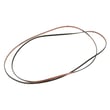
- Dryer drum belt WE03X29897 (broken or stretched belt)
- Drum support wear items (glides, felt seals, bearings)
Why it matters
Restricted venting does more than slow drying; it can also cause overheating, inconsistent drying times, and repeated shutdowns. Following the venting guidance in the installation instructions helps restore performance and reduces strain on components like the drive motor and belt.
Last updated: February 2026