Installation guide
 Owner’s manual
 Error Codes



What is the downside of an induction cooktop?
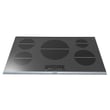
The main downsides of an induction cooktop like the Bosch NIT8668SUC are cookware compatibility (it must be ferromagnetic), possible buzzing or fan noise, and the fact that it will not cook during a power outage. Some homes also notice radio or TV interference. See the NIT8668SUC owner's manual for cookware and safety details.
Common downsides (what most owners notice)
- Cookware must be magnetic: cast iron, enameled steel, and many stainless steel pans work; aluminum, copper, and some stainless do not.
- Noise can be normal: you may hear a hum/buzz from the pan and a cooling fan running under the cooktop.
- Learning curve: power changes are fast, so simmering and low-heat cooking can feel different than radiant electric or gas.
- No cooking without electricity: induction needs power to create the electromagnetic field that heats the pan.
- Possible interference: induction can interfere with radio/TV reception in some setups.
- Medical device caution: people with pacemakers or similar devices should use extra caution near an operating induction cooktop.
Quick compatibility check: will my pans work?
Use this simple test before assuming the cooktop is the problem.
| Test | What to do | What it means |
|---|---|---|
| Magnet test | Put a magnet on the pan bottom | Strong stick = induction-ready |
| Flatness | Check for a flat, solid base | Better heating and fewer “pan not detected” issues |
| Size match | Use a pan base close to the element size | Less wasted energy, steadier performance |
Why it matters
Induction heats cookware using an electromagnetic field, so the cooktop depends on the pan’s magnetic properties and proper airflow for cooling. Keeping the underside area clear (especially if there is a drawer below) helps the cooling fan do its job and supports reliable operation.
Last updated: January 2026
How do I reset my induction cooktop?
To reset your Bosch NIT8668SUC induction cooktop, we recommend a full power reset: switch the cooktop off, then turn the circuit breaker off for several minutes and restore power. After power is back, turn the cooktop on with the On/Off touch key and confirm the panel lock is not active.
Quick reset steps (power cycle)
- Touch the On/Off touch key to switch the cooktop off.
- Turn OFF the cooktop circuit breaker.
- Wait 1 to 10 minutes.
- Turn the breaker ON.
- Touch the On/Off touch key to power the cooktop back up.
If the controls seem “locked” after reset
This model uses a Panel Lock feature and a short wipe protection mode that can make the touch controls seem unresponsive.
- Look for the Ú indicator above the Panel Lock key.
- If it is lit, touch the Panel Lock key to unlock.
- If wipe protection was activated, it locks the control panel for about 35 seconds.
Reference: NIT8668SUC user manual
Common reasons an induction zone will not heat (not a failure)
Induction cooking requires compatible cookware and proper detection.
- Use ferromagnetic cookware (cast iron, enameled steel, or induction-ready stainless steel).
- Center the pan; the magnetic area on the pan base should match the element size.
- If there is no cookware, the heat setting display can blink and the zone may switch itself off.
- Make sure the cooktop is turned on, then select the element and set a power level using the number keys.
What to check next (fast troubleshooting)
| Symptom | Most likely cause | What to do |
|---|---|---|
| Touch keys do nothing | Panel lock or wipe protection | Unlock Panel Lock; wait 35 seconds if wipe protection is active |
| Element display blinks | Cookware not detected | Try a magnetic pan; reposition pan |
| Cooktop turns off shortly after turning on | No power level set in time | Select the element and set power promptly |
| Repeated control issues | Moisture or residue on touch panel | Clean and dry the control area, then retry |
Why it matters
A reset clears minor electronic glitches, but induction cooktops also “self-protect” by locking controls during cleaning and by shutting off zones when cookware is not detected. Those normal behaviors can look like a failure until you know what to check.
Last updated: January 2026
Is it worth repairing an induction cooktop?
Yes, repairing a Bosch induction cooktop like model NIT8668SUC is usually worth it when the glass is intact and the problem is limited to an electrical module, cooling fan, or user interface. Induction cooktops are efficient and responsive, so a targeted repair often restores full performance.
When repair makes sense
Repair is a strong choice when the cooktop still has a solid cooking surface and the issue is isolated (for example, dead controls, a single zone not heating, or intermittent power).
- The cooktop glass is not cracked or broken
- One or more elements do not detect cookware, but others work
- Controls are unresponsive or erratic (often a user interface issue)
- The unit powers on but shuts down or overheats (cooling airflow problem)
- You want to keep a matching Bosch kitchen setup
For model-specific safety and operating guidance, follow the NIT8668SUC owner’s manual.
When replacement is the better call
If the cooking surface is damaged, replacement is typically the better path because the manual warns not to cook on a broken cooktop due to electric shock risk.
- The glass top is cracked, chipped, or shattered
- There is visible arcing, burning smell, or melted wiring
- Multiple zones fail and the repair points to major power electronics
- The cooktop has repeated shutdowns even after cleaning vents and verifying installation clearances
Common repair parts for this model
These are examples of parts we commonly see involved in induction cooktop repairs for NIT8668SUC:
| Symptom | Likely area | Example part for NIT8668SUC |
|---|---|---|
| Touch controls not responding | Control electronics | Cooktop user interface board 11019144 |
| Random shutdowns, heat errors | Power electronics | Power module 11009407 |
| Noisy operation, overheating | Cooling system | Fan 12016115 |
Why it matters
Induction cooking heats the cookware directly (not the glass), which saves energy and improves heat control. When the failure is limited to a board or fan, repairing preserves those benefits and avoids the disruption of a full cooktop replacement.
Last updated: January 2026