Installation guide
 Owner’s manual
 Error Codes



Can you adjust the height of a Frigidaire refrigerator?
Yes. On the Frigidaire GRFC2353AF0 bottom-mount refrigerator, we adjust height by raising or lowering the front leveling legs (anti-tip legs) and, if needed, fine-tuning door height at the lower hinges. This helps the cabinet sit stable and the doors seal correctly. See the GRFC2353AF0 installation guide for the exact procedure.
How to adjust the refrigerator height (cabinet leveling)
We use the adjustable front rollers and anti-tip legs to level the cabinet.
- Slightly open the freezer drawer to access the anti-tip legs at the bottom front.
- Lower both anti-tip legs until they touch the floor.
- To raise the unit: turn the leg clockwise (viewed from the top).
- To lower the unit: turn the leg counter-clockwise (viewed from the top).
- Confirm the cabinet is stable and not rocking.
- Check that both doors are bind-free and the seals touch the cabinet on all four sides.
How to adjust door height (final alignment)
If the cabinet is level but the doors are uneven, we adjust the refrigerator door height at the lower hinge.
- Open the freezer drawer to access the lower hinges.
- Insert a 6 mm Allen wrench into the lower hinge shaft (typically included with the unit).
- To raise the door: turn the adjustment screw clockwise (viewed from below the door).
- To lower the door: turn the adjustment screw counter-clockwise (viewed from below the door).
Quick reference: which way to turn?
| What you are adjusting | To raise | To lower |
|---|---|---|
| Front leveling leg (viewed from top) | Clockwise | Counter-clockwise |
| Door height screw (viewed from below door) | Clockwise | Counter-clockwise |
Why it matters
Proper height and leveling keeps the doors closing on their own, improves gasket sealing, reduces frost and moisture issues, and helps the refrigerator cool efficiently. For model-specific notes and clearances, use the GRFC2353AF0 owner’s manual.
Last updated: February 2026
What is a bottom mount fridge freezer?
A bottom-mount fridge freezer is a refrigerator design where the fresh-food section is on top (at eye level) and the freezer is a pull-out drawer or compartment on the bottom. On the Frigidaire GRFC2353AF0, this layout makes everyday refrigerated items easier to reach while keeping frozen foods below.
How a bottom-mount refrigerator is set up
In most bottom-mount refrigerators (including Frigidaire models like GRFC2353AF0), you will see:
- Fresh-food compartment on top with shelves and crisper drawers
- Freezer compartment on the bottom, typically a sliding drawer with baskets
- Separate temperature controls for refrigerator and freezer zones
- Doors and seals designed to close tightly when the cabinet is level
For model-specific features, operating tips, and control explanations, use the GRFC2353AF0 use and care manual.
Why people choose bottom-mount vs top-mount
Bottom-mount designs are popular because they prioritize the items most households use most often.
| Design | Fresh food access | Freezer access | Best for |
|---|---|---|---|
| Bottom-mount | Eye level | Lower drawer | Frequent fresh-food use |
| Top-mount | Lower shelves | Eye level | Frequent freezer use |
| Side-by-side | Mid level | Mid level | Narrow door swing spaces |
Installation and door-closing basics that matter with bottom-mount units
Bottom-mount refrigerators rely on proper leveling so the doors close and seal correctly. During installation, we follow these common requirements:
- All four cabinet corners rest firmly on the floor
- Front of the refrigerator is slightly elevated to help doors self-close
- Doors align with each other and seals contact the cabinet on all sides
- Adequate clearance for airflow (typically 3/8 inch at sides and top, 1 inch at the back)
Those steps and the door-height adjustment procedure (using a 6 mm Allen wrench at the lower hinge) are covered in the GRFC2353AF0 installation guide.
Why it matters
A bottom-mount layout improves day-to-day convenience, but it also makes door alignment and sealing especially important. A door that does not seal can cause temperature swings, frost, and longer run times.
Last updated: February 2026
What is the most common problem with Frigidaire refrigerators?
Cooling performance and ice-and-water issues are the most common Frigidaire refrigerator complaints; that includes warm fresh-food temps, freezer frost buildup, slow water dispensing, and low ice production. On the GRFC2353AF0, the quickest wins are airflow, door sealing, and water supply and filter checks (see the GRFC2353AF0 use and care manual).
Most common symptoms we see
- Refrigerator section not cold enough or temperature swings
- Freezer frost buildup or moisture inside the cabinet
- Ice maker not making enough ice
- Water dispenser slow or not dispensing
- Doors not closing or sealing consistently
Quick checks that fix many “common problems”
- Confirm doors close and seal: Close doors gently and make sure the refrigerator is level and not hitting a wall or cabinet.
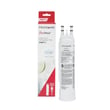
- Check the water filter age and flow: If water dispenses slowly or the filter is 6 months old or older, replace it (a clogged filter is a top cause of slow water and low ice). Consider the Frigidaire refrigerator water filter FPPWFU01.
- Inspect the water line: Look for kinks and verify the shutoff valve is fully open.
- Watch for ice maker bin and bail arm issues: Make sure the ice bin is pushed fully to the rear so it does not block the bail arm.
- Understand “runs a lot” behavior: This model uses a variable speed compressor that normally runs most of the time except during defrost.
Common causes and what they usually affect
| Likely cause | What you notice | Typical fix |
|---|---|---|
| Clogged water filter | Slow water, low ice | Replace filter; flush 10-12 glasses |
| Kinked/restricted water line | Low ice production | Straighten line; open valve |
| Door not sealing or unit not level | Frost, moisture, warm temps | Level unit; correct door alignment |
| Normal defrost/variable speed operation | Long run times | No repair needed |
Why it matters
Most “common problems” start small (restricted water flow, poor door sealing, blocked airflow) but can lead to temperature instability, frost buildup, and food spoilage if ignored.
Last updated: February 2026
What is the life expectancy of a Frigidaire Gallery refrigerator?
A Frigidaire Gallery refrigerator typically lasts 10 to 15 years. For a Frigidaire bottom-mount refrigerator like GRFC2353AF0, consistent maintenance (clean airflow, good door sealing, and on-time filter changes) helps you reach the high end of that range.
Typical lifespan and what affects it
Most refrigerators wear out from heat stress, poor airflow, or moisture and ice buildup. These factors have the biggest impact:
- Dirty condenser area reducing cooling efficiency
- Door gaskets leaking cold air (longer run times)
- Ice maker and dispenser use (more moving parts)
- Power outages and voltage spikes
- Skipped water filter changes that restrict water flow
Maintenance schedule we recommend
Use this as a simple baseline; follow the exact care steps in the GRFC2353AF0 owner's manual.
- Every 6 months: Replace the water filter (Frigidaire recommends at least every 6 months)
- Every 6 to 12 months: Clean dust from the condenser area and vents
- Monthly: Check door seals for gaps, tears, or sticky spots
- As needed: Level the refrigerator so doors close fully
Filter timing at a glance
| Item | Typical interval | Why it matters |
|---|---|---|
| Water filter | 6 months | Maintains water flow and taste; reduces strain on the water system |
| Door gasket check | Monthly | Prevents warm air leaks and frost buildup |
| Condenser cleaning | 6 to 12 months | Helps the compressor run cooler and longer |
Parts that commonly influence longevity
If you notice warm temps, frost, or long run times, these parts are frequent culprits:
- Evaporator fan motor (moves cold air through the compartments)
- Temperature sensor (thermistor) readings drifting out of range
- Door gaskets losing flexibility
- Water filter restricting flow
If you are replacing the filter, match the correct cartridge style for this platform; the Frigidaire refrigerator water filter FPPWFU01 is a common replacement option listed for GRFC2353AF0.
Why it matters
A refrigerator that runs longer to hold temperature racks up compressor hours faster. Keeping airflow clear, seals tight, and filters fresh reduces run time, stabilizes temperatures, and extends service life.
Last updated: February 2026
How big is a 23 cu ft refrigerator?
A 23 cu. ft. refrigerator is typically about 36 inches wide, 68 to 71 inches tall, and 28 to 34 inches deep depending on whether it’s counter-depth or standard-depth. For your Frigidaire GRFC2353AF0 bottom-mount refrigerator, confirm the exact cabinet and door-swing clearances in the GRFC2353AF0 installation guide.
Typical size ranges you can plan around
Most 23 cu. ft. French door and bottom-mount refrigerators fall into these planning ranges:
- Width: ~35 3/4 to 36 inches
- Height: ~68 to 71 inches (to top of case or hinge area varies)
- Depth (cabinet only): ~28 to 30 inches
- Depth (with doors/handles): often ~33 to 36+ inches
- Recommended installation clearance: allow airflow space and room for connections
The GRFC2353AF0 installation guidance also calls out clearances for installation and air circulation (sides/top and rear), which affects how “big” it needs to be in the opening. See the GRFC2353AF0 installation guide.
Counter-depth vs standard-depth (why depth varies)
Depth is the dimension that changes the most.
| Style | What it means | What you’ll notice |
|---|---|---|
| Counter-depth | Shallower cabinet designed to sit closer to cabinets | Less “stick out” into the kitchen |
| Standard-depth | Deeper cabinet for maximum storage | More capacity per inch of width |
Why it matters
Getting the size right prevents common install problems like doors not opening fully for drawer access, poor air circulation, and difficulty connecting the water line for the ice maker and dispenser. The installation instructions also specify planning for full door opening to access drawers and freezer baskets.
Quick measuring checklist before you buy or move it
- Measure the opening width, height, and depth in three places
- Confirm door swing clearance for fully opening both doors
- Plan a path through doorways and hallways (remove doors if needed)
- Leave space for rear clearance and the water line loop
- Verify electrical and water supply access before positioning
Last updated: February 2026
How to force a Frigidaire refrigerator into defrost mode?
On the Frigidaire GRFC2353AF0 bottom-mount refrigerator, the defrost cycle is automatic and typically runs periodically for about 30 minutes; we use the control panel and diagnostic steps in the GRFC2353AF0 owner's manual to access any available service tests and confirm the unit is actually defrosting.
What we recommend before trying any “forced defrost” steps
- Confirm the compressor is off because the refrigerator is in a normal defrost cycle (this can look like a cooling failure for up to about 30 minutes).
- Check the temperature display for any error message or code.
- Listen for normal defrost sounds (hissing/sizzling during defrost; popping after defrost).
- Make sure the freezer control is not set to “OF”.
- Power-cycle only if needed: unplug for 2 minutes, then plug back in.
Using the controls and diagnostics (model-specific)
Frigidaire uses different key sequences across models, so we follow the GRFC2353AF0 control logic shown in the manual. For example, this model documents a 10-second press-and-hold for certain special modes (Sabbath Mode uses FZ- and FF+ together for 10 seconds). Use the same “press-and-hold” approach only as directed in the manual’s service/controls section.
If your display is flashing an error or shows a code, use the Frigidaire refrigerator error codes reference to identify what the control is reporting before replacing parts.
Quick reference: what “defrost mode” looks like
| What you notice | What it usually means | What to do |
|---|---|---|
| Compressor not running | Normal defrost cycle | Wait up to ~30 minutes |
| Hissing/sizzling | Water hitting defrost heater | Normal during defrost |
| Popping after | Parts cooling after heater shuts off | Normal |
| Error on display | Control detected a performance problem | Check code guidance, then service |
Why it matters
Forcing defrost when it is not needed can waste time and can mask the real issue (like an evaporator fan problem, a sensor issue, or an airflow restriction). Confirming normal defrost behavior first helps you troubleshoot the right system.
Last updated: February 2026