Error Codes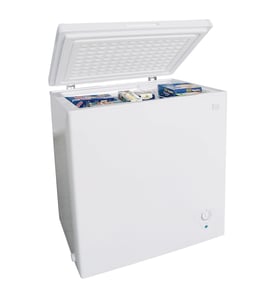



What is the life expectancy of a chest freezer?
A Kenmore chest freezer like model 2539135180 typically lasts 12 to 16 years, and 10 to 20 years is a normal overall range when it is kept clean, level, and in a well ventilated location. Most early failures are tied to heat, dirty condenser areas, or lid seal problems.
Typical lifespan and what affects it
- Room temperature and ventilation: Hot garages and tight enclosures make the compressor work harder.
- Clean condenser area: Dust buildup raises operating temperature and shortens compressor life.
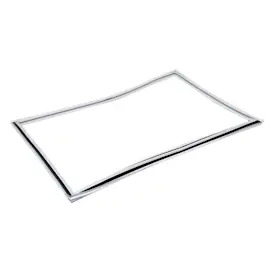
- Lid gasket condition: A poor seal causes long run times and frost buildup.
- Power quality: Frequent outages or low voltage can stress the compressor start components.
- Usage habits: Fewer lid openings and organized storage reduce warm air intrusion.
Quick maintenance checklist (2 to 4 times per year)
- Vacuum dust from the exterior cabinet vents and condenser area.
- Confirm the freezer is level so the lid closes evenly.
- Wipe the lid gasket with mild soap and water; dry fully.
- Defrost when frost reaches about 1/4 inch thick.
- Keep some space around packages so air can circulate.
Common “life extender” fixes vs bigger repairs
| Symptom | Often a maintenance issue | More likely a repair issue |
|---|---|---|
| Runs a lot | Dirty condenser area, warm location | Temperature control problem (thermostat) |
| Frost builds quickly | Lid not sealing, frequent openings | Lid liner or cabinet air leak |
| Not cold enough | Overpacked, lid left ajar | Sealed system issue (compressor/refrigerant) |
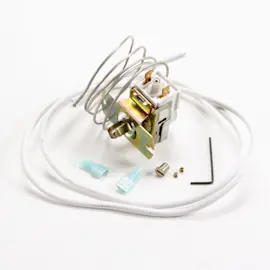
If temperature control is inconsistent, checking or replacing the temperature control is a common first step; for this model, see the thermostat 5304496560.
Why it matters
A chest freezer that runs longer than it should uses more electricity, builds frost faster, and puts extra wear on the compressor. Simple airflow and sealing checks often add years of reliable service.
Last updated: January 2026
How many cubic feet is my chest freezer?
We size a Kenmore chest freezer model 2539135180 by its usable interior volume (cubic feet). The exact cubic-foot capacity is typically listed on the model and serial tag or in product specs; if you do not have that, you can estimate it by measuring the inside and converting to cubic feet.
How to estimate cubic feet (quick method)
- Empty the freezer enough to measure the interior.
- Measure the inside:
- Width (left to right)
- Depth (front to back)
- Height (bottom to the underside of the lid)
- Convert to cubic feet:
- Cubic feet = (width x depth x height in inches) ÷ 1,728
- If you measure in feet: cubic feet = width x depth x height
Measurement tips that improve accuracy
- Measure the largest open interior box; do not include the lid thickness.
- If the compressor hump takes up space, measure the main cavity and subtract the hump volume.
- Round to the nearest 0.1 to 0.5 cu. ft.; most estimates land close enough for baskets and storage planning.
Typical chest freezer size ranges (for context)
| Chest freezer class | Typical capacity | Typical use |
|---|---|---|
| Compact | 3 to 7 cu. ft. | Apartment, overflow |
| Medium | 7 to 14 cu. ft. | Family storage |
| Large | 14 to 25+ cu. ft. | Bulk buying, hunting |
Why it matters
Knowing cubic feet helps us match the right storage accessories and troubleshoot performance issues. For example, an overfilled freezer can restrict airflow and make temperatures less consistent.
Parts that often relate to storage and temperature control
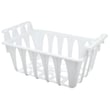
- Basket 216848200 for organizing and improving access
- Thermostat 5304496560 if temperatures are too warm or too cold
- Frost indicator 216140400 to help monitor frost buildup
Last updated: January 2026
Where is the model number on a chest freezer?
On the Kenmore chest freezer model 2539135180, the model number is printed on a rating label that’s typically inside the cabinet near the top rim, or on an exterior panel such as a side or back. We use that exact model number to match the correct parts.
Common places to check on a chest freezer
Look for a paper or foil label in these spots:
- Inside the freezer on a side wall (often near the upper edge)
- Inside the freezer near the lid opening or top rim
- On the outside back panel
- On an outside side panel
- Near the compressor area access panel (rear lower section)
What the label usually looks like
The model label is usually a small rectangle that includes the model number and other details.
| Label detail | What it’s used for |
|---|---|
| Model number (example: 2539135180) | Ensures parts fit your exact freezer |
| Serial number | Helps identify production run/version |
| Electrical ratings | Confirms voltage/amps for safe service |
Tips if you’re not finding it right away
- Use a flashlight and check along the top rim just under the lid.
- Wipe frost or dust off the inside walls so the print is readable.
- If the label is damaged, check for a second label on the back or side.
- Once you find it, write it down exactly as shown (all digits matter).
Why it matters
Kenmore freezers can look similar across multiple model series, but parts like a thermostat, basket, or lock can vary by model. Using the correct model number helps us match items like the thermostat 5304496560 or the basket 216848200 to your freezer.
Last updated: January 2026
What are the common chest freezer problems?
Common problems on the Kenmore 2539135180 chest freezer include not freezing or warming up, heavy frost buildup, the compressor running too long, water inside the cabinet, and unusual noises. Most issues trace back to airflow restrictions, dirty condenser areas, lid seal leaks, or a failing temperature control such as the thermostat 5304496560.
Quick symptoms and likely causes
- Too warm / not freezing: control set too warm, poor lid seal, blocked airflow from overpacking, dirty condenser area, sealed-system issue
- Too cold / items freezing solid: control set too cold, temperature control sticking
- Excessive frost: lid left open, weak gasket seal, humid room air entering frequently
- Runs constantly: warm room, frequent openings, heavy load of unfrozen food, dirty condenser area, control or refrigerant problem
- Water in bottom: defrost meltwater not managed, lid left open causing heavy frost then melt, cabinet drain issue (if equipped)
- Clicking, buzzing, rattling: compressor start components, fan-less vibration, tubing or panel vibration, items/baskets vibrating
What we recommend checking first (in order)
- Temperature setting: set to a mid-range position and allow 24 hours to stabilize.
- Lid seal and alignment: close a dollar bill in several spots; consistent drag indicates a good seal.
- Loading and airflow: avoid packing food tight against interior walls; leave space for cold air circulation.
- Condenser area cleanliness: vacuum dust from vents and the compressor area (unplug first).
- Basic electrical checks: confirm the outlet is solid and the cord is not damaged; use a meter if needed.
Parts that commonly relate to these problems
| Symptom | Part that often relates | What it does |
|---|---|---|
| Temperature swings, too warm, too cold | Thermostat 5304496560 | Senses temperature and cycles the compressor |
| Poor cooling after long run time | Filter 5303305677 | Helps keep the sealed system clean and dry |
| Lid will not stay shut or feels loose | Latch catch 216117701 | Helps the lid close securely |
Why it matters
A chest freezer that runs warm can spoil food quickly, and one that runs constantly wastes energy and shortens compressor life. Catching simple issues like airflow, lid sealing, and temperature control early prevents bigger repairs.
Last updated: January 2026