Owner’s manual
 Error Codes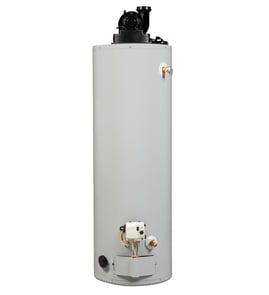





How much should I expect to pay for a new water heater installed?
For a new water heater installed, most homeowners pay about $600 to $2,500 for a traditional tank unit and about $1,400 to $3,900 for a tankless unit; costs go up when venting, gas piping, permits, or code upgrades are needed. For your American N50T122-403 gas water heater, installation complexity (especially venting and combustion air requirements) is a major cost driver; see the N50T122-403 owner’s manual for installation requirements.
What drives the installed price
- Tank type and size: larger tanks typically cost more to buy and to move into place.
- Venting changes: shorter, simpler vent runs usually cost less than long runs with multiple elbows.
- Gas line work: adding or resizing gas piping increases labor and materials.
- Combustion air needs: tight or confined spaces may require added air openings or ducting.
- Permits and inspections: common for gas water heater replacements.
- Disposal and haul-away: often billed separately.
Typical installed cost ranges (quick comparison)
| Water heater type | Typical installed total | When it trends higher |
|---|---|---|
| Tank (gas or electric) | $600 to $2,500 | venting changes, gas line work, permits |
| Tankless | $1,400 to $3,900 | conversions, added venting, higher labor |
Model-specific installation items that affect labor
Your N50T122-403 is a Category I, non-direct vented gas water heater; installers often spend extra time verifying code-compliant venting and adequate combustion air.
- Place the heater to minimize vent length and elbows.
- Locate it near existing gas piping to reduce new pipe runs.
- Confirm the space provides adequate combustion air (confined spaces need dedicated openings).
- Install it where a future leak is less likely to damage surrounding areas.
Why it matters
Installed price is not just the heater; it is the safety-critical work around gas supply, venting, and combustion air. Getting those right helps prevent nuisance shutdowns and protects the home.
Last updated: January 2026
How much should a 50 gallon gas water heater cost?
A 50-gallon gas water heater like American model N50T122-403 typically costs about $600 to $2,000+ for the unit, and about $1,000 to $3,000+ installed, depending on efficiency level, venting type, and local labor rates. Use the N50T122-403 owner's manual to confirm venting and gas requirements that can affect installed price.
What drives the price most
- Venting type: atmospheric vent units usually cost less than power-vent or direct-vent setups.
- Efficiency and features: higher efficiency, electronic controls, and diagnostics raise cost.
- Warranty length: longer warranties usually mean a higher purchase price.
- Gas line and vent modifications: resizing gas piping or changing venting materials adds labor and parts.
- Location and access: tight closets, attic installs, or code-required upgrades increase labor time.
Typical cost ranges (unit vs. installed)
| Type of 50-gallon gas water heater | Typical unit cost | Typical installed total |
|---|---|---|
| Standard atmospheric vent | $600 to $1,000 | $1,000 to $2,200 |
| Power vent or direct vent | $1,100 to $2,000+ | $1,800 to $3,000+ |
| High-efficiency/condensing (where applicable) | $1,500 to $2,500+ | $2,500 to $4,500+ |
Model-specific details that can change installed cost
Your N50T122-403 installation cost can jump if the installer needs to adjust combustion air, venting, or gas piping. The manual includes guidance on combustion air space sizing and gas pipe capacity selection, which often determines whether upgrades are needed.
- Confirm the gas type (natural gas vs. LP) and input rating on the data plate.
- Verify the space is unconfined vs. confined and meets combustion air requirements.
- Check whether the existing gas pipe diameter and run length support the BTU input.
Why it matters
A low unit price can turn into a high installed price if venting, combustion air, or gas piping needs changes. Matching the heater’s requirements up front helps avoid nuisance shutdowns, poor performance, and rework.
Last updated: January 2026
What is the average lifespan of a 50 gallon water heater?
A 50-gallon gas water heater like American model N50T122-403 typically lasts 8 to 12 years. With consistent maintenance (especially anode-rod inspections and periodic tank flushing) and good water quality, many units reach 12 to 15 years.
Typical lifespan ranges
Most 50-gallon tank-style water heaters fall into these real-world ranges:
- 8 to 12 years: typical service life for many households
- 12 to 15 years: common with regular maintenance and moderate water hardness
- 15+ years: achievable when the anode rod is kept in good shape and the tank is maintained
| What affects lifespan most | What you can do | What to watch for |
|---|---|---|
| Anode rod condition | Inspect and replace as needed | Rotten-egg odor, faster corrosion, leaks |
| Water quality (hard or softened) | Flush sediment; monitor corrosion | Rumbling/popping, reduced hot water |
| Temperature setting | Keep setpoint reasonable (often 120°F) | Overheating, scald risk, faster wear |
| Combustion air and installation environment | Keep area clear and ventilated | Sooting, poor flame, nuisance shutdowns |
Maintenance that extends tank life
The N50T122-403 manual calls out anode-rod inspection intervals that directly impact tank longevity.
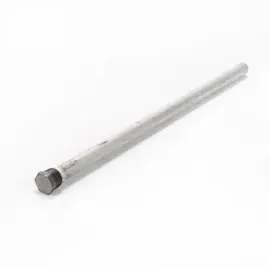
- Inspect the anode rod every 3 years under typical conditions
- Inspect the anode rod annually if you have artificially softened water
- Replace the anode rod when the rod diameter is mostly under 3/8 inch or the support wire is significantly exposed
- Keep combustibles and corrosive household chemicals away from the heater and air inlet
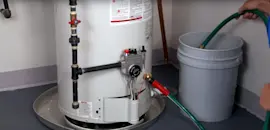
- Periodically flush the tank to reduce sediment buildup (frequency depends on water hardness)
For model-specific maintenance guidance and intervals, use the N50T122-403 owner’s manual.
Why it matters
A depleted anode rod allows the glass-lined tank to corrode faster; once the tank starts leaking, replacement is the practical fix. Staying ahead of anode wear is the single most effective way to get the full lifespan from a 50-gallon water heater.
Last updated: January 2026