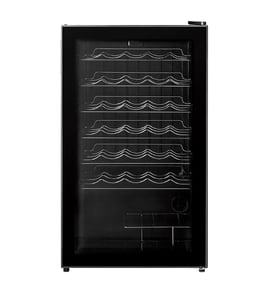

Is there a difference between a wine fridge and a wine cooler?
Yes. Most people use “wine fridge” and “wine cooler” interchangeably, but the practical difference is the feature set: a wine fridge is typically described as purpose-built for steadier, longer-term wine storage, while a wine cooler is often described as a simpler unit focused on chilling to serving temperature. For your Vinotemp VT-32TEDS, performance comes down to temperature stability, sealing, and ventilation.
These are the real-world features that separate “storage-focused” units from “chill-focused” units:
- Temperature stability (smaller swings protect flavor and aroma)
- Temperature range (wine-friendly vs. beverage-center cold)
- Vibration control (less disturbance helps sediment stay settled)
- Light protection (tinted glass, low-heat interior lighting)
- Door seal quality (gasket condition prevents warm air leaks)
- Airflow and ventilation (keeps the cooling system from struggling)
| What you want to do | Best-fit features | Term you’ll commonly see |
|---|---|---|
| Chill bottles for near-term drinking | Wider range, faster pull-down, flexible shelving | Wine cooler |
| Store wine for months to years | Tight control, low vibration, strong sealing | Wine fridge / wine refrigerator |
| Store mostly cans and beer | Colder setpoints, adjustable racks | Beverage cooler / beverage center |
- Keep it out of direct sun and away from heat sources
- Leave the recommended clearance for ventilation (especially if not built-in)
- Minimize long door openings to reduce temperature swings
- Clean the door gasket and confirm the door closes squarely
- Set a realistic target temperature (whites colder than reds)
Wine quality is most affected by temperature swings, warm air leaks, and vibration. The label on the door matters less than whether the cabinet holds a steady temperature and seals consistently.
For help confirming the exact model number from the rating label before you shop parts, use how to find your appliance model number (and what it means for parts).
Last updated: February 2026
What are the drawbacks of a wine fridge?
A wine fridge like the Vinotemp VT-32TEDS adds controlled storage, but the tradeoffs are cost, space, and upkeep. The most common drawbacks are higher purchase and operating costs than a standard fridge, plus noise, vibration, and occasional temperature or humidity swings that can affect long-term storage.
- Upfront cost: Wine and beverage coolers typically cost more per cubic foot than a standard refrigerator.
- Energy use: Running a dedicated compressor (or thermoelectric system) adds to your electric bill.
- Temperature stability limits: Frequent door openings, warm rooms, or poor airflow can cause wider temperature swings.
- Humidity control is basic: Many units do not actively manage humidity, so cork-friendly humidity can be harder to maintain.
- Noise and vibration: Compressors and fans can create a low hum; vibration can be noticeable in quiet rooms.
- Maintenance needs: Condenser cleaning, door gasket care, and drain/defrost checks help prevent performance issues.
| Feature | Wine fridge (VT-32TEDS type) | Standard refrigerator |
|---|---|---|
| Temperature range | Tuned for beverage and wine temps | Tuned for food safety temps |
| Vibration | Low, but not zero | Often higher and less controlled |
| Humidity support | Limited on many models | Not designed for cork storage |
| Repair complexity | Can be specialized | More common service parts |
- Place the cooler where it can breathe (avoid tight enclosures unless it is designed for built-in use).
- Keep the door seal clean and check for gaps that cause warm air leaks.
- Clean dust from vents and condenser areas on a regular schedule.
- Use stable shelving and avoid overloading to reduce vibration and improve airflow.
- If you suspect an electrical issue, use safe testing practices from our how to use a multimeter to test electrical parts video.
Wine is sensitive to heat, light, and vibration. If a cooler runs warm, cycles too often, or leaks air at the gasket, you can lose the main benefit of owning a dedicated wine fridge: steady storage conditions.
Last updated: February 2026
What does VT-32TEDS stand for in the states?
VT-32TEDS is the Vinotemp model number for this wine and beverage cooler in the United States; it identifies the exact design and parts configuration for the VT-32TEDS unit. It is not a state abbreviation or a reference to a university.
We use VT-32TEDS to match the right parts diagrams and replacement components for your Vinotemp wine cooler.
- VT: Vinotemp model series prefix
- 32: commonly used to indicate an approximate capacity class (often around 32 bottles, depending on layout)
- TEDS: a suffix that distinguishes the specific feature set and version (finish, controls, shelving, or internal configuration)
Using the full model number prevents mismatches, especially on items like the control board, temperature sensor, door gasket, fan motor, or interior light.
- Always match the full model number on the rating label
- Avoid using partial numbers (for example, “VT-32”) when searching
- If your cooler has a revision tag or serial number, keep it handy for cross-checking
Most wine and beverage coolers place the rating label in one of these spots:
- Inside the cabinet on a side wall
- Along the door frame area
- On the back exterior panel
- Near the compressor compartment opening
| Label location | What to look for | Why it helps |
|---|---|---|
| Inside cabinet wall | Model and serial | Best for exact parts match |
| Door frame | Model number | Easy to check quickly |
| Back panel | Model, electrical ratings | Helpful for electrical parts |
If you are confirming the exact characters in the model number before searching, use our guide: how to find your appliance model number (and what it means for parts).
Vinotemp model suffixes can change internal components even when the cooler looks the same from the outside; using VT-32TEDS keeps your parts search accurate.
Last updated: February 2026
What is the most common problem with wine coolers?
The most common problem we see with wine coolers (including the Vinotemp VT-32TEDS) is inconsistent temperature, meaning the cabinet runs too warm, too cold, or swings up and down. The usual causes are restricted airflow, dirty heat-exchange surfaces, a control/thermostat issue, or a fan that is not moving air correctly.
- Poor ventilation: blocked front grille or no clearance around the unit traps heat.
- Dust buildup: dirty condenser area makes the system work harder and cool unevenly.
- Door not sealing: a warped door, weak gasket seal, or frequent opening lets warm air in.
- Overloading: tightly packed bottles/cans can block internal airflow paths.
- Fan problems: evaporator or condenser fan noise, stopping, or weak airflow.
- Control/thermostat drift: setpoint says 55°F but actual cabinet temp is different.
- Confirm the set temperature and give the cooler 24 hours to stabilize after changes.
- Check clearances and airflow; keep vents unobstructed and avoid enclosing the unit without proper ventilation.
- Clean dust from the intake/grille area and any accessible condenser surfaces (unplug first).
- Test the door seal: close a thin sheet of paper in the door; if it slides out easily, the seal is leaking.
- Use a separate thermometer (placed mid-cabinet) to compare actual temperature vs. the display.
| Symptom | Most likely cause | Best first action |
|---|---|---|
| Runs warm | Ventilation, dirty condenser, fan issue | Improve airflow; clean dust; listen for fan |
| Runs too cold/freezes | Control/thermostat issue | Raise setpoint; verify with thermometer |
| Big temperature swings | Door seal, overloading, airflow blockage | Reduce load; check gasket; improve circulation |
| Water inside | Drain path blocked or high humidity | Check for blockage; reduce door openings |
Wine and beverages store best when temperature is stable. Even if the average temperature seems close, frequent swings can affect taste, carbonation, and long-term storage quality.
If you plan to do electrical checks (like verifying a fan motor or control power), we recommend using a safe testing method such as the steps in how to use a multimeter to test electrical parts video.
Last updated: February 2026