


How do you know if your vacuum motor is burnt out?
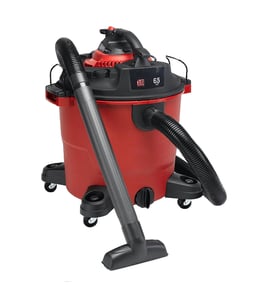
On the Craftsman 113178000 8-gallon home-n-shop wet/dry vacuum, a burnt-out motor usually shows up as a strong burning smell, the motor not starting (or only humming), repeated shutoffs after overheating, or harsh grinding/howling noises with little to no suction. If basic airflow checks do not help, the motor is the likely failure.
Quick signs the motor is burnt out
- Strong burning plastic or rubber smell from the motor housing
- Vacuum will not start, or it only hums and the fan does not spin
- Runs for a short time, then shuts off and will not restart until fully cooled
- Loud grinding, screeching, or howling (bearing failure leading to motor damage)
- Visible sparking through vents (more than a brief, small brush spark)
Rule out common “not a bad motor” causes first
A wet/dry vac can lose suction or overheat from restrictions. Before assuming the motor is bad, we check these items:
- Empty the tank and confirm the lid is seated evenly
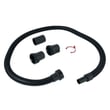
- Inspect the hose for clogs, splits, or collapsed sections; replace if damaged using the wet/dry vacuum hose, 1-1/4-in x 6-ft 551013109
- Remove the hose and test suction directly at the inlet (a quick airflow check)
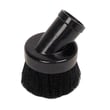
- Check attachments for blockages (crevice tool, car nozzle, dusting brush)
- Verify the power source: try a different outlet and avoid long, undersized extension cords
What the symptoms usually mean
| Symptom | Most common cause | What we do next |
|---|---|---|
| Hums but will not spin | Seized bearings or jammed fan | Unplug, check for obstruction; motor replacement is typical |
| Burning smell + shuts off | Overheating from restriction or failing motor | Clear restriction; if it repeats, motor is failing |
| Loud grinding/howling | Bearing failure | Stop using; continued use can burn out the motor |
| No suction but motor sounds normal | Air leak or blockage | Check hose, lid seal, and tank seating |
Why it matters
A failing motor can overheat wiring and damage internal components. Stopping use when you smell burning or hear grinding helps prevent additional damage and keeps troubleshooting focused on the real root cause.
Last updated: January 2026
Where is the model number on a Craftsman 113178000 8-gallon home-n-shop vacuum?
On the Craftsman model 113178000 8-gallon home-n-shop vacuum, the model number is typically printed on the rating/serial label on the powerhead (upper motor housing) or on the outside of the tank near the top rim. We use that label to match the correct hose, nozzle, and adapter parts.
Common places to check
- Powerhead: look on the back or side of the upper motor housing, near the handle or cord wrap
- Tank/canister: check around the upper half of the tank, just below where the powerhead latches on
- Base/dolly: flip the unit and look for a label on the underside near the caster mounts
- Cord area: inspect near where the power cord enters the powerhead
- Latch area: check close to the lid latches where labels often stay protected
What the label usually looks like
Most Craftsman wet/dry vac labels include a few fields. Use the model number to shop parts; the serial number is mainly for manufacturing identification.
| Label field | What it’s used for | Example you might see |
|---|---|---|
| Model number | Matching parts and diagrams | 113178000 |
| Serial number | Manufacturing tracking | Varies |
| Electrical rating | Power requirements | Volts/amps |
If the label is missing or unreadable
- Check for a faint “shadow” outline where a sticker used to be; a flashlight at an angle helps
- Compare your hose diameter and tool connection size before ordering accessories
- If your hose end is loose or cracked, replacing the hose often restores suction and fit
A common fit-up issue on older wet/dry vacs is mixing 1-1/4-inch tools with 2-1/2-inch ports; a reducer/adapter solves that quickly (for example, the wet/dry vacuum hose adapter, 1-1/4 to 2-1/2-in 551025121).
Why it matters
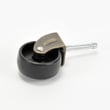
The model number ensures we match the correct Craftsman vacuum cleaner parts, especially connection sizes (hose, crevice tool, car nozzle) and base components like caster wheels.
Last updated: January 2026
Why do shop vacuums lose suction?
Shop vacuums like the Craftsman 113178000 most often lose suction because airflow is restricted (clog, full tank, dirty filter) or because air is leaking in (hose, fittings, lid seal). Restoring suction usually comes down to clearing the air path and sealing leaks.
Quick checks that fix most suction problems
- Empty the tank; a full tank reduces airflow and can wet the filter.
- Check the hose for a clog; remove the hose and look through it end-to-end.
- Inspect the hose connection points for cracks or loose fit.
- Make sure the lid is seated evenly and latched all the way around.
- If you were vacuuming fine dust, clean or replace the filter (a loaded filter is the most common cause).
Common leak points on an 8-gallon wet/dry vacuum
Air leaks let outside air in, so less airflow pulls through the nozzle.
| Leak location | What you’ll notice | What to do |
|---|---|---|
| Hose cuff or split hose | Whistling, weak pickup | Replace the hose if it’s cracked or soft |
| Adapter/fitting not sealing | Hose falls off, poor suction | Reseat or replace the adapter |
| Tank-to-lid seal area | Suction varies when you press on lid | Reseat lid; clean rim and gasket area |
| Accessory connection | Weak pickup at tool | Confirm tool is fully seated |
If the hose is damaged or collapsing, the correct replacement for this model is the wet/dry vacuum hose, 1-1/4-in x 6-ft 551013109. If you need to connect different hose sizes, use the wet/dry vacuum hose adapter, 1-1/4 to 2-1/2-in 551025121.
A simple airflow test (helps pinpoint the cause)
- Remove the hose and run the vacuum briefly.
- If suction at the inlet is strong, the clog or leak is in the hose, adapter, or tool.
- If suction at the inlet is weak, focus on the filter, lid seal, or motor airflow path.
Why it matters
Low suction is almost always an airflow problem. Clearing restrictions and sealing leaks prevents overheating, improves pickup, and reduces strain on the motor.
Last updated: January 2026