Owner’s manual
 View engine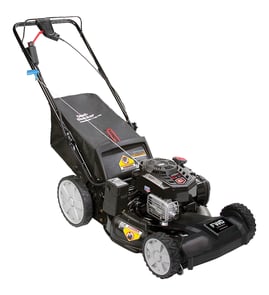



Are gas lawn mowers being phased out?
Gas walk-behind mowers like the Craftsman 917388272 are not being phased out everywhere at once; the shift is gradual and depends on where you live and what retailers choose to stock. Electric models are growing in popularity, but gas mowers remain common for many homeowners.
Most changes happen in two areas: new product sales and local emissions rules. Even where new sales change over time, existing gas mowers can still be used and maintained with normal service parts.
- Some regions restrict or plan to restrict new sales of certain gas-powered outdoor equipment.
- Retailers may reduce gas inventory as demand shifts to battery models.
- Gas mowers still make sense for longer run time, quick refueling, and heavy grass.
- Parts support continues because routine wear items (belts, blades, adapters, wheels) still need replacement.
- Proper maintenance keeps a gas mower reliable for many seasons.
Use the maintenance and safety steps in the 917388272 owner's manual. The manual also notes the mower ships without oil or gasoline and includes standard safety steps like stopping the engine and disconnecting the spark plug wire before service.
Common upkeep that helps most gas walk-behind mowers:
- Use fresh fuel and avoid storing stale gas.
- Keep the underside of the deck clean (scrape buildup; avoid spraying water into the engine area).
- Replace or clean the air filter on schedule.
- Inspect the blade and blade adapter for looseness or damage.
- Store the mower only after the engine cools.
| If you value... | Gas mower (like 917388272) | Battery electric mower |
|---|---|---|
| Run time | Longer with refueling | Limited by battery capacity |
| Maintenance | More routine service | Less routine service |
| Noise and exhaust | Higher | Lower |
| Cold starts | Can be finicky | Typically easier |
Even if your area trends toward electric, a well-maintained gas mower is still practical. Knowing the maintenance basics helps you avoid common no-start and power-loss issues (often tied to stale fuel, dirty air filter, or grass buildup).
Last updated: January 2026
Is it worth replacing a lawn mower engine?
Replacing the engine on your Craftsman rotary lawn mower model 917388272 is worth it when the mower deck, wheels, handle, and safety guards are still solid and the total engine swap cost stays well below the cost of a comparable new mower. If the mower also needs multiple major repairs, replacement usually makes more sense.
- Replace the engine if the deck is straight (not cracked or rusted through) and the mower is otherwise safe to use.
- Replace the engine if you can do the work confidently and have basic tools.
- Replace the engine if you maintain the mower regularly (oil changes, blade care, fastener checks).
- Replace the mower if the deck or drive system is worn out and you are chasing multiple problems.
- Replace the mower if the total repair cost is around 50% or more of a new mower.
Use the maintenance and safety guidance in the 917388272 owner’s manual to evaluate the mower’s overall condition.
Focus on these areas first:
- Deck and housing: look for cracks, severe rust, or bent mounting points.
- Engine mounting bolts and fasteners: the manual recommends checking blade and engine mounting bolts often for proper tightness.
- Blade system: a dull or bent blade can mimic “engine weakness” and increases vibration.
- Grass catcher condition: the manual notes bags wear out and should be replaced when deteriorated.
- Cooling and cleanliness: built-up grass and debris can make an engine run hotter and shorten engine life.
| Option | Typical parts cost | Skill/time | Best when |
|---|---|---|---|
| Tune-up and maintenance | Low | Low | Hard starting, rough running, neglected upkeep |
| Replace engine (full) | Medium to high | Medium | Deck and chassis are in great shape |
| Replace mower | High | Low | Multiple major issues or heavy deck damage |
A new engine only pays off if the rest of the mower can safely deliver years of service. The manual emphasizes keeping guards in place, checking fasteners frequently, and keeping the engine area clean to reduce overheating and fire hazards.
Last updated: January 2026
Should I use 87 or 93 for lawn mower?
For the Craftsman rotary lawn mower model 917388272, use regular unleaded 87 octane (AKI) in normal conditions; 93 octane does not improve power or reliability in small mower engines. For fuel and operating guidance specific to your mower, follow the 917388272 owner's manual.
- Use: fresh, clean 87 octane (AKI) unleaded gasoline
- Skip: 93 octane unless your engine specifically requires it (most walk-behind mowers do not)
- Avoid: old gas (fuel can go stale quickly and cause hard starting)
- Avoid: contaminated fuel (water or debris in the can)
- Use good habits: store fuel in an approved container and keep the cap sealed
| Fuel choice | What you get | Best for |
|---|---|---|
| 87 octane (regular) | Correct combustion for most mower engines | Everyday mowing, normal temps |
| 93 octane (premium) | Typically no performance gain | Only if the engine manual explicitly calls for it |
These steps fix most “bad gas” symptoms on walk-behind mowers:
- Drain the tank and refill with fresh 87 octane fuel
- Check the air filter and spark plug condition during a basic tune-up
- Verify the operator presence control bar is held fully against the handle during starting
- Inspect for loose fasteners and obvious fuel leaks before running
If you are doing seasonal maintenance, the storage section in the 917388272 owner's manual is the best checklist to follow.
Using the correct octane keeps combustion stable and helps prevent hard starting, surging, and plug fouling. In most small engines, fuel freshness matters more than buying higher octane.
Last updated: January 2026