Owner’s manual


How do I reset the control board on a whirlpool washer?
To reset the control board on your Whirlpool washer model WFW8620HC4, we recommend a simple power reset first: turn the washer off, unplug it (or switch the breaker off) for about 1 minute, then restore power and try a cycle again. This clears many temporary control glitches.
Recommended reset steps (WFW8620HC4)
- Press Power to turn the washer off.
- Unplug the washer (or turn the circuit breaker off) for 1 minute.
- Restore power.
- Press Power, select a normal cycle, then touch and hold Start/Pause to test operation.
- If the washer was mid-cycle, reselect the cycle and restart.
If the washer still acts up
These checks often solve the underlying issue that looks like a “bad control board”:
- Make sure the outlet is a grounded 3-prong outlet (no extension cord or adapter).
- Confirm both water faucets are fully open and inlet hoses are not kinked.
- If the washer will not drain or stops with water in the tub, check for a drain restriction; a clogged pump filter or weak pump can mimic a control problem.
- If the door will not lock or unlock, inspect the latch area for obstruction and try powering off for 1 minute again.
- If an error code is showing, use an error-code chart to pinpoint the failed system.
Helpful references for troubleshooting
| What you see | What it usually points to | What to do next |
|---|---|---|
| Random freezing, unresponsive buttons | Control logic glitch or power issue | Do the 1-minute power reset; verify outlet power |
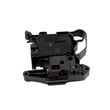
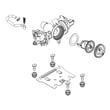
| Won’t drain or ends with water | Drain path or pump issue | Check drain hose routing; consider washer drain pump assembly W11458345 |
| Error code displayed | Specific system fault | Use Whirlpool duet high efficiency front load washer error codes |
Why it matters
A reset is a safe first step because it restores the washer’s control logic without replacing parts. If symptoms return quickly, the “reset” is telling us to focus on the failing system (drain, door lock, water fill, or the main control).
For model-specific operating details (including proper restarting after interruptions), use the WFW8620HC4 owner's manual.
Last updated: January 2026
What is the average lifespan of a whirlpool dryer?
Whirlpool dryers typically last 10 to 13 years with normal household use and basic care. Even though this Sears PartsDirect page is for the Whirlpool washer model WFW8620HC4, the same maintenance mindset applies: consistent cleaning and correct operation are what most often extend appliance life (see the WFW8620HC4 owner's manual).
Typical lifespan at a glance
| Appliance type | Typical lifespan | What most affects it |
|---|---|---|
| Electric or gas dryer | 10 to 13 years | Lint control, venting, load size |
| Front-load washer (like WFW8620HC4) | 10 to 13 years | HE detergent use, hose condition, cleaning routine |
What extends a Whirlpool dryer’s life
- Clean the lint screen before every load.
- Keep the exhaust vent path clear and as short as practical.
- Avoid overloading; heavy loads strain the drum support and motor.
- Use the right cycle and heat setting for the fabric.
- Periodically check for unusual noise, burning smells, or long dry times.
Maintenance habits we recommend (and why they matter)
Dryers fail early most often from restricted airflow (overheating) and mechanical strain (overloading). For washers, Whirlpool specifically calls out good care practices such as keeping the area clear for airflow, using HE detergent, and inspecting hoses; those same “prevent buildup and reduce strain” habits translate well to dryers too. The manual also recommends replacing washer inlet hoses about every 5 years to reduce failure risk, which is a good reminder to proactively replace aging dryer venting and clamps as well.
Quick “replace vs. repair” guide
- Repair makes sense when the dryer is under ~8 years old and the issue is a wearable item (belt, rollers, thermal fuse).
- Consider replacement when the dryer is 10+ years old and needs a motor, control board, or major drum support work.
Last updated: January 2026
What is the most common problem with front load washers?
The most common problem with front load washers (including Whirlpool model WFW8620HC4) is musty odor and mildew caused by moisture and detergent residue staying in the door seal and dispenser areas. Regular cleaning and better drying between loads prevents most odor complaints; see the WFW8620HC4 owner's manual.
What usually causes the odor problem
Front-load washers seal tightly for efficiency, so small amounts of water can stay trapped after a cycle. Odor typically builds up when residue and moisture combine in hidden areas.
- Leaving the door closed between loads
- Using too much HE detergent (or non-HE detergent)
- Running only cold-water cycles
- Not cleaning the door seal and dispenser regularly
- Poor airflow around the washer (laundry piles blocking ventilation)
What to do first (quick prevention checklist)
These steps match the care guidance for this Whirlpool front-load design.
- Use HE detergent and do not exceed the recommended amount
- Leave the door slightly open after each load to dry the drum
- Wipe the inside of the door and the gray door seal regularly
- Clean the dispenser drawer if you see residue buildup
- Run the washer’s monthly cleaning routine (about every 30 cycles)
Common front-load washer issues compared
| Issue | What you notice | Often related to |
|---|---|---|
| Odor/mildew | Musty smell, visible residue | Door seal, dispenser, too much detergent |
| Leaks | Water on floor, damp cabinet | Fill hoses, drain hose, door seal |
| Won’t drain | Water left in drum, long drain | Clogged pump/filter path, drain pump |
| Excess vibration | Walking, banging | Leveling feet not set, uneven floor |
Why it matters
Odor and residue are more than a nuisance; buildup can reduce cleaning performance over time and can contribute to leaks if seals and dispenser areas are neglected.
Parts that can be involved when symptoms go beyond odor
If you also have draining problems (standing water, slow drain), the drain system is a common next place to check, including the washer drain pump assembly W11458345.
Last updated: January 2026