Owner’s manual
 View engine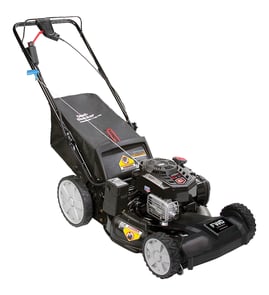



How to look up Craftsman model number?
For your Craftsman walk-behind mower, we find the model number on the model/serial decal attached to the rear of the lawn mower housing. On model 917372940, that decal lists both the model number and serial number for parts lookup and service records (see the 917372940 owner's manual).
Where to look on model 917372940
- Tip the handle forward for easier access to the rear housing area (engine off and cool)
- Look for a decal or sticker on the rear of the mower deck/housing
- Wipe off grass and dirt so the numbers are readable
- Record both the model number and serial number
- Keep the numbers with your purchase date for future reference
Mower model number vs. engine model number
This mower has two different model identifiers; both can matter depending on what you’re fixing.
| What you’re looking up | Where to find it | What it’s used for |
|---|---|---|
| Lawn mower model number (917372940) | Decal on rear of mower housing | Mower parts like blade, belt, wheels, controls |
| Engine model number | On the engine blower housing | Engine-specific parts and tune-up items |
Why it matters
Using the exact model number helps us match the correct Craftsman parts diagrams and avoid ordering the wrong blade, drive belt, or hardware. It also speeds up troubleshooting when you’re comparing specifications and maintenance steps.
Last updated: February 2026
What year is Craftsman Model 917372940?
Craftsman walk-behind mower model 917372940 is identified by its model number, but the year of manufacture is not encoded in the model number itself. To find the year, we use the product date code on the mower’s ID decal and match it to the date-code format shown in the owner's manual.
Where to find the date information
Look for the mower’s identification decal:
- The mower model number decal is typically attached to the rear of the mower housing.
- The engine model number is on the engine blower housing (this is separate from the mower’s build date).
- The decal may also include a date code or other production identifiers.
How to decode the date (what to look for)
Many Craftsman outdoor power products use a separate date code (not the 917 model number). When you locate a date code on the decal, decode it using the format specified for your unit.
Common date-code patterns you may see:
- MMDDYY (month, day, year)
- YYWW (year, production week)
- A serial number where certain digits indicate the build date
Quick examples (for reference)
| Code format | Example code | What it means |
|---|---|---|
| MMDDYY | 072895 | July 28, 1995 |
| YYWW | 1128 | Year 2011, week 28 |
| Serial-based | varies | Date is embedded in specific digits |
Why it matters
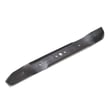
Knowing the build year helps us match the correct Craftsman parts and diagrams for wear items like the blade, drive system, and hardware. For example, this model’s parts list includes items such as the lawn mower blade 532406713 and the belt 532157769, and the correct revision can depend on production run.
Last updated: February 2026
What is the life expectancy of a gas-powered lawn mower?
Most gas-powered walk-behind lawn mowers last 8 to 10 years with normal residential use and routine maintenance. Your Craftsman 917372940 can reach (and often exceed) that range when you follow the maintenance and storage steps in the owner's manual.
What affects mower lifespan the most
- Maintenance schedule: oil changes, blade care, and periodic checks prevent premature wear.
- Deck and engine cleanliness: grass and debris buildup makes the engine run hotter and shortens engine life.
- Storage habits: proper off-season storage reduces fuel and corrosion problems.
- Blade condition and balance: a damaged or unbalanced blade increases vibration and can stress the crankshaft.
- Operating conditions: sandy soil, wet grass, and heavy weekly mowing shorten life compared to light-duty use.
Maintenance basics for Craftsman 917372940
The manual for this model calls out key specs that support long engine life:
| Item | What to use/check | Why it matters |
|---|---|---|
| Engine oil | SAE 30 above 32°F; SAE 5W-30 below 32°F | Correct viscosity reduces wear at operating temperature |
| Fuel | Unleaded regular; capacity about 1.6 quarts | Fresh fuel helps prevent hard starting and carburetor issues |
| Spark plug | Champion J19LM or RJ19LM; gap 0.030 in. | Proper ignition improves starting and power |
| Blade bolt torque | 35 to 40 ft-lbs | Correct torque helps prevent blade loosening and vibration |
Quick “extend the life” checklist
- Disconnect the spark plug wire before cleaning or servicing.
- Clean the underside of the deck after each use by scraping off grass and debris.
- Clean under the drive cover at least twice per season.
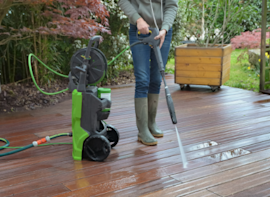
- Avoid spraying the mower with a garden hose unless sensitive areas are fully protected; water in the engine shortens engine life.
- Replace worn cutting parts when needed, such as the lawn mower blade 532406713 and the lawn mower blade adapter 581547901.
Why it matters
A mower that is maintained and kept clean runs cooler, vibrates less, and puts less strain on the engine and drive system. That directly translates into more seasons of reliable starting, better cut quality, and fewer expensive repairs.
Last updated: February 2026
Is it cheaper to repair or replace a lawn mower?
For a Craftsman walk-behind mower like model 917372940, it’s cheaper to repair when the problem is routine wear (blade, belt, fasteners, tune-up items). Replacement makes more sense when the engine or drive system needs major work and the repair total approaches about half the cost of a comparable new mower.
Quick rule of thumb we use
- Repair when the fix is maintenance or a single worn part.
- Replace when multiple major systems are failing (engine performance plus self-propel drive plus deck damage).
- Decide by total cost: parts + your time (or labor) vs. a new mower price.
Common “repair” situations (usually worth it)
These are normal wear items for this mower type and are typically cost-effective to fix:
- Dull or damaged blade (consider the lawn mower blade 532406713)
- Worn drive belt or slipping self-propel (consider the belt 532157769)
- Loose or missing hardware (nuts, washers, E-rings)
- Seasonal tune-up needs (spark plug, air filter, oil change)
- Height adjustment issues (consider the husqvarna lawn mower height adjuster knob 532701037)
When replacement is the better value
Replacement is usually the smarter choice when you’re facing:
- Major engine problems (low compression, heavy smoking, persistent no-start after basic tune-up)
- Repeated drive failures (multiple drive components worn, not just a belt)
- Deck or crankshaft damage (vibration that won’t go away after blade and adapter checks)
Cost comparison checklist
Use this simple comparison to make the call:
| What you’re paying for | Typical outcome | Usually best choice |
|---|---|---|
| Blade, belt, knobs, basic hardware | Restores cutting or drive performance | Repair |
| Multiple drive parts plus labor | Costs climb quickly | Depends on total |
| Engine rebuild/major engine repair | High cost relative to mower value | Replace |
Why it matters
A well-maintained mower runs longer and costs less over time. Your 917372940 owner’s manual calls out regular maintenance (oil checks, fastener checks, seasonal adjustments, and annual spark plug and air filter replacement) as the foundation for reliability and warranty value. Use the owner's manual to follow the maintenance schedule and storage steps so small issues do not turn into expensive repairs.
Last updated: February 2026
What are the common problems with Craftsman lawn mowers?
Common problems on the Craftsman 917372940 gas walk-behind mower include no-start conditions (fuel, air, spark, or control bar issues), loss of power from airflow or deck buildup, uneven cutting from blade or wheel-height problems, excessive vibration from a damaged blade or adapter, and loss of drive from belt or drive-wheel issues. See the owner's manual troubleshooting chart for model-specific checks.
Most common symptoms and what usually causes them
- Engine does not start: stale fuel, dirty air filter, disconnected spark plug wire, bad spark plug, or the control bar not held in the run position
- Loss of power: cutting too much grass, dirty air filter, grass buildup under the deck, or too much oil in the engine
- Poor cut (uneven): worn or bent blade, uneven wheel height settings, low engine speed, or deck buildup
- Excessive vibration: loose/worn blade, broken blade adapter, or bent crankshaft
- Starter rope hard to pull: brake engaged when the control bar is released, blade dragging in grass, or blade adapter issues
- Loss of drive (self-propel): drive wheels not turning with drive control engaged, or the belt not driving
Quick checks we recommend first (fastest wins)
- Drain old gas and refill with fresh fuel; avoid over-priming in warm weather (flooding can prevent starting)
- Clean or replace the air filter; restricted airflow causes hard starting and power loss
- Confirm the spark plug wire is firmly seated; inspect the plug condition
- Tip the mower safely and clear packed grass from under the deck (with the spark plug wire disconnected)
- Verify wheel height adjusters match side-to-side for an even cut
Parts that commonly solve these problems
| Symptom | Part to inspect/replace | What it affects |
|---|---|---|
| Uneven cut or vibration | Lawn mower blade 532406713 | Cut quality and balance |
| Vibration or blade won’t stay tight | Lawn mower blade adapter 581547901 | Blade mounting and alignment |
| Mower won’t move (self-propel) | Belt 532157769 | Drive power transfer |
Why it matters
Most “mower problems” trace back to basic maintenance and safety-control operation. Keeping the deck clean, using fresh fuel, and maintaining the blade reduces engine load, improves cut quality, and helps prevent premature wear on drive components.
Last updated: February 2026