Owner’s manual
 View engine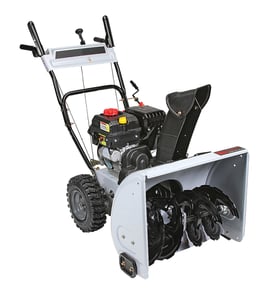


How to find snowblower model number?
On the Craftsman snow thrower model 247885570, the model and serial numbers are printed on a label attached to the frame. We typically see this label on the rear of the unit near the wheel area, where it stays visible but protected.
Where to look on the machine
Check these common label locations first:
- Rear of the snowblower between the wheels (most common)
- On the frame rail near the axle or wheel assembly
- Near the engine mounting area on the frame
- Under or behind the belt cover area (if your unit has been serviced and the label shifted)
For the exact wording and what the label looks like, use the 247885570 owner's manual.
What to write down (and why)
Record both numbers and keep them with your purchase info:
- Model number (example format: 247.885570, often shown without the dot as 247885570)
- Serial number (unique to your unit)
- Date of purchase (helps with parts matching and service history)
Quick reference table
| Item | What it does for you | When you need it |
|---|---|---|
| Model number | Identifies the correct parts diagrams and part lists | Ordering belts, cables, bearings, hardware |
| Serial number | Helps confirm production run details | When parts changed mid-series |
| Purchase date | Helps track maintenance intervals | Seasonal tune-ups, storage prep |
Why it matters
Snowblower parts can vary by model series and production run. Using the correct model number helps us match the right Craftsman parts (like an auger belt, chute control cable, or belt cover) so fit and performance stay correct.
Last updated: January 2026
Is sae 30 the same as 5W30 for snowblower?
No. SAE 30 and 5W-30 are different oils, and for the Craftsman snow thrower model 247885570 we recommend using SAE 5W-30 because it flows better during cold starts while still protecting like a 30-weight oil at operating temperature (the manual also notes 0W-30 for extreme cold).
What the numbers mean (SAE 30 vs 5W-30)
- SAE 30 is a single-viscosity oil; it behaves like a 30-weight oil across temperatures.
- 5W-30 is a multi-viscosity oil; it behaves like a lighter oil when cold (5W) and like a 30-weight oil when hot (30).
- In winter equipment, cold-flow matters because thick oil can make starting harder and reduce lubrication right after startup.
What we recommend for Craftsman 247885570
Your manual calls for SAE 5W-30 engine oil and specifies the crankcase fill amount.
- Use SAE 5W-30 for normal snowblower conditions.
- For 0°F and below, use 0W-30 (the manual notes partial synthetic 0W-30 for easier starting).
- Fill to the FULL mark; do not overfill.
Reference: 247885570 owner's manual
Quick spec check
| Item | Model 247885570 guidance |
|---|---|
| Recommended oil | SAE 5W-30 |
| Extreme cold option | 0W-30 |
| Oil capacity | 19 oz (1-1/4 pints) |
When SAE 30 causes problems
Using SAE 30 in a snowblower commonly leads to:
- Hard starting in cold weather
- Slower oil circulation right after startup
- Increased engine wear during warm-up
Why it matters
Snowblower engines run in cold, high-load conditions. Using the correct viscosity helps the engine start easier, lubricate faster, and maintain protection once the engine warms up.
Last updated: January 2026
What is the most common problem with snow blowers?
The most common problem we see with gas snowblowers like the Craftsman 247885570 is a no-start or hard-start condition caused by old fuel and fuel-system deposits. Close behind are clogged discharge chutes and auger or drive issues caused by shear bolts, belt wear, or an ice jam.
Quick checks that fix the most calls
- Replace old gasoline with fresh fuel (stale fuel causes starting problems and gum deposits during storage).
- Inspect and service the spark plug (remove and inspect; replace if worn).
- If the machine vibrates after hitting something, stop and inspect for damage before restarting.
- If the chute is clogged, shut the engine off and clear it with a stick (never your hand).
- If the augers will not turn, check for sheared bolts on the auger shaft.
What to do based on the symptom
| Symptom | Most common cause | What we recommend first |
|---|---|---|
| Engine will not start | Stale fuel, carburetor deposits | Drain old fuel, refill with fresh gas; follow storage and fuel steps in the 247885570 owner's manual |
| Starts then dies | Fuel restriction, contaminated fuel | Empty tank/carburetor for storage over 30 days; avoid leaving fuel sitting |
| Snow not throwing well | Clogged discharge or impeller housing | Stop engine, remove key, disconnect spark plug wire; clear with a stick |
| Auger not turning | Shear bolts sheared after impact/ice jam | Inspect and replace sheared bolts and lock nuts as needed |
| Poor self-propel/drive | Worn traction components or belt issues | Inspect drive system; belt replacement is a common fix (see how to replace a snowblower belt video) |
Why it matters
These issues are common because snowblowers sit unused for long periods. Fuel can deteriorate and form deposits, and packed snow or hidden objects can overload the auger system (leading to sheared bolts or vibration warnings). Fixing the root cause prevents repeat failures and protects the gearbox, belts, and engine.
Last updated: January 2026
How long does a gas-powered snow blower last?
A gas-powered snowblower typically lasts 10 to 15 years with normal homeowner use and consistent maintenance. For your Craftsman 247885570 snow thrower, following the maintenance, lubrication, tune-up, and storage steps in the Craftsman 247885570 owner's manual is the most reliable way to reach that lifespan.
What most affects lifespan
A snowblower’s service life is usually determined by fuel care, lubrication, and wear parts (belts, friction wheel rubber, skid shoes, shave plate, spark plug).
- Use clean, fresh unleaded gasoline and keep containers clean
- Don’t store fuel in the machine for 30+ days; drain the fuel system for storage
- Check wear items regularly (especially friction wheel rubber)
- Keep cables and controls adjusted so the drive and auger fully engage and fully release
- Replace worn belts before they slip and overheat
Maintenance checkpoints to plan for
The manual calls out wear inspection intervals and storage practices that directly impact longevity.
| Item or task | When to check | What you’re looking for |
|---|---|---|
| Friction wheel rubber | About every 25 hours, then periodically | Cracks, glazing, chunks missing, thinning |
| Fuel system storage prep | If storing 30+ days | Tank and carburetor emptied to prevent gum deposits |
| Belts and drive engagement | Each season | Slipping, squealing, weak auger or weak drive |
Parts that commonly limit performance first
If the engine runs but the machine will not throw snow well, or it will not pull itself, these are common wear points.
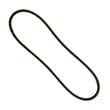
- Auger belt 754-0430 (auger stops or slips under load)
- Friction wheel rubber (drive slips, especially in higher speeds)
- Skid shoes and shave plate (poor scraping, uneven clearing)
- Spark plug (hard starting, misfire)
Why it matters
Most “short lifespan” snowblower problems are really storage and wear-item issues. Draining fuel for off-season storage and catching belt or friction-wheel wear early prevents bigger drive and carburetor problems and keeps your Craftsman snow thrower working at full capacity.
Last updated: January 2026