Owner’s manual
 Error Codes




Can I replace fridge parts myself?
Yes, for Gladiator model GAFZ30FDGB02, we recommend DIY replacement for many non-sealed-system parts (shelves, bins, gaskets, some fan components). For sealed refrigeration system repairs (refrigerant lines, compressor work), use a service technician because specialized tools and training are required.
These tasks are typically straightforward with basic hand tools and careful handling:
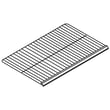
- Shelves and door bins (lift out, slide out, then reinstall)
- Door gasket (if torn, warped, or leaking air)
- Evaporator fan blade (if cracked or rubbing)
- Temperature sensor/thermistor (for temperature-sensing issues)
- Door hinge small hardware (thimbles, screws) when the door is sagging
For model-specific removal steps for shelves, bins, and door handling, follow the GAFZ30FDGB02 owner's manual.
Avoid DIY work on anything that opens the sealed cooling system or requires refrigerant handling:
- Compressor replacement
- Refrigerant leak diagnosis/repair
- Filter drier replacement and system evacuation/recharge
We use these steps to reduce damage and prevent shock:
- Turn cooling off at the control (if equipped), then unplug the unit
- Remove food and clear door bins/shelves so nothing falls
- Support the door during hinge work (do not rely on door magnets)
- Use a non-switch-controlled grounded outlet; do not use an extension cord
- Take photos of wiring and fastener locations before disassembly
| Symptom | Likely DIY part | Notes |
|---|---|---|
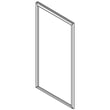
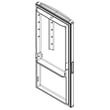
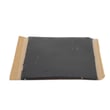
| Door not sealing, frost, warm spots | Refrigerator door gasket (black) W11102846 | Warm the gasket to help it seat flat after install |
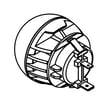
| Clicking, rattling, or airflow noise | Refrigerator evaporator fan blade WP2169142 | Replace if cracked, warped, or rubbing |
| Temperature swings | Refrigerator thermistor WPW10383615 | Sensor issues can cause short cycling or poor temps |
DIY repairs can restore proper temperature control and door sealing, which reduces run time, prevents frost buildup, and helps protect stored food. Choosing the right part by model number also prevents returns and repeat repairs.
Last updated: February 2026
What are the most commonly replaced parts in a refrigerator?
The most commonly replaced refrigerator parts are the ones tied to temperature control, airflow, and sealing. On Gladiator model GAFZ30FDGB02, we most often see service needs around door sealing, evaporator airflow, and temperature sensing; use the GAFZ30FDGB02 owner's manual to match symptoms to the right component.
- Door gasket (warm spots, sweating, frost, or the door not sealing)
- Evaporator fan motor and fan blade (poor cooling, warm fridge, noisy fan)
- Thermistor or temperature sensor (temps swing high or low, runs too long)
- Defrost heater and defrost system parts (heavy frost on the back wall, weak airflow)
- Control board or control assembly (erratic operation, won’t maintain set temp)
- Compressor start components (clicking, hard starting, intermittent cooling)
These are common replacement items we stock for this Gladiator refrigerator when symptoms point to them:
| Symptom | Likely area | Example part for this model |
|---|---|---|
| Door won’t seal, moisture on gasket | Door sealing | Refrigerator door gasket (black) W11102846 |
| Warm temps but compressor runs | Airflow in cabinet | Refrigerator thermistor WPW10383615 |
| Rattling or scraping fan noise | Evaporator fan airflow | Refrigerator evaporator fan blade WP2169142 |
| Heavy frost, weak airflow | Defrost system | Refrigerator defrost heater WPW10316428 |
- Confirm the controls are set correctly and allow 24 hours for temps to stabilize after changes.
- Check for blocked vents and ensure proper air circulation around shelves and stored items.
- Inspect the door gasket for gaps, tears, or areas that feel loose.
- Listen for fan noise changes when the door is opened and closed.
- If you’re testing electrical parts, use a meter and follow safe practices.
Replacing the correct part restores proper airflow and temperature control, reduces run time, and helps prevent food spoilage. A simple seal or sensor issue can look like a major cooling failure, so symptom-matching saves time and cost.
Last updated: February 2026
What are the main 5 parts of a refrigerator?
The five main parts that make a refrigerator cool are the compressor, condenser, evaporator, expansion device, and a temperature sensor (thermistor). In your Gladiator GAFZ30FDGB02 all refrigerator, these parts work together to move heat out of the cabinet and keep food at a steady temperature (see the GAFZ30FDGB02 owner's manual).
- Compressor: pumps refrigerant through the sealed system; it cycles on and off after the cabinet reaches temperature.
- Condenser: releases heat to the room air.
- Expansion device: drops refrigerant pressure so it can absorb heat.
- Evaporator: absorbs heat from inside the refrigerator.
- Thermistor (temperature sensor): tells the control when to run cooling.
These are not always counted in the “main 5,” but they are essential for performance and efficiency:
- Evaporator fan: moves cold air across the evaporator and through the cabinet.
- Defrost heater: melts frost off the evaporator so airflow stays strong.
- Door gasket: seals the door to prevent warm, moist air leaks.
| Function | Example part on GAFZ30FDGB02 | What a failure can look like |
|---|---|---|
| Temperature sensing | Refrigerator thermistor WPW10383615 | Temps swing, runs too long or not enough |
| Air movement | Refrigerator evaporator fan blade WP2169142 | Warm spots, weak airflow, unusual fan noise |
| Defrosting | Refrigerator defrost heater WPW10316428 | Frost buildup, reduced cooling over time |
| Door sealing | Refrigerator door gasket (black) W11102846 | Condensation, frost, longer run times |
When any one of these components is weak, the refrigerator can run longer, struggle to hold temperature, or develop frost and airflow problems. Keeping the door seal tight and airflow clear helps the sealed-system parts (compressor, condenser, evaporator, expansion device) do their job efficiently.
Last updated: February 2026
Why is my gladiator refrigerator freezer not cooling?
If your Gladiator GAFZ30FDGB02 freezer is not cooling, the most common causes are blocked airflow, dirty condenser coils, or a failed evaporator fan system. Start with vent and coil checks, then listen for the fan and compressor; these steps quickly narrow the problem.
- Make sure the temperature setting is appropriate; changing to colder will not cool faster.
- Check that interior air vents are not blocked by food packages.
- Give the unit time after a restart; initial pull-down can take 6 to 8 hours (or longer) depending on room temperature and door openings.
- Clean the condenser coils when dusty or dirty (behind the base grille).
- Confirm the door closes and seals evenly all the way around.
- Reset safely: Press and hold TEMP SETTING for 3 seconds to turn off cooling, then unplug the unit before inspecting anything. See the GAFZ30FDGB02 owner's manual.
- Airflow inside the freezer: If vents are clear but cooling is weak, check for a “no-fan” symptom (no air movement, warm spots, or unusual noise).
- Condenser coil condition: Dirty coils reduce heat removal and can cause poor cooling; vacuum coils with an extended attachment.
- Evaporator fan system: If the fan is not running or the blade is damaged, cooling will suffer. Consider the refrigerator evaporator fan blade WP2169142 and the motor-evap f W11499658 if your diagnosis points to the fan.
- Defrost-related frost buildup: Heavy frost can block airflow; if you see a solid frost blanket, a defrost failure is likely. A common repair is the refrigerator defrost heater WPW10316428.
- Temperature sensing: Erratic temperatures can be caused by a bad sensor; the refrigerator thermistor WPW10383615 is a common fix when readings are inaccurate.
| What you notice | Most likely area to check | Common next step |
|---|---|---|
| Runs a lot, still warm | Dirty condenser coils, blocked vents | Clean coils; clear vents |
| No air movement inside | Evaporator fan motor/blade/harness | Inspect fan; replace failed part |
| Thick frost on back wall | Defrost system | Check heater and defrost components |
| Temps swing up and down | Thermistor/control | Test sensor; inspect wiring |
A freezer that is not cooling is usually an airflow or heat-transfer problem first (vents, coils, fan). Fixing those early prevents food loss and reduces strain on the compressor and start components.
Last updated: February 2026