View engine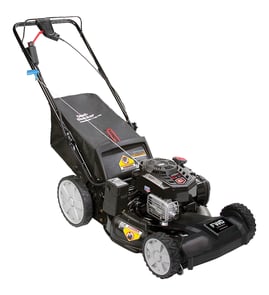




Is it better to sharpen a lawn mower blade or just buy a new one?
For an MTD gas lawn mower model 11A-B2A9791, it’s better to sharpen the blade when it’s simply dull and the edge is nicked but intact; it’s better to replace the blade when it’s bent, cracked, heavily chipped, or worn thin because that can cause vibration, poor cutting, and unsafe operation.
- Sharpen when the blade is dull, has small nicks, and the blade body is straight.
- Replace when the blade is bent, cracked, has large chunks missing, or the cutting edge is badly thinned.
- Replace if the mower vibrates strongly after sharpening (often a balance or damage issue).
- Replace if you hit a rock, curb, or stump and the blade shows visible deformation.
- Sharpen if you want the lowest-cost fix and the blade is structurally sound.
- Turn the engine off and let it cool.
- Disconnect the spark plug wire and secure it away from the plug.
- Tip the mower with the air filter and carburetor side up (to reduce fuel or oil leakage).
- Wear cut-resistant gloves and eye protection.
- Block the blade with a piece of wood before loosening the bolt.
These are common blade listings for the 11A-B2A9791; match by shape and mounting pattern before ordering.
| Option | Best for | What you’ll notice |
|---|---|---|
| Lawn mower 21-in deck xtreme mulching blade | Mulching | Finer clippings, less bagging |
| Craftsman troybilt lawn mower 21-in deck mulching blade | Mulching or general cut | Strong all-around performance |
| Lawn mower blade adapter | When the blade won’t seat tight or keeps slipping | Better fit and reduced wobble |
A sharp, straight blade cuts grass cleanly so your lawn recovers faster and your mower runs smoother. A damaged blade can create heavy vibration that stresses the crankshaft, deck hardware, and blade adapter.
Last updated: January 2026
Should I use 87 or 91 gas for lawn mower?
For the MTD 11A-B2A9791 gas lawn mower, we recommend using fresh 87-octane (regular) gasoline for normal mowing. Higher octane (like 91) does not add power in small mower engines; fuel freshness and the correct ethanol level matter more for easy starting and smooth running.
- Use 87 octane from a busy station (fresher fuel).
- Choose ethanol-free fuel when available; if not, keep ethanol at 10% or less (E10).
- Avoid E15/E85; they commonly cause hard starting and rough running in small engines.
- Do not “upgrade” to 91 for performance; octane is mainly about knock resistance, not extra power.
- Do not store fuel long-term in the mower; old gas is a top cause of no-start complaints.
91 octane is only useful if it is the only way you can buy ethanol-free gas locally. In that case, ethanol-free 91 can be a good choice because it stores better and helps reduce varnish in the carburetor.
| Situation | Best choice | Why |
|---|---|---|
| Weekly mowing, buying fuel often | 87 octane (E0 or E10) | Runs correctly; cost-effective |
| Fuel may sit 30+ days | Ethanol-free (often 90-91) | Better storage stability |
| Only E15 available | Do not use; find E10/E0 | Helps prevent fuel-system issues |
Most mower “fuel problems” are really stale gas or too much ethanol, which can gum up the carburetor jets and make the engine surge, stall, or refuse to start.
- Replace a dirty air filter so the engine does not run rich
- Check the fuel cap venting if the mower stalls after a few minutes
- Drain or run the tank dry before off-season storage
- Use clean containers dedicated to gasoline
If your mower is running rough after a fuel change, a clogged air filter is a common contributor; the air filter 593260 is the correct replacement listed for this model.
Last updated: January 2026
What are the most common issues with 11A-B2A9791?
The most common problems we see on the MTD 11A-B2A9791 gas walk-behind mower are no-start or hard-start conditions, poor cutting or uneven cut, weak bagging or mulching performance, and drive or control issues. These usually trace back to basic maintenance items, blade and deck parts, or control cables.
- Won’t start / starts then dies: stale fuel, dirty air filter, fuel cap venting issue, or ignition/fuel system problems
- Runs rough / lacks power: clogged air filter, restricted fuel flow, or heavy grass load
- Uneven cut / poor cut quality: dull/bent blade, loose blade adapter, or deck packed with wet grass
- Poor bagging / clumping: overgrown or wet grass, bag or frame issues, deck buildup, incorrect mulching setup
- Safety bar or zone control problems: stretched/binding control cable or misadjustment
- Use fresh fuel and confirm the fuel shutoff (if equipped) is on.
- Inspect and replace the air filter if it is dirty; a restricted filter is a top cause of hard starting.
- Check the blade for damage and sharpness; clean packed grass from the underside of the deck.
- Verify the discharge setup matches your goal (bagging vs mulching plug installed).
- Inspect the zone control cable for kinks, fraying, or sticking.
| Symptom | Part to check | What it affects |
|---|---|---|
| Hard start, surging, low power | Air filter 593260 | Airflow and fuel mixture stability |
| Fuel smell, vacuum in tank, stalling | Fuel cap 84004416 | Tank venting and fuel delivery |
| Poor cut, tearing grass | Lawn mower grass bag 664P05322A | Collection performance (bagging) |
On a gas mower like the MTD 11A-B2A9791, small restrictions (airflow, venting, deck buildup) quickly turn into starting trouble and poor cut quality. Keeping the blade sharp and the intake/venting clear prevents most repeat problems.
Last updated: March 2026