
How to tell if your air compressor pressure switch is bad?
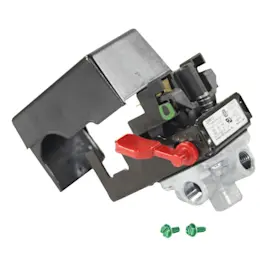
On a Coleman air compressor model P0401110, a bad pressure switch shows up as starting problems, failure to shut off at cut-out pressure, rapid on-off cycling, or no power getting to the motor when tank pressure is low. These symptoms point to the switch not controlling power based on tank pressure.
- Compressor won’t start even with the tank empty or low pressure
- Compressor runs but never shuts off (does not reach or recognize cut-out)
- Short-cycling (starts and stops repeatedly within seconds)
- Stops too soon and leaves the tank under-pressurized
- Clicking/chattering from the switch area during start or shutoff
- Burnt smell, heat discoloration, or pitted contacts inside the switch housing
Safety first: unplug the compressor and bleed tank pressure before opening any covers.
- Confirm power supply basics: outlet power, extension cord gauge, and a reset breaker.
- Watch the behavior at low tank pressure: if the motor does not energize at all, the switch or its wiring is a prime suspect.
- Listen for the unload event: after shutoff, many compressors briefly vent air from the unloader line; if the switch never shuts off, it never unloads correctly.
- Inspect wiring and terminals: loose spade connectors and heat-damaged terminals can mimic a bad switch.
| What you see | Most likely cause | Why it matters |
|---|---|---|
| Won’t start, tank empty | Pressure switch contacts not closing, wiring issue | Motor never gets power |
| Won’t start with pressure in tank | Unloader not venting, check valve leaking back | Motor starts under load |
| Runs constantly | Switch not opening at cut-out, stuck mechanism | Overheats motor, wastes air |
| Rapid cycling | Weak diaphragm/spring, arcing contacts | Premature motor and switch wear |
The pressure switch is the main control that turns the motor on at cut-in pressure and off at cut-out pressure. When it fails, you can get no-start issues, unsafe run time, and excessive wear on the motor, pump, and check valve.
- Use our step-by-step guide: how to replace an air compressor pressure switch
- If the unit struggles to start with pressure in the tank, also review: air compressor won't start with a full air tank
If you need to identify the correct replacement switch for Coleman P0401110, use the model-based parts lookup on this page, or search by model on Sears PartsDirect.
Last updated: February 2026
Is it worth it to repair a compressor?
Yes, repairing a Coleman P0401110 air compressor is worth it when the problem is a single, serviceable failure (like a pressure switch, check valve, regulator, or a small air leak) and the total repair cost stays well below the price of a comparable replacement unit. If the pump is worn out, the tank is compromised, or multiple major issues show up at once, replacement is the better value.
We use these practical checkpoints for air compressor repair decisions:
- One clear symptom (won’t start, won’t build pressure, leaks) usually means a targeted fix.
- Multiple symptoms at once often means stacked failures and higher cost.
- Tank condition matters most; a questionable tank ends the repair discussion.
- Parts availability and labor time can outweigh the cost of a new unit.
- Your usage level (occasional DIY vs. daily use) changes what “worth it” means.
Use this as a simple way to estimate value before you tear into the compressor.
| What’s wrong | Typical fix type | Usually worth repairing? |
|---|---|---|
| Won’t start | Electrical/control diagnosis | Often yes |
| Won’t build tank pressure | Leak/valve/pump diagnosis | Often yes (unless pump is worn) |
| Can’t adjust output pressure | Regulator-related diagnosis | Often yes |
| Loud operation | Maintenance/isolating vibration | Sometimes |
| Tank won’t hold air | Tank integrity check | No |
Before buying anything, we recommend these steps:
- Unplug the unit and let it cool; then drain the tank fully.
- Listen for constant hissing at fittings, the regulator, or the safety valve.
- Watch the gauges while it runs; note whether pressure rises, stalls, or drops.
- Check the unloader behavior (hard-start symptoms often point here).
- Confirm power supply (outlet, extension cord length, breaker trips).
For step-by-step troubleshooting paths, use our DIY symptom guide: air compressor won't start.
A good repair restores safe, reliable pressure and prevents repeat failures (like hard starts that damage the motor). A bad repair decision wastes money and time, especially if the pump is worn out or the tank is the real problem.
If you decide to move forward, we recommend starting with the parts list for Coleman P0401110 and using Sears PartsDirect to search by model number when you need additional diagrams or replacement options.
Last updated: February 2026
What is the most common cause of air compressor failure?
The most common cause of air compressor failure on a Coleman P0401110 is poor maintenance that leads to overheating and accelerated wear. Dirty intake filtration, restricted cooling airflow, and small air leaks force the pump and motor to run hotter and longer, which shortens component life.
- Overheating from restricted airflow (blocked shrouds, dusty cooling fins, poor ventilation)
- Dirty or clogged intake filter that reduces airflow and increases run time
- Air leaks at fittings, drain valve, regulator, hose, or tank check valve
- Electrical stress (weak outlet circuit, damaged cord, failing pressure switch, bad capacitor)
- Moisture and corrosion from not draining the tank regularly
- Worn pump components (valves, seals, piston ring) after extended run time
- Listen and look while it runs: longer run time and hotter-than-normal pump head point to restriction or leaks.
- Check for leaks: spray soapy water on fittings and watch for bubbles.
- Confirm cooling airflow: keep vents clear and avoid running in tight, hot spaces.
- Drain the tank after use to reduce internal rust and water carryover.
- Watch the gauges: unstable pressure behavior often signals a regulator, check valve, or pressure switch issue.
| What you notice | Most likely cause | What to do first |
|---|---|---|
| Won’t start | Power supply issue, pressure switch, capacitor | Verify outlet/circuit, then inspect switch wiring |
| Runs but won’t build pressure | Leak, bad check valve, worn pump valves | Leak test, then evaluate pump/check valve |
| Builds pressure slowly | Dirty intake, restriction, worn pump | Clean intake path, then assess pump condition |
| Pressure won’t regulate | Regulator issue or gauge problem | Inspect regulator knob and outlet fittings |
Heat and run time are the biggest enemies of an air compressor. When airflow is restricted or air is leaking, the unit cycles longer, temperatures rise, and parts like valves, seals, and electrical components fail sooner.
- Use our troubleshooting steps for air compressor won't start.
- If pressure is low or slow to build, follow air compressor won't build tank pressure.
- For deeper mechanical wear, see how to rebuild an air compressor pump.
If you need replacement parts for the Coleman P0401110, start with the parts list for your model, or search by model number on Sears PartsDirect.
Last updated: February 2026
Are air compressor parts interchangeable?
Most air compressor parts are not interchangeable, especially on a specific unit like the Coleman P0401110; internal components (pump parts, valves, seals, motor parts) must match the exact design and pressure ratings. Some external air fittings can interchange if the thread type and coupler style match.
These parts are typically model-specific because of mounting patterns, pressure limits, and internal tolerances:
- Pump components (piston, cylinder, reed/plate valves)
- Head gasket and seal kits
- Pressure switch and unloader setup (cut-in/cut-out range and port layout)
- Check valve (tank port size and flow direction)
- Regulator assembly (port sizes and gauge range)
- Motor and capacitor (voltage, amperage, shaft size)
Some items are more standardized, but you still have to match the connection details to avoid leaks:
- Quick-connect couplers and plugs (industrial, automotive, ARO styles)
- Hose fittings and adapters
- Threaded fittings when the thread standard and size match (commonly NPT in the U.S.)
- Air tools and blow guns (as long as the coupler style matches)
Use this checklist to prevent cross-threading, leaks, and unsafe pressure mismatches:
- Match thread type (for many U.S. compressors this is NPT, not metric)
- Match thread size (common sizes include 1/4 in. and 3/8 in.)
- Match coupler style (industrial vs automotive vs ARO)
- Confirm pressure rating meets or exceeds your compressor’s max PSI
- Confirm port orientation and clearance (especially for pressure switches and regulators)
| Part type | Often interchangeable? | What must match |
|---|---|---|
| Quick coupler/plug | Sometimes | Coupler standard, thread size/type, PSI rating |
| Regulator | Sometimes | Port size, gauge range, flow capacity |
| Pressure switch | Rarely | Cut-in/cut-out range, unloader port, mounting/ports |
| Pump rebuild parts | No | Exact pump design and kit for the model |
Interchanging the wrong part can cause constant air leaks, failure to build tank pressure, nuisance tripping, or unsafe over-pressurizing. Matching the correct specs keeps your Coleman P0401110 running reliably and helps protect the tank, pump, and connected air tools.
We recommend using the model-based parts lookup first; if you do not see the exact component listed for P0401110, search by the model number on Sears PartsDirect to find the closest matching diagram or replacement listing.
For troubleshooting that often gets mistaken for a “wrong part” issue, use our DIY guides like air compressor won't build tank pressure and air compressor air leaks.
Last updated: February 2026