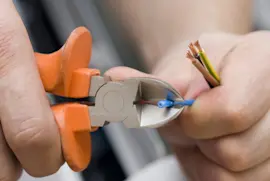
Installation guide
 Owner’s manual
 Error Codes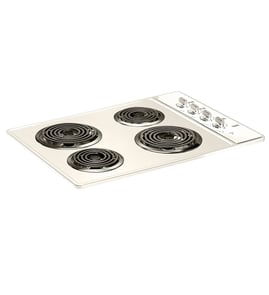



How much is it to replace an electric stove top?
Replacing an electric stove top usually runs from a few hundred dollars to $1,000+ depending on whether you replace one surface element, the glass cooktop surface, a control board, or the entire cooktop. For GE PP945BM2BB, installation and electrical hookup details in the installation guide can also affect labor time.
What “stove top replacement” can mean
Most repairs fall into one of these categories:
- Replace a single radiant or halogen element (one burner not heating)
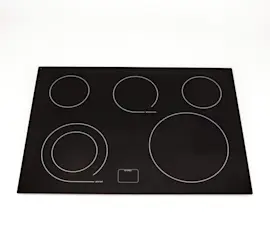
- Replace the glass cooktop main top (cracked or heavily damaged)
- Replace a control board (touch controls not responding, burner stuck on)
- Replace the entire cooktop (multiple major failures)
Typical cost ranges (parts plus labor)
These ranges are common for a 30-inch electric cooktop; totals vary by local labor rates and whether the unit must be pulled from the countertop.
| What gets replaced | Typical total cost | Common situation |
|---|---|---|
| Single surface element | $250 to $600 | One burner fails but others work |
| Control board | $300 to $900 | Erratic heat, won’t turn on, stuck on |
| Glass cooktop main top | $900 to $1,600+ | Cracked glass or severe damage |
| Entire cooktop | $1,000 to $2,600+ | Multiple issues or full upgrade |
Model-specific parts that often drive the price
If you are repairing (not replacing the whole cooktop), these PP945BM2BB parts are common:
- Glass surface: cooktop main top (black) WB62T10567
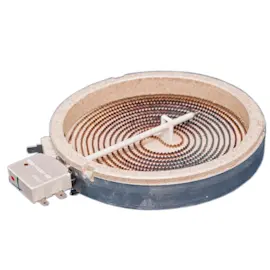
- Small element: halogen element WB30T10145
- Dual element: range dual radiant surface element WB30T10131
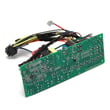
- Touch controls: GE cooktop touch control board WB23T10024
Why it matters
A cracked glass top is the highest-cost repair, while a single element is often the most cost-effective fix. Electrical requirements and safe power shutoff steps are covered in the installation guide, and they directly impact labor.
Last updated: February 2026
What pans should not be used on a glass top stove?
On the GE PP945BM2BB glass cooktop, do not use cookware with warped, ridged, rounded, or rough bottoms, and avoid woks with support rings. We also recommend avoiding glass-ceramic/stoneware and thin lightweight aluminum because they heat poorly and can scratch or damage the surface (especially if overheated). See the cookware guidance in the owner's manual.
Cookware to avoid (to prevent scratches and poor heating)
- Glass-ceramic or stoneware cookware (usable, but not recommended; can scratch and performs poorly)
- Thin lightweight aluminum pans (can overheat; not recommended)
- Pans with rounded, curved, ridged, or warped bottoms (poor contact; can affect performance)
- Rough-bottom pans (can leave metal marks and scratches)
- Woks with support rings (won’t heat properly on radiant glass elements)
- Wet pans or wet lids placed on the cooktop (can cause issues and mess; use dry cookware)
Cookware that works best on this cooktop
Flat-bottom cookware that matches the burner size gives the most even heating and helps protect the glass.
| Cookware type | Recommended? | Notes |
|---|---|---|
| Stainless steel | Yes | Good overall performance on glass tops |
| Heavyweight aluminum | Yes | Clean residue immediately to prevent marks |
| Copper | Yes | Can leave residue; remove promptly |
| Porcelain enamel-covered cast iron | Yes | Must be smooth and fully coated to reduce scratching risk |
| Copper-bottom pans | Not recommended | Can leave residue that looks like scratches |
Why it matters
Glass cooktops heat through direct contact. Anything that reduces contact (warped bottoms) or increases abrasion (rough surfaces) can cause scratches, metal marks, and even permanent staining if a pan boils dry or overheats.
Quick protection tips we use in the field
- Check pan flatness with a straight edge before using it.
- Lift pans; do not slide them across the glass.
- Never heat an empty pan and never let a pot boil dry.
- Clean spills and residue right after cooking (once safe to do so).
Last updated: February 2026
Why is my electric cooktop not turning on?
If your GE PP945BM2BB electric cooktop will not turn on, the most common causes are a tripped breaker or blown fuse, a loose or incorrect junction box connection, or a control shutdown that needs a power reset. Start by verifying the home power supply, then reset power for 1 minute.
Quick checks (start here)
- Confirm the cooktop breaker is ON (or replace the time-delay fuse if your home uses fuses).
- Make sure the cooktop is on its own properly grounded branch circuit.
- Check that the conduit is securely connected to the junction box and wiring is not loose or pinched.
- Remove items from the cooktop surface and try powering on again.
- If the cooktop recently overheated or showed an error, let it cool completely before retrying.
Reset the cooktop control (recommended first fix)
The manual’s control-error recovery steps are:
- Turn OFF power at the circuit breaker (or fuse box) for 1 minute.
- Turn power back ON.
- Try setting a surface element to a cooking setting.
If it still will not operate after the reset, the issue is typically in the touch controls, relay control, or power supply wiring. See the troubleshooting guidance in the owner's manual.
Parts that commonly cause a “dead” cooktop
If power is confirmed at the breaker and the junction box connections are secure, these parts are common suspects on this model:
| Symptom | What it often points to | Example part for PP945BM2BB |
|---|---|---|
| No response from any touch keys | Touch control failure | GE cooktop touch control board WB23T10024 |
| Touch panel responds but elements never heat | Relay/control not switching power | Cooktop relay control board WB27T10893 |
Why it matters
An electric cooktop that will not power on is often a simple supply issue (breaker, fuse, junction box connection). Confirming power and connections first prevents unnecessary part replacement and helps avoid unsafe electrical troubleshooting.
Last updated: February 2026