
Are circular saw blade nuts reverse thread?
Yes, many circular saw blade arbor nuts are reverse (left-hand) thread, but it depends on the saw’s blade rotation and which side the blade mounts on. For a Craftsman circular saw model 315108220, the safest rule is to loosen the nut in the same direction the blade normally rotates.
Use these checks before you force anything:
- Look for an arrow or “LOOSEN” marking on the blade guard, flange, or arbor nut area.
- Note the blade rotation arrow on the upper guard; loosen the nut in that same direction.
- If the nut starts to tighten when you try to loosen it, stop and reverse direction.
- Use the spindle lock (if equipped) or hold the blade with a scrap wood block to prevent rotation.
- Use the correct wrench size so you do not round the nut.
This is the common pattern across many circular saws; use it as a guide when markings are missing.
| Saw layout | Common blade rotation | Common arbor nut thread | Loosen direction (typical) |
|---|---|---|---|
| Blade on right (many corded saws) | Clockwise | Left-hand (reverse) | Clockwise |
| Blade on left (many cordless saws) | Counterclockwise | Right-hand (standard) | Counterclockwise |
- Unplug the saw or remove the battery.
- Raise the lower guard and set depth to full so you can access the arbor nut.
- Lock the spindle (or brace the blade) and apply steady pressure with the wrench.
- If it will not break free, add a short, controlled “snap” of force; do not use heat.
Arbor nuts are designed so normal cutting forces tend to self-tighten, not loosen. Turning the wrong way can over-tighten the nut, damage threads on the arbor shaft, or crack the blade flange.
For parts diagrams and to match the correct hardware for model 315108220, search by model number on Sears PartsDirect.
Last updated: February 2026
Why is my circular saw stopping mid cut?
On a Craftsman circular saw model 315108220, stopping mid-cut is usually caused by the saw being overloaded (blade binding or too aggressive a feed rate), a power delivery problem (cord, outlet, breaker), or an internal electrical issue such as worn motor brushes or a failing switch.
- Let the blade do the work: slow your feed rate, especially in thick lumber or wet/treated wood.
- Confirm the blade is sharp and correct: a dull blade or the wrong tooth count increases load and heat.
- Check blade alignment and binding: make sure the lower guard moves freely and the blade is not rubbing the shoe.
- Verify power: try a different outlet, avoid long/light-gauge extension cords, and reset any tripped breaker.
- Inspect the cord and plug: look for cuts, loose prongs, or intermittent power when the cord is moved.
| Symptom | Most likely cause | What to do next |
|---|---|---|
| Stops only in dense cuts | Blade dull, wrong blade, binding | Replace blade, reduce feed, support workpiece to prevent pinch |
| Stops randomly, restarts when cord moves | Cord/plug or extension cord issue | Use a heavier-gauge cord, replace damaged cord/plug |
| Stops and smells hot | Overload, motor overheating, worn brushes | Let it cool, check ventilation, inspect brushes |
| Stops and won’t restart until trigger is released | Switch issue or brush contact issue | Test switch continuity, inspect brush wear |
- Unplug the saw before any inspection.
- Remove dust buildup around the trigger area and motor vents.
- If the saw has accessible motor brushes, check for short length, chipping, or weak springs.
- Use a multimeter to check for intermittent continuity through the switch and cord (wiggle test).
For step-by-step testing technique, we use the same process shown in how to use a multimeter to test electrical parts video.
A saw that stops mid-cut is often warning you about blade bind or overheating. Fixing the root cause helps prevent kickback, reduces motor damage, and improves cut quality.
If you need to look up diagrams or replacement items by model number, search using 315108220 on the parts list for this saw or on Sears PartsDirect.
Last updated: February 2026
What are the parts of a circular saw machine?
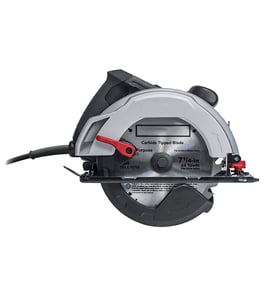
A Craftsman circular saw like model 315108220 is built around a motor that spins a circular blade, plus safety and adjustment parts that control depth, angle, and guarding. Knowing the main components helps you diagnose issues (won’t start, rough cuts, binding) and choose the right replacement parts on Sears PartsDirect.
- Blade: The cutting disc; tooth count and blade type affect cut quality.
- Blade guard (lower guard): Spring-loaded cover that retracts during a cut and returns when you lift the saw.
- Upper guard: Fixed housing around the top of the blade.
- Shoe (base plate): The flat plate that rides on the workpiece; supports straight, stable cuts.
- Depth adjustment: Sets how far the blade extends below the shoe.
- Bevel adjustment: Sets the cutting angle (commonly 0 to 45 degrees).
- Handle and trigger: Main grip and power control; many saws also include a trigger lock for safety.
| Part | What it does | Common symptom when it’s the problem |
|---|---|---|
| Blade | Cuts material | Burning, tear-out, slow cutting |
| Shoe/base plate | Keeps cut stable | Crooked cuts, wobble, poor tracking |
| Lower guard | Protects user | Guard sticks, won’t retract/return |
| Depth/bevel adjusters | Controls cut settings | Wrong depth, bevel slips, inconsistent cuts |
| Trigger/switch | Starts motor | Won’t start, intermittent power |
When a circular saw cuts poorly, the cause is usually a blade issue (dull, wrong type, warped) or a setup issue (shoe bent, depth too deep, bevel not locked). When it won’t run, the most common checks are the power cord, switch/trigger, and internal wiring.
- Unplug the saw before inspecting anything near the blade or guard.
- Confirm the blade is installed correctly and tightened.
- Check that the lower guard moves freely and snaps back.
- Verify the shoe is flat and the bevel lock holds firmly.
- If electrical problems are suspected, use a meter and follow safe testing practices (see how to use a multimeter to test electrical parts video).
Last updated: February 2026
How to change an old Craftsman circular saw blade?
To change the blade on your Craftsman circular saw model 315108220, disconnect power, use the saw’s blade wrench to loosen the arbor (spindle) nut while preventing the blade from turning, remove the outer washer, swap blades in the correct direction, then reinstall and tighten the nut securely.
- Unplug the saw before touching the blade area
- Wear gloves when handling the blade teeth
- Set the saw on a stable bench with the base plate fully supported
- Keep the lower blade guard moving freely; only retract it as needed
- Use the correct blade wrench; avoid adjustable wrenches that can slip
- Unplug the saw.
- Raise the lower guard to access the arbor nut and outer washer.
- Prevent the blade from turning using a non-damaging method:
- Rest the saw firmly on a bench and brace the blade so it cannot rotate, or
- Use a wood scrap against the blade teeth to hold it from turning (do not use your hand).
- Loosen the arbor (spindle) nut with the blade wrench.
- Remove the outer washer/flange, then slide the old blade off the arbor.
- Install the new blade:
- Match the blade’s rotation arrow to the saw’s rotation direction.
- Seat the blade fully on the arbor.
- Reinstall the outer washer/flange and arbor nut.
- Tighten the arbor nut securely with the wrench while the blade is braced.
- Hand-spin check (still unplugged): blade turns without rubbing, and the guard returns smoothly.
| Check | Correct result | If not correct |
|---|---|---|
| Blade direction | Arrow matches saw rotation | Flip blade over |
| Washer/flange | Flat, fully seated | Re-seat washer/blade |
| Guard action | Opens and snaps closed | Clean debris, inspect guard |
| Blade stability | No wobble | Re-seat blade, tighten nut |
A properly installed blade cuts straighter, reduces vibration, and lowers kickback risk by keeping the blade clamped evenly on the arbor.
Use the model diagrams to match blade size and any blade hardware (arbor nut, outer washer, guard parts). If you need to search by model number for compatible parts and accessories, use Sears PartsDirect.
Last updated: February 2026
