Owner’s manual
 Error Codes


What is the average lifespan of an LG washing machine?
Most LG washing machines, including the LG WM4200HWA, typically last 10 to 14 years with normal household use. Regular maintenance (especially keeping the drum and door seal clean) and avoiding chronic overloading are the biggest factors that help you reach the high end of that range.
What affects lifespan the most
These habits have the biggest impact on how long a front-load washer like the WM4200HWA lasts:
- Run the Tub Clean cycle monthly to reduce residue and odor buildup
- Use only HE detergent and avoid over-dosing (oversudsing stresses components)
- Keep the door slightly open between loads so the drum and gasket can dry
- Don’t overload; tightly packed loads increase vibration and bearing wear
- Check and replace fill hoses on schedule to prevent leaks and water damage
For model-specific cleaning and care steps, follow the maintenance section in the WM4200HWA owner’s manual.
Quick maintenance schedule (recommended)
| Task | How often | Why it helps |
|---|---|---|
| Tub Clean cycle | Monthly | Prevents residue, mildew, and odors |
| Wipe door glass and door seal | After wash day | Reduces moisture that leads to mold |
| Clean dispenser drawer | 1 to 2 times per month | Prevents clogs and detergent buildup |
| Inspect/replace inlet hoses | Inspect periodically; replace every 5 years | Reduces leak risk |
When “end of life” is really a repairable issue
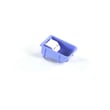
A washer that seems worn out is often just showing a common, fixable failure. For example, if the door won’t lock or the washer won’t start, the door lock can be the culprit; see the LG washer door lock EBF61315802 if you’re diagnosing a door-latch problem.
Why it matters
Knowing the typical 10 to 14 year lifespan helps you decide whether to invest in a repair (like a door lock, inlet valve, or drain component) versus planning for replacement, especially if multiple issues are stacking up.
Last updated: January 2026
How do you fix an unbalanced LG washer?
On the LG WM4200HWA washer, an unbalanced condition (often shown as a UE error) is usually fixed by pausing the cycle, redistributing the load in the drum, and restarting. If it keeps happening, we focus on load size, item mix, and making sure the washer is level. See the WM4200HWA manual for operating and leveling guidance.
Quick steps to rebalance the load
- Press Start/Pause and wait for the drum to stop and the door to unlock.
- Open the door and untangle and spread items evenly around the drum.
- If the drum is packed tight, remove a few items and run a smaller load.
- If the load is very small (1 item), add a few similar items to help balance.
- Close the door and press Start/Pause to resume.
If it keeps going out of balance
Check these common causes
- Mixed weights (one heavy item with light items) causing the load to “ball up”
- Bulky items (comforters, blankets) that should be washed alone
- Washer not level; even a slight rock can amplify vibration at high spin
- Slippery floor; the washer can shift during spin
Leveling checklist (most important long-term fix)
Use this as a quick reference while following the leveling procedure in the manual:
| What to check | What “good” looks like | What to do if it’s not |
|---|---|---|
| Washer rocks when pushed | No rocking | Adjust leveling feet, then tighten locknuts |
| Floor condition | Solid, not flexing | Reinforce floor or move washer to a sturdier spot |
| Load type | Similar-weight items | Re-sort and re-run the cycle |
When a part may be involved
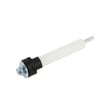
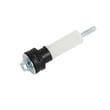
If the washer is level and loads are balanced but it still shakes hard or repeatedly stops to rebalance, a worn suspension component can be a factor. For this model, one component used to control tub movement is the LG washer shock absorber ACV72909506.
Why it matters
Running the WM4200HWA with frequent unbalanced spins can lead to loud banging, longer cycle times (extra rebalancing), and more wear on the suspension and tub support system.
Last updated: January 2026
Why is an LG washing machine expensive?
LG washers like model WM4200HWA often cost more because they bundle premium hardware and convenience features into the base machine, such as high spin speeds, built-in heating for hot wash options, and smart connectivity. You are typically paying for performance, efficiency, and feature set rather than just basic wash capability (see the WM4200HWA manual).
What you are paying for on WM4200HWA
From the model’s specifications and feature set, higher pricing commonly reflects:
- High max spin speed (up to 1300 RPM) to remove more water and reduce dryer time
- Built-in heating capability for higher-temperature cycles (for example, Sanitary)
- Smart features (LG ThinQ, Remote Start, Smart Diagnosis)
- High-efficiency (HE) design that uses less water and energy while maintaining cleaning performance
- Heavier build (this model’s listed net weight is about 201.5 lb), which often supports stability and durability
Cost drivers that are not obvious at purchase
Even when two washers look similar, price differences often come from parts and engineering choices that affect long-term ownership.
| Cost driver | What it can mean for you | Example on WM4200HWA |
|---|---|---|
| More sensors and electronics | Better control, more diagnostics, higher part complexity | Wi-Fi module, Smart Diagnosis |
| Higher-performance components | Better extraction, quieter operation, more cycle options | 1300 RPM spin, specialty cycles |
| Premium door and sealing system | Better leak control, but more precision parts | Door lock and door boot system |
When a higher price is worth it
A higher-priced LG front-load washer is usually worth it if you:
- Wash frequent loads and want lower water and energy use
- Want faster drying from higher spin extraction
- Use specialty cycles like Sanitary or Allergiene
- Prefer app-based monitoring and diagnostics
Why it matters
Washer pricing is not just brand markup; it is often tied to the machine’s feature set and the cost of the components inside. On WM4200HWA, the combination of high-speed spinning, heating, and smart functions is a common reason the upfront price is higher.
Last updated: January 2026
Is a 4.5 cu ft washer large?
Yes. A 4.5 cu ft washer is considered large capacity; and your LG WM4200HWA is actually larger than that. The WM4200HWA is a 5.0 cu. ft. washer, so it falls solidly in the large-capacity range (see the WM4200HWA owner's manual).
What “large capacity” means for washers
In most washer lineups, “large capacity” starts around 4.5 cu. ft. and up. That extra drum space helps you wash more items per load without packing the drum.
- Handles bigger mixed loads (jeans, sweatshirts, towels)
- Better for bulky items when loaded loosely
- Helps reduce the chance of out-of-balance spinning
- Can cut down the number of loads per week
How we recommend loading the WM4200HWA
Even with a large drum, cleaning performance depends on airflow and tumbling space.
- Load items loosely; do not compress laundry
- Combine large and small items to help balance the spin
- Wash very bulky items (comforters, pet bedding) one at a time if they cause vibration
- Use HE detergent; too much can cause oversudsing and poor rinsing
Quick capacity guide
| Washer capacity | Common label | Best fit for |
|---|---|---|
| Under 4.0 cu. ft. | Standard | Smaller loads, 1 to 2 people |
| 4.0 to 4.4 cu. ft. | Medium-large | Mixed loads, moderate use |
| 4.5 cu. ft. and up | Large | Bulky items, larger households |
Why it matters
A true large-capacity washer like the LG WM4200HWA (5.0 cu. ft.) helps you avoid overloading, which can reduce cleaning performance, increase vibration, and contribute to error codes such as unbalance conditions.
Last updated: January 2026