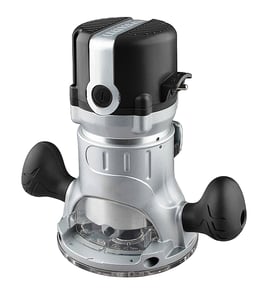

Does Craftsman make a router table?
Yes. Craftsman makes router tables, and the Craftsman model 25444 is a router and sabre saw table designed to support routing work with a mounted router and guided cuts. For the best fit and safe operation, match the table, insert plate, and mounting pattern to your router.
A router table needs to match your router’s base pattern and the way you plan to use it (edge profiling, dadoes, pattern routing). When you compare options, focus on these practical details:
- Mounting compatibility: pre-drilled patterns or a universal mounting plate
- Table flatness and size: larger tops support wider stock and reduce tipping
- Fence quality: straight, adjustable fence with solid locking
- Dust collection: fence port and under-table collection help visibility and motor cooling
- Switch access: a large, easy-to-reach safety switch is a big usability upgrade
- Stability: wide stance or the ability to bolt down to a bench/stand
| Router table type | Best for | What to watch for |
|---|---|---|
| Bench-top table | Small shops, occasional routing | Lighter fences, smaller work surface |
| Table insert plate system | Frequent bit changes, better alignment | Plate leveling and router pattern match |
| Router table cabinet/stand | Dust control, stability, repeatability | Footprint, cost, setup time |
A properly matched router table improves cut accuracy and safety by keeping the router stable, the work supported, and the fence aligned. That reduces chatter, burning, and kickback risk, especially with larger bits.
If you are maintaining a Craftsman 25444 router and sabre saw table, use the model-based parts lookup first; if you are searching beyond what’s listed for this model, we recommend searching by model number on Sears PartsDirect.
Last updated: February 2026
How to replace router bits sears Craftsman router?
On the Craftsman 25444 router and sabre saw table, you change the bit on the router motor mounted in the table (not on the table itself). Unplug the router, loosen the collet nut, remove the old bit, install the new bit correctly, then tighten the collet securely before powering back on.
- Unplug the router from the outlet before touching the bit or collet.
- Raise the router motor or lift the bit above the table for safe access.
- Use the router’s wrench(es) to hold the spindle and loosen the collet nut (some routers use two wrenches; others use a spindle-lock button).
- Turn the collet nut counterclockwise until the bit releases; remove the old bit.
- Insert the new bit shank, then pull it back out slightly (about 1/8 inch) so it is not bottomed out.
- Tighten the collet nut firmly with the wrench(es) so the bit cannot slip.
| Check | What to do | Why it matters |
|---|---|---|
| Shank size | Match the bit shank to your router’s collet (commonly 1/4 inch or 1/2 inch) | Prevents poor clamping and vibration |
| Shank seating | Do not bottom out the shank; keep most of the shank engaged | Reduces loosening during cuts |
| Collet condition | Wipe dust off the collet and bit shank | Improves grip and cut quality |
| Tightness | Confirm the bit does not twist or pull out by hand | Helps prevent kickback |
A router bit that is the wrong shank size, bottomed out, or not tightened evenly can chatter, burn the wood, or slip in the collet. Correct seating and tightening improves control and cut quality.
The Craftsman 25444 is the table; bit-changing parts (collet, collet nut, wrenches) belong to the specific router motor you have installed. Use your router’s model number to find the correct replacement parts, or search by model on Sears PartsDirect.
For general DIY safety guidance before working on powered equipment, see are diy appliance repairs safe.
Last updated: February 2026
What is a Sears Craftsman router?
Craftsman model 25444 is not a handheld router; it is a router and sabre saw table that lets you mount a compatible router (or sabre saw) upside down for controlled, table-style cutting. It improves repeatability for edge profiling, grooves, and straight cuts.
A router table turns many freehand routing tasks into guided cuts using a flat work surface and adjustable guides.
Common uses include:
- Edge profiling with round-over, chamfer, and ogee bits
- Cutting straight grooves and dadoes using a fence
- Making rabbets and flush-trimming with better control
- Routing small parts more safely than handheld routing
- Repeating the same cut depth and fence setting across multiple boards
On a router and sabre saw table like the 25444, the “tool” you adjust most is the table system, not the router motor itself.
Look for these table features during setup:
- Tabletop work surface and mounting area for the router
- Fence system (often adjustable for straight, guided cuts)
- Throat plate or insert area around the bit opening
- Miter gauge slot (for guided crosscuts and angles)
- Switch access and cord routing for safer on/off control
- Unplug the router before mounting it or changing bits
- Confirm the router is firmly secured to the table before powering on
- Set the fence parallel to the bit and lock it before cutting
- Use push blocks or push sticks for narrow stock
- Make multiple shallow passes instead of one deep cut
| Item | What it is | What it does |
|---|---|---|
| Handheld router | Motor + base you move over the work | Good for large panels, in-place trimming |
| Router table (25444) | Table that holds the router stationary | Best for repeatable, guided cuts on smaller stock |
Identifying the 25444 correctly as a router table helps you shop for the right replacement hardware and accessories, and it also helps you choose a compatible router and safe cutting method.
For diagrams and replacement items tied to model 25444, start with the model parts list; for broader model-based searching, use Sears PartsDirect.
Last updated: February 2026