Owner’s manual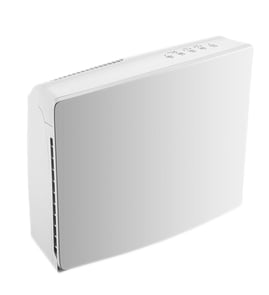

Do air purifiers with HEPA filters really work?
Yes. Air purifiers with a True HEPA filter really work for reducing airborne particles in the room, especially allergens like dust, pollen, and smoke. For the Kenmore 25185300900 air cleaner, the manual states the True HEPA filter captures 99.99% of particles as small as 0.3 microns when the unit is used correctly and maintained.
What a HEPA air purifier helps with (and what it does not)
HEPA filtration is designed for particles, not every type of air contaminant.
- Helps reduce: dust, pollen, smoke particles, and other common airborne allergens
- Helps with odors when the carbon pre-filter is fresh (odor-causing gases)
- Does not remove carbon monoxide (CO) from heating appliances or other sources
- Performance drops if you run the unit without filters or with overloaded filters
Quick reality check
| Air issue in the home | Will HEPA help? | What to use with it |
|---|---|---|
| Allergens (pollen, dust) | Yes | Keep doors/windows closed during high pollen, replace filters on time |
| Smoke particles | Yes | Use higher fan speed during events, replace filters sooner |
| Odors (cooking, pets) | Sometimes | Carbon pre-filter replacement every ~3 months for best performance |
| Carbon monoxide (CO) | No | Use a CO alarm and address the source |
How to get real results from your Kenmore 25185300900
A HEPA purifier only performs as well as its setup and filter maintenance.
- Do not operate without a filter installed
- Do not wash and reuse the True HEPA filter or the carbon pre-filter
- Do not block the intake or outlet vents
- Avoid humid or wet locations (for example, bathrooms)
- Keep it away from oily residue sources (such as deep fryers) that can load filters faster
Filter maintenance that makes the biggest difference
The manual calls out two key maintenance triggers:
- Replace the True HEPA filter when the CHECK FILTER indicator turns on
- Replace the carbon pre-filter about every 3 months for best performance (odor control and larger particles)
If the CHECK FILTER light stays on after replacement, reset it using the RESET FILTER hole on the control panel (the manual describes using a paperclip to press the reset).
Why it matters
If you are buying an air purifier for allergies, pet dander, or visible dust, True HEPA filtration is one of the most effective tools for particle reduction. Keeping filters fresh and airflow unobstructed is what turns “it runs” into “it works.”
For model-specific operating and filter replacement steps, use the 25185300900 owner's manual.
Last updated: February 2026
Is it okay to sleep with an air purifier on all night?
Yes. For the Kenmore 25185300900 air cleaner, it’s OK to run it all night as long as it’s fully assembled with the filters installed and the intake and outlet vents are not blocked; this model is designed with quiet operation that works well for nighttime use. See the owner's manual for safety and operating details.
Best settings for overnight use
Most people get the best sleep comfort and steady air cleaning by using a lower fan speed or AUTO.
- Use a low fan speed for the quietest operation.
- Use AUTO if you want the unit to adjust fan speed based on detected pollutants.
- If the room is dark, the light sensor can dim the control panel lights and lower fan speed for quiet, energy-efficient operation.
- Keep doors and windows in a consistent state (open or closed) so the air quality stays stable.
- Place the unit where airflow is unobstructed (not behind curtains or furniture).
Safety checks to do before leaving it on overnight
These steps match common air cleaner safety guidance and the precautions in the Kenmore use and care information.
- Keep the unit away from humid or wet locations (for example, bathrooms).
- Do not use near flammable gases, cigarettes, incense, or other spark-creating items.
- Do not block the intake or outlet vents.
- Do not operate the air cleaner without a filter installed.
- Do not insert fingers or objects into the air intake or outlet.
What an air cleaner can and cannot do
Air cleaners help with airborne particles, but they are not a cure-all.
| Topic | What to expect overnight | What not to expect |
|---|---|---|
| Dust, pollen, pet dander | Ongoing reduction while it runs | Instant elimination of all allergens |
| Odors (with carbon pre-filter) | Some odor reduction over time | Removal of every odor source |
| Carbon monoxide (CO) | No benefit | This unit does not remove CO |
Why it matters
Sleep is a long, continuous exposure period. Running your Kenmore 25185300900 overnight keeps air moving through the filters for steady particle capture, and the quiet and light-sensing features are intended to make nighttime operation more comfortable.
Last updated: February 2026
Is there a downside to air purifiers?
Yes. With a Kenmore air cleaner like model 25185300900, the main downsides are ongoing filter cost, noise and airflow restrictions if filters are dirty, and safety or performance limits (for example, it will not remove carbon monoxide). For model-specific use and care details, follow the owner's manual.
Common downsides (and how to minimize them)
- Filter replacement cost and availability: Filters are expendable parts and are not covered under the product warranty.
- Reduced performance with clogged filters: A loaded filter restricts airflow and can make the unit seem “weak.”
- Noise at higher fan speeds: Higher airflow typically means more fan noise.
- Placement limitations: Do not block intake or outlet vents; blocked airflow reduces cleaning performance.
- Not a complete indoor air solution: This unit does not remove carbon monoxide from heating appliances or other sources.
Safety and use limits to know for this Kenmore air cleaner
The 25185300900 is designed for typical dry indoor rooms and safe operation depends on proper placement and handling.
- Do not use in humid/wet locations (such as bathrooms).
- Do not use near flammable gases, cigarettes, incense, or other spark-creating items.
- Do not operate without a filter.
- Do not wash and reuse the True HEPA filter or carbon pre-filter.
- Turn the unit off and unplug it before maintenance.
Quick troubleshooting: “My air purifier seems worse after I run it”
| Symptom | Most common cause | What we recommend |
|---|---|---|
| Musty or stale odor | Pre-filter loaded with odor particles | Replace filters on schedule; keep unit away from oily residue sources (example: deep fryer) |
| Weak airflow | Intake/outlet blocked or filter clogged | Clear vents; confirm filters are installed correctly |
| Irritation or dryness | Air movement, dust disturbance, or room conditions | Lower fan speed, reposition unit, and keep doors/windows consistent |
Why it matters
Air purifiers help most when airflow is unobstructed and filters are maintained. Knowing the limits (like carbon monoxide removal) helps you use the air cleaner as one layer of indoor air quality, not a substitute for ventilation and safe heating equipment.
Last updated: February 2026
What is the 2 3 rule for air purifiers?
The 2/3 rule is a quick sizing guideline: choose an air purifier with a CADR (Clean Air Delivery Rate) that is at least two-thirds of your room’s square footage. For your Kenmore 25185300900 air cleaner, we recommend confirming any model-specific coverage guidance in the owner's manual.
How to use the 2/3 rule (step by step)
- Measure the room length and width in feet.
- Multiply to get room area in square feet.
- Multiply the room area by 0.67 (two-thirds).
- Use that number as your minimum target CADR (often listed as smoke CADR).
- If you have pets, smoke, or strong odors, choose a higher CADR than the minimum.
Example calculation
If your room is 10 ft x 12 ft:
| Item | Value |
|---|---|
| Room area | 120 sq ft |
| Two-thirds of area | 80 |
| Minimum target CADR | 80 |
Why it matters
Using the 2/3 rule helps you avoid an air cleaner that is too small for the space. An undersized unit has to run at higher fan speeds more often, which can mean more noise and less effective particle and odor control.
Setup tips that improve real-world performance
Even with the right CADR, placement and operation affect results:
- Place the unit at least 2 feet away from the wall.
- Keep intake and outlet vents unblocked.
- Avoid drafty areas so the air quality sensor reacts accurately.
- Do not operate the unit without a filter installed.
- Expect the air quality sensor to take about 3 to 4 minutes to calibrate when starting up.
Last updated: February 2026