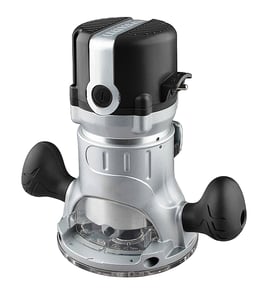

How to replace router bits sears Craftsman router?
To replace router bits on your Craftsman router model 31517390, unplug the router, loosen the collet nut, remove the old bit, then insert the new bit and tighten the collet securely. A properly seated bit helps prevent slipping, chatter, and poor cut quality.
Safe, correct steps to change a router bit
- Unplug the router (or remove the battery if it is cordless) before touching the collet.
- Press the spindle lock (if your router has one) or use two wrenches (one on the spindle, one on the collet nut).
- Turn the collet nut counterclockwise to loosen.
- Pull the old bit straight out.
- Insert the new bit shank fully, then back it out about 1/16 to 1/8 inch so it is not bottomed out.
- Tighten the collet nut firmly (snug plus a bit more); do not overtighten.
Quick fit check (before you cut)
Use this checklist after tightening:
- Bit does not wiggle when you try to twist it by hand
- Shank is inserted deep enough (most of the shank is inside the collet)
- Collet nut turns smoothly and seats fully
- Router base and bit clear the work surface and fence
Common issues and what they usually mean
| Symptom | Most common cause | What to do |
|---|---|---|
| Bit slips downward while routing | Bit bottomed out or collet dirty | Re-seat bit with slight pull-back; clean collet and nut |
| Excess vibration or chatter | Bent bit, wrong speed, or poor clamping | Try a different bit; adjust speed; re-tighten collet |
| Collet nut feels “stuck” | Resin buildup or overtightened previously | Loosen with correct wrenches; clean threads and collet |
Why it matters
A router bit spins at very high RPM. Correct collet tightening and proper shank seating reduce the chance of bit slippage, burning, rough edges, and loss of control during a cut.
For more help finding the exact model number details when ordering accessories or parts, use how to find your appliance model number (and what it means for parts).
Last updated: February 2026
Does Craftsman make a router table?
Yes. Craftsman has made router tables and router table accessories that can be used with many Craftsman routers, including models in the 315-series like the Craftsman 31517390. The key is matching the table’s mounting pattern and the router’s base size so the router installs safely and stays aligned.
How to check if a router table will fit your Craftsman 31517390
Before buying or installing a table, we recommend confirming these common fit points:
- Mounting method: direct-mount to the table top or to an insert plate
- Bolt pattern: whether the table or plate is pre-drilled for your router base
- Base diameter and opening size: the router base must sit flat and clear the opening
- Bit height adjustment: whether you can adjust from above the table (depends on table and router setup)
- Switching: a table with a dedicated safety switch is preferred for table use
Typical router table options (what you’ll see most often)
Router tables generally fall into a few categories; this helps you choose the right style for your shop and projects.
| Router table type | Best for | What to watch for |
|---|---|---|
| Benchtop table | Small shops, occasional use | Smaller fence and work surface |
| Standalone/cabinet-style | Frequent use, better dust control | More space and setup time |
| Table extension (workbench/saw) | Saving space | Compatibility and stability |
Why it matters
A router table that does not match the router’s mounting pattern or does not support the router securely can cause vibration, poor cut quality, and unsafe operation. A correct fit keeps the bit centered, the fence aligned, and the workpiece controlled.
Helpful next step
If you are confirming the exact model number before shopping for accessories, use how to find your appliance model number (and what it means for parts).
Last updated: February 2026
What is a Sears Craftsman router?
A Sears Craftsman router (like the Craftsman 31517390) is a handheld power tool used to shape, trim, and cut wood by spinning a router bit at high speed. We commonly see it used for edge profiles, dadoes, rabbets, and hinge mortises in woodworking.
What it’s used for
A router is basically a motor that holds a collet; the collet grips interchangeable bits to cut wood (and some plastics) with control and repeatability.
Common projects include:
- Rounding over or beveling edges on shelves and tabletops
- Cutting grooves (dadoes) for cabinet joinery
- Trimming laminate or veneer flush to an edge
- Cutting rabbets for back panels
- Making mortises for hinges or hardware
Key features you’ll typically see on Craftsman routers
Exact specs vary by version and configuration, but most corded Craftsman routers in this class share these core elements:
- Collet sizes: commonly 1/4-inch (some models also accept 1/2-inch)
- Depth adjustment: a depth ring or rack-and-pinion style adjustment
- Base style: fixed base, or a plunge base on some setups
- Speed control: single-speed or variable-speed depending on the model
- Dust control: optional port or base opening for chip ejection
Quick reference: fixed base vs plunge base
| Feature | Fixed base router | Plunge router |
|---|---|---|
| Best for | Edge work, consistent depth cuts | Starting cuts in the middle of a board |
| Depth changes | Set before the cut | Adjust during setup; plunge to start |
| Typical feel | Stable, simple | More versatile for mortises and inlays |
Why it matters
Knowing whether your Craftsman 31517390 is set up as a fixed base or plunge style helps you choose the right bit, set cutting depth correctly, and troubleshoot issues like burning, chatter, or rough finishes.
Helpful related reading
Last updated: February 2026