Error Codes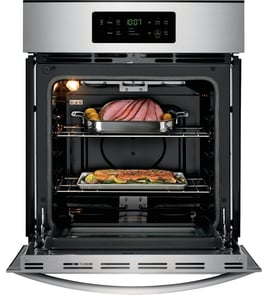



How long does a GE wall oven last?
A GE electric wall oven like model JKD3000SN2SS typically lasts 12 to 15 years with normal household use. Consistent cleaning, good airflow around the cabinet, and fixing overheating or temperature problems early are the biggest factors in reaching the high end of that range.
What affects wall oven lifespan
- Heat stress and ventilation: Restricted airflow can overheat controls and shorten life.
- Self-clean frequency: High-heat cleaning cycles add wear to electronics and door lock parts.
- Power quality: Surges and loose connections can damage the control board.
- Door seal condition: A leaking gasket makes the oven run hotter and longer.
- Sensor accuracy: A drifting temperature sensor can cause overbaking and longer run times.
Parts that commonly impact performance as the oven ages
If your JKD3000SN2SS starts running hot, takes longer to preheat, or shows temperature swings, these model-matched parts are often involved:
| Symptom | Common suspect | Example model-matched part |
|---|---|---|
| Oven temperature inaccurate | Temperature sensor | Wall oven temperature sensor WB21X10165 |
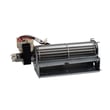
| Cabinet gets unusually hot, fan behavior odd | Cooling fan or fan control | Wall oven cooling fan assembly WB26X31060 |
| Door won’t unlock after clean | Door lock mechanism | Wall oven door lock assembly WB10X28391 |
| Oven light out | Bulb or light assembly | Wall oven light bulb WB25T10102 |
Maintenance that helps you reach 15 years
- Wipe spills after the oven cools; avoid harsh abrasives on the door gasket.
- Keep vents clear; do not block trim or airflow openings.
- Use self-clean only when needed; remove racks first.
- If you notice overheating or error codes, address them promptly.
Why it matters
A wall oven can keep “working” while slowly drifting out of temperature or overheating the cabinet; that extra run time stresses the control board, cooling fan, and wiring. Catching sensor, gasket, and fan issues early helps protect the most expensive components.
Last updated: February 2026
What is the best brand for electric wall ovens?
There is no single “best” brand for every kitchen; the best electric wall oven brand is the one that matches your cooking features, cabinet cutout, and service support. For a GE wall oven like model JKD3000SN2SS, we focus on reliability basics: accurate temperature control, strong cooling airflow, and readily available replacement parts.
How we recommend choosing the “best” brand
- Pick the size and configuration first (single vs. double wall oven, 27-inch vs. 30-inch).
- Prioritize cooking features you will actually use (true convection, air fry, probe, self-clean).
- Check parts availability and repairability (sensors, control boards, cooling fan, door lock).
- Compare warranty and local service coverage.
- Read owner feedback specifically about temperature accuracy and preheat time.
Quick brand comparison (what to look for)
| Brand tier | What typically stands out | Best for |
|---|---|---|
| Mainstream (GE, Whirlpool, Frigidaire) | Broad service network, parts availability | Most households, value-focused upgrades |
| Premium (Bosch, KitchenAid) | Fit and finish, quieter fans, refined convection | Frequent bakers, design-focused kitchens |
| Luxury (Thermador, Miele) | Advanced cooking modes, premium build | High-end remodels, specialty cooking |
Why parts support matters (especially for wall ovens)
Wall ovens run hot and rely on a cooling system and sensors to protect the electronics. When those components wear, a brand with strong parts support can be the “best” choice long-term because repairs stay practical.
Common repair-related parts for GE JKD3000SN2SS include:
- Wall oven temperature sensor WB21X10165 (helps regulate bake temperature)
- Wall oven cooling fan assembly WB26X31060 (moves air to cool controls)
- Wall oven door lock assembly WB10X28391 (used during self-clean)
- Wall oven control board WB27X36811 (manages oven functions)
Practical buying checklist (before you decide)
- Measure your cabinet cutout and electrical supply (240V requirements are common).
- Confirm the door swing and handle clearance.
- Look for consistent baking results (even browning, stable temps).
- Consider noise level from the cooling fan during and after baking.
- Plan for long-term ownership: availability of sensors, boards, and door hardware.
Why it matters: The “best” brand is the one that fits your space and delivers consistent temperature control with dependable service and parts support over the life of the oven.
Last updated: February 2026
Is GE profile considered high end?
Yes. GE Profile is generally considered the higher-end tier within GE’s mainstream appliance lineup; it typically adds more cooking features, upgraded styling, and more electronics than basic GE models. For a GE wall oven like model JKD3000SN2SS, “Profile” usually signals a step-up feature set rather than an entry-level build.
Where GE Profile fits in the GE lineup
GE’s brand family is commonly viewed like this (from mainstream to premium):
| Tier | Typical positioning | What you usually get |
|---|---|---|
| GE (standard) | Value to mid-range | Core bake/broil features, simpler controls |
| GE Profile | Mid-to-high end | More modes, more sensors, sleeker design, more control features |
| Premium lines (varies by brand family) | Premium | Highest styling and feature density |
What “high end” means in real-world use
GE Profile models often feel “high end” because they tend to include more of the features people notice day-to-day:
- More precise temperature management (sensor-driven control)
- More cooking modes (often including convection options)
- More advanced user interface and electronics
- Quieter, more managed cooling airflow after baking
- More design-forward finishes and trim
Parts that commonly reflect a step-up design
Even without comparing every feature, higher-feature ovens typically rely more on sensors, controls, and cooling management. On JKD3000SN2SS, examples of parts tied to that kind of performance include:
- Wall oven temperature sensor WB21X10165 (helps the control regulate oven temperature)
- Wall oven control board WB27X36811 (the “brain” that runs modes, timing, and temperature logic)
- Wall oven cooling fan assembly WB26X31060 (helps manage heat around controls and cabinetry)
Why it matters
If you are deciding whether to repair or replace, “Profile” usually means the oven has more electronics and feature-driven parts. That can improve cooking performance and convenience, and it also means accurate diagnosis (sensor, control board, cooling fan) matters when troubleshooting heat, error codes, or temperature swings.
Last updated: February 2026
How to reset a GE wall oven?
To reset your GE JKD3000SN2SS electric wall oven, we recommend power-cycling it at the home breaker: turn the oven circuit OFF for at least 1 minute, then turn it back ON. This clears many temporary control glitches and restores normal operation.
Reset steps (safe and effective)
- Turn the oven circuit breaker OFF (or remove the fuse if your home uses fuses).
- Wait at least 1 full minute.
- Turn the breaker ON (or reinstall the fuse).
- Set the clock, then test Bake at 350°F for a few minutes.
- If the display is blank or unresponsive after reset, stop and check the breaker again.
What a reset fixes (and what it does not)
| Symptom | Reset often helps | Likely needs troubleshooting/parts |
|---|---|---|
| Control panel frozen or not responding | Yes | Sometimes |
| Random beeping or odd display behavior | Yes | Sometimes |
| Oven will not heat at all | Sometimes | Often |
| Error code returns immediately | No | Yes |
If the problem comes back right away
A repeating failure after a reset usually points to a heat-sensing, cooling, or control issue. These model-matched parts are common suspects:
- Wall oven temperature sensor WB21X10165 (bad sensor can cause false temperature readings)
- Wall oven cooling fan assembly WB26X31060 (overheating protection can interrupt operation)
- Wall oven control board WB27X36811 (control logic or relay issues)
Why it matters
Resetting restores power to the electronic controls and can clear a temporary fault. If the oven overheats or misreads temperature, the control may shut down again to protect components, so identifying the underlying cause prevents repeat shutdowns.
Last updated: February 2026