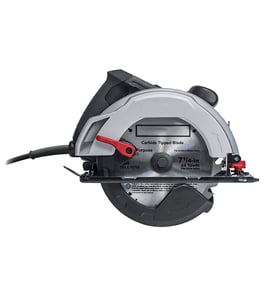

Is a 6 1/2 or 7 1/4 circular saw better?
A 7-1/4 inch circular saw is the better all-around choice because it cuts deeper and handles common framing tasks (including angled cuts) more easily; a 6-1/2 inch saw is better when you want a lighter, more compact tool for everyday crosscuts and sheet goods. For Craftsman model 315275420, choose based on what you cut most often.
Quick comparison (what changes in real use)
| Feature | 6-1/2 inch saw | 7-1/4 inch saw |
|---|---|---|
| Typical best use | Plywood, OSB, trim, lighter duty | Framing, thicker lumber, general purpose |
| Cut depth | Shallower | Deeper |
| Weight/handling | Lighter, easier overhead | Heavier, steadier in long rips |
| Blade availability | Good, but fewer options | Widest selection |
When a 7-1/4 inch is the better pick
- You regularly cut 2x lumber and want more margin for bevel cuts
- You do framing, deck work, or repeated rip cuts
- You want the broadest blade selection (tooth counts, thin-kerf, specialty blades)
- You prefer a saw that feels more planted on a straightedge guide
When a 6-1/2 inch is the better pick
- You prioritize lighter weight and easier one-handed positioning
- You mainly break down sheet goods (plywood/OSB) with a guide
- You work overhead or on ladders where fatigue matters
- You want a compact saw for quick, frequent cuts
Why it matters
Blade diameter drives maximum cut depth and how comfortably the saw handles bevel cuts. If your projects include thicker stock or frequent angled cuts, the extra depth of a 7-1/4 inch saw prevents partial cuts and reduces the need to flip the workpiece.
Practical buying and setup tips
- Match the blade to the job: fewer teeth for fast framing cuts, more teeth for cleaner plywood cuts
- Use a sharp blade first; a dull blade makes any saw feel underpowered
- Confirm the blade bore size and arbor style before ordering blades
- For parts and accessories by model number, search 315275420 on Sears PartsDirect
Last updated: February 2026
What is the bottom plate of a circular saw called?
On the Craftsman 315275420 circular saw, the bottom plate is commonly called the shoe (also called the base plate). It’s the flat surface that rides on the workpiece and helps you guide the saw for straight cuts and bevel cuts.
Common names you’ll hear
- Shoe
- Base plate
- Saw base
- Foot plate (less common)
What the shoe does (and why it matters)
The shoe is the reference surface for your cut. If it’s bent, loose, or out of alignment, the saw can wander, bind, or cut at the wrong angle.
Typical shoe functions
- Supports the saw on the material while cutting
- Helps keep the blade at 90 degrees for square cuts
- Pivots to set bevel angles (commonly up to about 45 degrees on many saws)
- Works with the depth adjustment to control how much blade is exposed
Quick checks if cuts are not straight
- Confirm the shoe sits flat on a known-flat board (no rocking)
- Tighten the bevel and depth lock knobs/levers
- Check that the blade is installed correctly and not warped
- Inspect the shoe for bends or cracks, especially near pivot points
Shoe vs. other nearby parts
| Part name | What it is | What it affects |
|---|---|---|
| Shoe (base plate) | Flat plate under the saw | Cut straightness, bevel accuracy |
| Lower blade guard | Spring-loaded guard that retracts | Safety, smooth entry into cut |
| Upper guard | Fixed cover around blade | Safety, debris control |
Finding the right part for your saw
When you’re shopping for a replacement shoe or related hardware, match the full model number exactly and use our model number tips in how to find your appliance model number (and what it means for parts).
Last updated: February 2026
Can I cut a 2x4 with a circular saw?
Yes. A circular saw like the Craftsman 315275420 is commonly used to cut 2x4 lumber for crosscuts and rip cuts; the key is supporting the board correctly, setting the blade depth properly, and guiding the saw straight for a safe, square cut.
How to cut a 2x4 safely and straight
- Unplug the saw (or remove the battery) before adjusting the blade or guard.
- Set blade depth so the teeth extend about 1/4 to 3/8 inch below the 2x4.
- Support the 2x4 on sawhorses or a workbench so the cutoff piece can drop freely.
- Clamp a speed square or straightedge as a guide for square crosscuts.
- Keep the shoe flat on the wood; let the blade reach full speed before entering the cut.
- Stand to the side of the cut line (not directly behind the saw) to reduce kickback risk.
Quick setup guide (recommended settings)
| Task | Best guide | Blade choice | Notes |
|---|---|---|---|
| Crosscut (across the 2x4) | Speed square | 24T to 40T | 40T leaves a cleaner edge |
| Rip cut (along the 2x4) | Straightedge | 24T | Feed steadily; avoid forcing |
| Repeated same-length cuts | Stop block + guide | 24T to 40T | Measure once, cut many |
Common problems and what to fix
- Cut wanders: Re-check that the guide is clamped tight and the shoe stays flat.
- Burn marks: Use a sharper blade and slow the feed rate slightly.
- Binding or stalling: Improve support so the kerf stays open; do not pinch the blade.
- Splintering: Use a higher tooth-count blade and score the cut line with a utility knife.
Why it matters
A 2x4 is thick enough that poor support or too-deep blade settings can increase binding and kickback. A shallow, controlled depth and a solid guide give you straighter cuts and safer handling.
For general DIY safety habits that apply to power tools like circular saws, review are diy appliance repairs safe.
Last updated: February 2026
What brand of circular saw is best?
There isn’t one “best” circular saw brand for everyone; the best choice depends on how you’ll use it (DIY vs. daily jobsite), whether you want corded or cordless, and what battery platform you already own. For a Craftsman circular saw like model 315275420, we focus on fit, safety, and parts support for your exact saw.
How to choose the best brand for your needs
Use these factors to decide what “best” means for you:
- Power source: corded for steady power; cordless for portability
- Blade size: most common is 7-1/4 in.; smaller blades trade cut depth for lighter weight
- Motor type (cordless): brushless typically runs cooler and longer per charge
- Weight and balance: lighter saws reduce fatigue; heavier saws can feel steadier
- Cut features: bevel capacity, depth adjustment feel, and line-of-sight to the blade
- Parts availability: brushes, switches, cords, guards, and bearings matter long-term
Brand comparison (quick guide)
| User type | What usually matters most | Brands that commonly fit the need |
|---|---|---|
| Homeowner / occasional DIY | Value, easy setup, basic reliability | Craftsman, SKIL |
| Serious DIY / remodel | Better ergonomics, stronger build | DeWalt, Makita |
| Pro / daily use | Durability, battery ecosystem, performance | Milwaukee, DeWalt, Makita |
Why it matters (especially for model 315275420)
A circular saw is only as good as its safety features and condition. Even a top-tier brand won’t cut well if the blade is dull, the lower guard sticks, or the cord/switch is failing. Keeping your Craftsman 315275420 maintained and using the right blade for the material usually improves results more than switching brands.
Practical tips that improve any circular saw
- Match the blade tooth count to the job (framing vs. finish cuts)
- Set blade depth so teeth extend about 1/4 in. below the material
- Confirm the lower blade guard snaps back freely every time
- Use a straightedge guide for long rips to reduce wandering
- If you suspect an electrical issue, test safely with a meter before replacing parts
For electrical troubleshooting basics, we recommend how to use a multimeter to test electrical parts video.
Last updated: February 2026
What is a 140 tooth circular saw blade used for?
A 140-tooth circular saw blade is used for ultra-smooth, low tear-out cuts on thin sheet goods and trim materials when you want a clean, finish-ready edge. On a Craftsman circular saw model 315275420, it’s a good choice for fine crosscuts and delicate work, not fast framing cuts.
Best uses for a 140-tooth blade
A high tooth count means smaller bites per tooth; that reduces splintering but also slows the cut.
- Plywood and veneered panels (clean face cuts)
- Laminate and melamine (reduced chipping with the right technique)
- Thin paneling and hardboard
- Finish trim and molding (fine crosscuts)
- Non-ferrous materials only if the blade is rated for it (check the blade label)
When not to use it
A 140-tooth blade is not the right match for heavy, fast cuts because it can overheat and bog down.
- 2x framing lumber and rough construction cuts
- Wet, pressure-treated, or very knotty wood (higher load and heat)
- Thick ripping cuts (with the grain) where a lower tooth count cuts better
Quick tooth-count guide (what to pick)
| Blade type | Typical tooth count | What it’s for |
|---|---|---|
| Framing/rough cut | 18 to 24T | Fast cuts in construction lumber |
| General purpose | 40 to 60T | Everyday crosscuts and light ripping |
| Fine finish | 80T to 140T | Smooth, low tear-out cuts in sheet goods and trim |
Why it matters
Using the right blade on your Craftsman 315275420 improves cut quality and safety. A fine-tooth blade helps prevent splintering and chipping, but it also increases friction; that’s why feed rate, sharpness, and correct blade selection matter.
Tips to get the cleanest cut
- Support the workpiece fully to prevent vibration.
- Use painter’s tape over the cut line for laminates and veneers.
- Keep the blade sharp; dull fine-tooth blades burn and wander.
- Let the saw reach full speed before entering the cut.
- If the saw has a blade-right/blade-left orientation, keep the “good face” on the side that minimizes tear-out for your setup.
For general DIY safety practices before changing blades or servicing a power tool, follow our guidance in are diy appliance repairs safe.
Last updated: February 2026
