



What are the disadvantages of a twin tub washing machine?
Twin tub washers have more hands-on steps than an automatic washer like the GE GTW680BPL2DG; you typically fill and drain water manually and move laundry from the wash tub to the spin tub, so laundry takes longer and needs more attention.
Main disadvantages (what you notice day to day)
- More manual labor: you transfer wet clothes between tubs and often manage water levels yourself.
- Longer laundry time: washing and spinning are separate steps, so a “load” is less set-it-and-forget-it.
- More mess risk: moving dripping laundry can lead to water on the floor.
- Less convenience: fewer cycle options and less automation than modern top-load washers.
- More user monitoring: you stay nearby to switch steps and prevent overfilling or poor draining.
Performance and results tradeoffs
Twin tub machines can clean well, but they commonly trade convenience for simplicity.
| Area | Twin tub washer | Modern top-load washer (like GE GTW680BPL2DG) |
|---|---|---|
| Workflow | Manual transfer between tubs | One-tub automatic sequence |
| Water handling | Often manual fill and drain | Automatic fill, drain, spin |
| Capacity use | Can be limited by tub sizes | Designed for full-size loads |
| Features | Basic timers, fewer options | More cycles and controls |
Parts and repair considerations
Twin tub designs vary widely by brand and region, so parts availability and service support can be inconsistent compared to common U.S. top-load platforms.
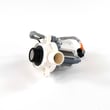
For a standard GE top-load washer, common repair items are typically straightforward to source and replace, such as a GE washer drain pump assembly WH23X28418 if the washer will not drain or a washer water inlet valve assembly WH13X26637 if it will not fill correctly.
Why it matters
If you want the lowest upfront cost and do not mind hands-on operation, a twin tub can work. If you want faster, more automated laundry with easier long-term parts support, a conventional automatic washer is usually the better fit.
Last updated: January 2026
What is the most common problem with GE washers?
The most common GE washer problems are not draining and not spinning, and on the GE GTW680BPL2DG those symptoms are most often tied to a drain restriction, a failing drain pump, a lid lock issue, or an out-of-balance condition from worn suspension parts.
Most common symptoms and what usually causes them
- Washer won’t drain or drains slowly: kinked/blocked drain hose, clogged pump inlet, or a failing GE washer drain pump assembly WH23X28418.
- Washer won’t spin or stops mid-cycle: lid not locking, load out of balance, or drive system sensing issues.
- Loud banging or walking: worn suspension rods/springs such as washer suspension rod and spring assembly WH16X26911.
- Fills slowly or won’t fill: household water supply issue, clogged inlet screens, or a failing washer water inlet valve assembly WH13X26637.
- Intermittent cycle problems: wiring connections, control issues, or a sensor/actuator problem.
Quick checks we recommend before replacing parts
- Reset power: unplug for 2 minutes, then retry a Drain/Spin cycle.
- Check the load: redistribute items; avoid washing one heavy item by itself.
- Inspect draining: confirm the standpipe is not clogged and the drain hose is not kinked.
- Listen during drain: a humming pump with little or no water movement points to a blockage or weak pump.
- Check filling: verify both hot and cold valves are fully open.
Symptom-to-part cheat sheet (GTW680BPL2DG)
| Symptom | Most likely area | Common related part for this model |
|---|---|---|
| Won’t drain | Drain path/pump | GE washer drain pump assembly WH23X28418 |
| Won’t fill or fills slowly | Water inlet | Washer water inlet valve assembly WH13X26637 |
| Excessive vibration/banging | Suspension | Washer suspension rod and spring assembly WH16X26911 |
Error codes can speed up diagnosis
If your washer is showing an error code, match it to the failure area first, then test the related component (pump, lid lock, inlet valve, shifter, or speed sensing). Use our GE gtw top load washer error codes reference to narrow it down.
Why it matters
Drain, spin, and balance problems can look similar, but the fix is different. A simple hose restriction can mimic a bad pump, and worn suspension can trigger repeated out-of-balance stops that feel like a spin failure.
Last updated: January 2026
Where is the filter on my GE Deep Fill washing machine?
On the GE GTW680BPL2DG top-load (Deep Fill) washer, there typically is not a user-accessible “filter” like you’d find on many front-load washers. Most routine “filter” cleaning on this style is really checking the drain pump area for debris and keeping the drain hose clear.
What you can check on this model
If you’re trying to fix slow draining, standing water, or lint and debris issues, these are the most common places to inspect:
- Check the drain hose for kinks, clogs, or a blocked standpipe
- Listen for the drain pump running during drain; a loud hum with no draining points to a blockage
- Inspect the tub for small items (coins, socks) that can migrate toward the pump
- If draining is weak, the pump may be obstructed or failing
- If the washer will not drain at all, the lid lock system can also prevent spinning and draining
“Filter” location: top-load vs front-load
Many videos show a front-load cleanout filter behind a small lower access door. That setup is different from your GTW680BPL2DG.
| Washer type | Common “filter” location | What it’s called |
|---|---|---|
| GE front-load | Lower front access door | Pump cleanout filter/trap |
| GE top-load (GTW series) | No front cleanout door | Pump inlet area (internal) |
Parts that relate to draining problems
If troubleshooting points to a drain system issue, these parts are the ones we see most often on this model:
- GE washer drain pump assembly WH23X28418 (moves water out during drain)
- Washer drain hose WH41X32477 (carries water to the standpipe or laundry sink)
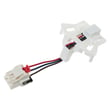
- Washer lid lock WH08X37938 (must lock for spin; spin issues can look like a drain problem)
Why it matters
Looking for a front “filter door” on a top-load washer can waste time and delay the real fix. Focusing on the drain pump, drain hose, and lid lock gets you to the most likely cause of poor draining or standing water.
Last updated: January 2026


