Installation guide
 Owner’s manual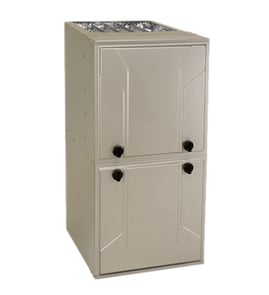



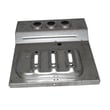
What is the most common part to fail on a furnace?
On a Payne PG8MAA024070AAJA gas furnace, the most common “failure point” is usually a maintenance-related item (air filter and flame-sensing/ignition system) rather than a single major component. When a furnace won’t heat, the igniter circuit, safety limit switches, and the control board are among the most frequent parts involved.
Most common culprits (what we see most often)
- Dirty air filter or restricted airflow: can overheat the furnace and trip safety limits.
- Ignition problems: a worn igniter or ignition circuit prevents burner light-off.
- High-temperature limit trips: a limit switch opens when the furnace overheats.
- Control board issues: failed relays or logic faults can stop the heat cycle.
- Venting or combustion-air problems: can cause unsafe operation and shutdowns.
Parts on this model that commonly get replaced
If your PG8MAA024070AAJA is short-cycling, not igniting, or shutting down on safety, these model-listed parts are common suspects:
| Symptom | What it often points to | Example part for this model |
|---|---|---|
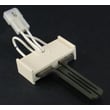
| Inducer runs but burners never light | Ignition failure | Furnace burner igniter (listed for this model) |
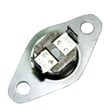
| Furnace starts then shuts off on high heat | Overheat condition or limit opening | Furnace temperature limit switch HH18HA495 |
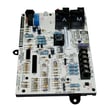
| No heat, odd cycling, or no response to thermostat | Control logic/relay issue | Control board HK42FZ034 |
Why these failures happen (and how to prevent repeats)
Many “bad part” calls are triggered by conditions that the installation guide warns about, such as airflow, venting, and combustion-air quality. For example, contaminated combustion air (from household chemicals) can corrode components and shorten furnace life; oversizing and incorrect setup can also contribute to premature failures.
Quick prevention checklist
- Replace the air filter on schedule; keep return grilles open.
- Keep supply vents open and unobstructed to maintain proper temperature rise.
- Avoid storing solvents, bleach, aerosols, or strong chemicals near combustion air.
- Make sure the blower compartment door is installed correctly (some furnaces will not run with the door off).
- If you suspect electrical issues, use safe test practices and the wiring diagram guidance in the installation guide.
Why it matters
Furnaces are designed to shut down when they detect unsafe conditions. Fixing the root cause (airflow restriction, venting, gas input setup, wiring issues) helps prevent repeat limit trips, ignition lockouts, and expensive component damage like heat exchanger stress.
Last updated: February 2026
What are the common problems with Payne furnaces?
Payne furnaces like model PG8MAA024070AAJA most often run into no-heat or short-cycling problems caused by airflow restrictions (dirty filter, closed registers), ignition issues (igniter or flame-sensing problems), or safety shutdowns from limit and rollout switches when overheating or combustion air is inadequate. See the installation guide for setup and safety checks.
Most common symptoms and what they usually point to
- No heat, inducer runs but no ignition: hot surface igniter, pressure switch, venting/combustion air issue
- Ignites then shuts off quickly: dirty flame sensor, weak ground, control issue
- Short cycling: thermostat cycle rate/anticipator setting, overheating from low airflow, limit switch opening
- Blower runs but air is not warm: burner not staying lit, control board timing, limit switch trip
- Rapid flashing LED and no operation: incorrect 115 V polarity or wiring/ground problem
Safety and setup issues that commonly cause shutdowns
Your PG8MAA024070AAJA is designed to shut down the gas valve if it detects unsafe conditions.
- Do not bypass manual-reset limit or rollout switches
- Correct inadequate combustion air before resetting any manual-reset switch
- Keep the blower compartment door installed; the furnace is designed to operate with the door in place
- Avoid contaminating combustion air with household halogen compounds (common in some cleaners, aerosols, solvents, and bleach) because they can accelerate corrosion
Quick checks we recommend before replacing parts
- Replace the air filter and confirm supply registers and return grilles are open.
- Verify thermostat wiring is secure at the furnace control terminal block.
- Confirm the vent connector is intact and not restricted.
- If the furnace overheats, correct airflow first; overheating commonly triggers a limit switch.
Common parts that may be involved
| Symptom | Likely area | Example part on this model page |
|---|---|---|
| No ignition | Ignition system | Furnace burner igniter (LH33ZS004) |
| Overheating shutdown | Safety limit circuit | Furnace temperature limit switch HH18HA495 |
| Intermittent operation, odd timing | Controls | Control board HK42FZ034 |
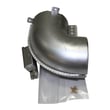
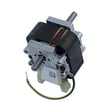
| Draft/vent problems | Inducer/venting | Furnace inducer vent motor HC21ZE121 |
Why it matters
Many “common furnace problems” are actually safety responses. Airflow restrictions and contaminated combustion air can lead to overheating, condensation, corrosion, and repeated shutdowns. Fixing the root cause prevents repeat failures and protects major components like the heat exchanger.
Last updated: February 2026
What is the cost to replace a furnace part?
For a Payne furnace model PG8MAA024070AAJA, the cost to replace a furnace part depends on which component failed and the labor required to access and test it. On this model, common replacement parts range from about $18 to $477 for the part alone, plus service labor.
Typical part-cost ranges for this model
Below are examples from parts commonly used on PG8MAA024070AAJA (part price only; labor is separate):
| Part type | Example part on this model | Typical part-only cost range |
|---|---|---|
| Safety switch | Temperature limit switch | $18 to $26 |
| Ignition | Burner igniter | Around $54 |
| Air movement | Inducer vent motor, blower wheel | $75 to $195 |
| Electrical | Control board | Around $477 |
If you suspect an electrical or ignition issue, start with the troubleshooting and wiring guidance in the installation guide.
What usually changes the total repair price
We see the total replacement cost swing widely based on these factors:
- Which part failed (a limit switch is far less than a control board)
- Diagnosis time (confirming the failed component before replacing it)
- Access and disassembly (some parts require more teardown)
- Safety steps required (gas shutoff, electrical lockout, leak checks)
- Whether multiple parts were damaged (for example, overheating can affect more than one component)
Why it matters to diagnose before buying parts
Your furnace’s troubleshooting process is designed to isolate the failed component and then verify correct operation after replacement. The installation documentation also emphasizes safe service practices such as turning off gas and electrical supplies before maintenance, and checking gas connections for leaks after service.
Quick examples
- If the furnace overheats and trips a limit, a temperature limit switch may be involved, but airflow issues (dirty filter, blower problems) can be the root cause.
- If the furnace will not ignite, the issue can be the igniter, flame sensing, gas valve control, or the control board.
Parts customers commonly replace on this model
If your diagnosis points to one of these, they are common on this model’s parts list:
- Control board HK42FZ034
- Furnace inducer vent motor HC21ZE121
- Furnace temperature limit switch HH18HA495
Last updated: February 2026
What is the most expensive part to fix on a furnace?
On a Payne PG8MAA024070AAJA furnace, the most expensive repair is typically a heat exchanger replacement because it is a major sealed combustion component and the labor to access it is extensive. Other high-cost repairs often involve the control board, inducer vent motor, or blower components.
Most expensive furnace repairs (what usually tops the list)
These repairs tend to cost the most because they combine higher part cost with longer diagnostic and installation time:
- Heat exchanger: most expensive single component repair
- Control board: expensive electronics and troubleshooting time
- Inducer vent motor: critical for safe venting and ignition sequence
- Blower wheel or blower motor: airflow problems can trigger overheating and shutdowns
- Multiple safety switches (limit and rollout): often indicates an underlying airflow or combustion issue
Examples of high-cost parts for this model
Here are common “big ticket” parts we see customers replace on this Payne furnace.
| Component | What it does | Why it gets expensive |
|---|---|---|
| Heat exchanger | Transfers heat to air safely | Major disassembly and safety-critical part |
| Control board | Runs ignition and blower timing | Complex diagnosis; electronics cost |
| Inducer vent motor | Pulls combustion gases through vent | Venting and pressure-switch checks add labor |
| Blower wheel | Moves heated air through ducts | Cleaning vs replacement depends on damage |
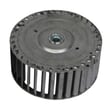
Model-specific examples from the parts list include the furnace heat exchanger 326600-751, control board HK42FZ034, furnace inducer vent motor HC21ZE121, and wheel blwr LA11XA048.
Why heat exchanger issues are treated as “major”
Your installation literature notes that if the heat exchangers develop a heavy accumulation of soot and carbon, they should be replaced and the underlying cause corrected (for example, combustion air problems or incorrect gas adjustment). That combination of root-cause correction plus replacement labor is why this repair is usually the costliest.
How to reduce the chance of expensive repairs
Basic maintenance helps prevent overheating, nuisance shutdowns, and soot buildup:
- Check and clean the air filter monthly; replace if torn
- Keep the blower motor and wheel clean each heating season
- Inspect the burner compartment for rust, soot, or heavy dust before heating season
- Inspect the vent system for rust or corrosion before heating season
- Keep electrical connections tight and controls operating correctly
For the full maintenance schedule and safety steps (including shutting off gas and power before service), follow the installation guide.
Last updated: February 2026