Owner’s manual
 Error Codes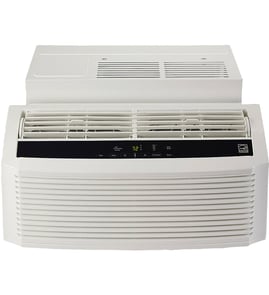




What size room does a 14000 BTU air conditioner cool?
A 14,000 BTU room air conditioner typically cools about 550 to 700 square feet in average conditions. For a GE Zoneline like model AZ61H15DABM1, the best match depends on insulation, sun exposure, ceiling height, and how much heat the room gains during the day; use the sizing guidance in the owner's manual.
Quick sizing guide (what changes the number)
Use these common adjustments to decide whether you are closer to 550 sq ft or closer to 700 sq ft:
- Strong sun exposure (south or west facing windows): plan for the lower end
- Poor insulation or air leaks: plan for the lower end
- High ceilings (over 8 ft): reduce the effective square footage
- Many occupants or heat-producing equipment (kitchenette, servers, TVs): reduce the effective square footage
- Shaded room and good insulation: you can use the higher end
How to estimate your room size
Measure the conditioned space and compare it to the typical range.
- Measure length x width for each area you want cooled
- Add areas together if the space is open (no doors separating rooms)
- If ceilings are high, treat the room as “larger” than the floor area suggests
| Room situation | Practical target for 14,000 BTU |
|---|---|
| Shaded, well insulated, 8 ft ceilings | 650 to 700 sq ft |
| Average insulation, mixed sun, 8 ft ceilings | 600 to 650 sq ft |
| Hot sun, leaky room, or high ceilings | 550 to 600 sq ft |
Why it matters
Right-sizing helps comfort and efficiency. An oversized unit can cool fast but leave the room clammy (short cycling), while an undersized unit can run constantly and still struggle on hot days.
Last updated: January 2026
Can I use AC as a heater in winter?
Yes. Your GE AZ61H15DABM1 Zoneline air conditioner can heat in winter if it is set to HEAT mode; on heat pump models it heats efficiently most of the time, then automatically relies more on electric heat when outdoor temperatures drop very low. See the owner's manual for the exact heat settings and options.
How heating works on this GE Zoneline
On heat pump versions, the unit pulls heat from outdoor air and releases it indoors. For comfort and efficiency, avoid frequent thermostat changes; raising the setpoint 2 to 3 degrees can trigger the electric heating elements to warm the room faster.
- Use HEAT mode for normal heating operation.
- Expect a 3-minute minimum compressor run time to prevent short cycling.
- The indoor fan typically starts before the compressor and runs briefly after it cycles off.
- When outdoor temperature is below about 25°F, the unit provides heat using the electric heater instead of the heat pump.
- A brief “burning” odor at the start of heating can be normal dust burning off the heating element.
Heat pump vs electric heat: what to expect
Heat pump heat often feels less hot at the vent than electric resistance heat, even when it is working correctly.
| Heating method | What you notice | Energy use | Best use case |
|---|---|---|---|
| Heat pump | Warm air, not as hot at the vent | Lower | Most winter days above very low outdoor temps |
| Electric heat | Hotter air at the vent | Higher | Very cold weather, quick warm-up, or when heat pump output feels cool |
Quick winter setup checklist
- Set the vent control to closed if you want to recirculate and heat indoor air only.
- Increase the temperature gradually; avoid frequent large changes.
- If the air feels cool, switch to the Electric heat option (higher operating cost).
- If the unit is not blowing air, remove the room cabinet and confirm the power cord connector is fully seated.
- If a fault indicator returns shortly after a restart, schedule service.
Why it matters
Using the heat pump mode when conditions allow typically costs less to run than electric resistance heat. Knowing when the unit switches to electric heat helps you manage comfort and winter energy use.
Last updated: January 2026
What is the 3 minute rule for air conditioners?
For the GE AZ61H15DABM1 Zoneline air conditioner, the “3-minute rule” means the compressor is protected by a built-in delay and minimum run time; after the compressor starts, it runs at least 3 minutes, and if you shut the unit off and restart too soon, it can wait up to 3 minutes before starting again.
What you will notice during normal operation
- If you turn the unit off and back on quickly, cooling or heating may not start right away.
- The indoor fan can start before the compressor and may run after the compressor stops.
- The unit may feel “unresponsive” for a few minutes, but it is protecting the compressor.
- Short cycling (rapid on/off) is reduced by this built-in protection.
Why the 3-minute rule exists (compressor protection)
The compressor has to start against refrigerant pressure. A short wait lets pressures equalize and helps prevent the compressor overload protector from tripping. GE also designs this Zoneline to run a minimum of 3 minutes once the compressor starts to prevent short cycling.
Quick troubleshooting if it will not restart
If your AZ61H15DABM1 still will not start after a few minutes:
- Check the house breaker or fuse.
- Check the power cord reset device (if equipped) and reset it.
- Wait at least 3 minutes after turning the unit back on.
- If the unit is completely dead, a blown internal fuse can be involved.
Common “no start” checks
| Symptom | Most likely cause | What to do first |
|---|---|---|
| Fan runs, no cooling | Compressor delay/protection | Wait 3 minutes, then recheck |
| Unit dead | Power issue or fuse | Check breaker, then test fuse |
| Starts, then stops quickly | Overload protection | Clean airflow path, wait and retry |
Parts that can be involved when the unit will not run
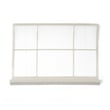
If electrical checks point to a failed component, these model-matched parts are commonly involved:
Why it matters
Following the 3-minute rule helps protect the compressor, reduces nuisance shutdowns from overload protection, and can prevent expensive sealed-system damage.
For control details and operating notes specific to this model, use the owner's manual.
Last updated: January 2026
What size AC unit do I need for 1900 sq ft?
For a 1,900 sq ft home, most central air systems land around 3.5 to 5 tons (about 42,000 to 60,000 BTU/hr), depending on insulation, sun exposure, ceiling height, and climate. A GE Zoneline like AZ61H15DABM1 is a single-room unit, so it is sized by the room it serves, not the whole house; use the AZ61H15DABM1 owner’s manual to confirm your unit’s intended application and installation requirements.
Quick sizing rule of thumb (starting point)
Use this as a rough estimate before doing a proper load calculation:
- 20 BTU per sq ft: mild climates, good insulation, shaded home
- 25 BTU per sq ft: average conditions
- 30 BTU per sq ft: hot climates, lots of sun, older/less insulated home
For 1,900 sq ft, that rough range is:
| Rule of thumb | Estimated BTU/hr | Approx. tons |
|---|---|---|
| 20 BTU/sq ft | 38,000 | 3.2 |
| 25 BTU/sq ft | 47,500 | 4.0 |
| 30 BTU/sq ft | 57,000 | 4.8 |
What to check before you buy (or upsize)
These factors change the required capacity the most:
- Ceiling height (vaulted ceilings increase load)
- Window area and sun exposure (west-facing glass adds heat)
- Insulation and air sealing (attic insulation and duct leakage matter)
- Number of occupants and appliances (kitchens add heat)
- Duct condition and airflow (low airflow can mimic “undersized” AC)
Why it matters
Oversizing can cause short cycling (frequent on/off), poor humidity removal, and uneven temperatures. Undersizing can run constantly and still not hold set temperature. Correct sizing improves comfort, efficiency, and compressor life.
If you are using Zoneline units instead of central air
If you plan to cool 1,900 sq ft with multiple room units, we size each room by its square footage and heat load, then choose the right number of units and placement. Installation details like electrical connection and grille requirements also affect performance; the manual notes that using the correct outdoor grille helps prevent recirculation and short cycling.
Last updated: January 2026