 Owner’s manual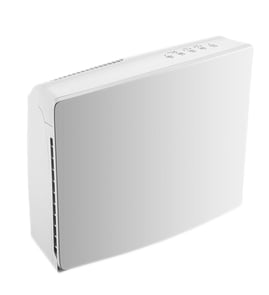



Is there a downside to air purifiers?
Yes. With the Kenmore 15285254 air cleaner, the main downsides are ongoing filter costs, some fan noise (especially on Turbo/HI), and limited removal of gases and odors unless the unit uses the right filtration for them. Like any appliance, safe placement and electrical use also matter.
Common downsides (and what to do about them)
- Filter replacement cost and upkeep: This model uses a pre-filter and a HEPA filter; the manual notes the pre-filter is typically changed about every 3 months and the HEPA filter lasts about 1 to 3 years, depending on air quality and run time.
- Noise: Higher speeds clean faster but are louder; LO is typically best for nighttime use.
- Not a cure-all for odors and gases: HEPA is excellent for particles (dust, pollen, smoke particles) but VOCs and some odors usually require activated carbon or other gas-control media.
- Performance drops as filters load up: The manual notes air volume output can decrease dramatically when the HEPA filter needs changing.
- Placement and airflow limits: Blocking intakes or outlets reduces cleaning and can stress the motor.
Kenmore 15285254 filter schedule at a glance
| Filter | Typical change interval | What you will notice when it’s due |
|---|---|---|
| Pre-filter | About every 3 months | More visible dust buildup, reduced airflow |
| HEPA filter | About 1 to 3 years | Airflow drops a lot, cleaning feels less effective |
Safety and electrical downsides to avoid
These are the issues that cause the most trouble in real homes:
- Plug the unit into a polarized 120V AC outlet (avoid extension cords when possible).
- Do not run the cord under carpets or rugs.
- Do not use in damp locations (bathroom, laundry area) or near water.
- Do not block air outlets or intakes.
- Never operate without the HEPA filter properly installed (motor damage can result).
For the model-specific safety and operating details, follow the owner's manual.
Why it matters
Air purifiers work best when you match expectations to what they are designed to do: remove airborne particles in a room. Keeping filters on schedule and maintaining clear airflow gives you the cleanest air and protects the fan motor.
Last updated: February 2026
What is the 2 3 rule for air purifiers?
The 2/3 rule is a quick way to size an air purifier to a room: choose a unit with a Smoke CADR that is at least two-thirds of the room’s square footage (for a typical 8-foot ceiling). For your Kenmore 15285254 HEPA air cleaner, use this rule to match room size to performance, then run it with doors and windows closed for best results (see the owner's manual).
How to use the 2/3 rule (with examples)
- Measure room size: length x width = square feet.
- Multiply by 0.67 (two-thirds).
- Look for an air cleaner’s Smoke CADR at or above that number.
Examples
| Room size (sq ft) | Minimum Smoke CADR (2/3 rule) | Good target if you want faster cleaning |
|---|---|---|
| 120 | 80 | 120+ |
| 200 | 135 | 200+ |
| 300 | 200 | 300+ |
When the 2/3 rule is not enough
Use a higher CADR target than the 2/3 rule when any of these apply:
- Higher ceilings (more air volume than a standard 8-foot ceiling)
- Wildfire smoke or heavy outdoor pollution
- Open floor plans where air mixes across rooms
- Allergy/asthma sensitivity where you want more frequent air changes
- You run the unit on low most of the time (lower fan speed reduces cleaning rate)
Getting the best real-world performance from the Kenmore 15285254
Even with the right CADR, setup and maintenance determine results. We recommend:
- Run the air cleaner continuously (24/7) when possible.
- Keep doors and windows closed in the room you are cleaning.
- Use Turbo/Hi for fastest cleanup, then Med/Lo for steady maintenance.
- Replace filters on schedule: pre-filter about every 3 months; HEPA filter about 1 to 3 years (both depend on conditions).
- Do not wash the filters; they are not washable.
Why it matters
The 2/3 rule prevents under-sizing (weak cleaning) and over-sizing (extra noise and cost). Correct sizing plus closed-room operation and on-time filter changes is what keeps airflow and particle removal strong over time.
Last updated: February 2026
How often do you need to replace an air purifier filter?
For the Kenmore 15285254 air cleaner, we replace the charcoal pre-filter about every 3 months and replace the HEPA filter every 1 to 3 years, based on air quality and how often you run the unit. The built-in filter change calendar wheels help you stay on schedule (see the 15285254 owner's manual).
Recommended replacement schedule (15285254)
- Charcoal pre-filter: every 3 months (sooner in dusty homes, homes with pets, or heavy smoke/odor exposure)
- HEPA filter: 1 to 3 years
- Replace sooner if airflow drops noticeably or the unit seems less effective
- Keep a spare HEPA filter on hand so performance does not lag
| Filter type | What it does | Typical replacement interval | Replace sooner when... |
|---|---|---|---|
| Charcoal pre-filter | Helps capture larger particles and reduce odors | About 3 months | Odors linger, pre-filter looks loaded, heavy use |
| HEPA filter | Captures fine particles | 1 to 3 years | Air output drops dramatically, high contaminants |
How to tell it is time (quick checks)
- Reduced air volume coming out of the top outlet
- More dust settling in the room than usual
- Odors are not improving (pre-filter often causes this)
- You are running Turbo/HI more often to get the same results
Replacement and care tips that protect the unit
The 15285254 is designed to run with both filters installed, and the filters are not washable.
- Turn the air cleaner OFF and unplug it before opening the grille
- Do not wash the pre-filter or HEPA filter (washing damages them)
- Never operate without the HEPA filter properly installed (motor damage can result)
- After starting, run Turbo briefly, then choose HI, MED, or LO for normal use
Why it matters
Staying on the filter schedule keeps airflow and particle capture strong. A clogged pre-filter or HEPA filter makes the fan work harder and can reduce cleaning performance, especially in higher-contaminant rooms.
Last updated: February 2026
What is the most highly recommended air purifier?
The most highly recommended air purifier is the one that matches your room size and filtration needs (allergens, smoke, odors) and that you will run consistently. Your Kenmore 15285254 is a HEPA air cleaner with a charcoal pre-filter plus a HEPA filter, which is a proven setup for everyday particle removal.
How we recommend choosing “the best” air purifier
Use these criteria to narrow it down quickly:
- Room size and airflow (CADR): pick a unit rated for your room; higher airflow cleans faster.
- True HEPA filtration: best for dust, pollen, pet dander, and many fine particles.
- Odor and VOC control: look for a substantial activated carbon stage if smells and smoke are a priority.
- Noise at the speed you will actually use: a quiet medium setting often beats a loud “turbo” you never run.
- Filter cost and replacement schedule: ongoing filter cost matters as much as purchase price.
How your Kenmore 15285254 fits into top recommendations
Many top-rated purifiers earn their reputation by combining the same fundamentals your model uses:
| Feature | What it does | Kenmore 15285254 approach |
|---|---|---|
| Pre-filter | Captures larger lint and hair; protects the main filter | Charcoal pre-filter stage |
| HEPA filter | Captures fine particles (allergens, dust) | HEPA filter stage |
| Continuous operation | Keeps air from re-contaminating | Designed to run 24/7 in closed rooms |
What to do if performance is not meeting expectations
These steps usually make the biggest difference:
- Close doors and windows while running the air cleaner.
- Set a fan speed you can tolerate and run it continuously.
- Replace the pre-filter and HEPA filter on schedule (use the filter change reminders on the control panel).
- Keep the intake and outlet clear; do not place it tight against walls or furniture.
- If airflow seems weak, check for a clogged filter first before suspecting the fan motor.
Why it matters
Air purifiers are most effective when the airflow matches the room and the filters are kept fresh. A strong HEPA stage can only perform well if the pre-filter is maintained and the unit is run consistently.
For model-specific operation and filter-change guidance, use the owner's manual.
Last updated: February 2026
Is it okay to sleep with an air purifier on all night?
Yes. For the Kenmore 15285254 air cleaner, it is okay to run it all night; the manual recommends operating the air cleaner 24 hours a day for best results. Use the LO (nighttime) speed for quieter operation and follow the safety steps in the Kenmore 15285254 owner’s manual.
How we recommend running it overnight
Use a setting that balances noise and cleaning performance.
- Start on TURBO for a few seconds, then switch to HI, MED, or LO.
- Use LO for nighttime operation when you want quieter airflow.
- Use MED or HI if you need faster cleaning (allergies, smoke, heavy dust).
- Keep doors and windows closed when possible; portable air cleaners work best in closed rooms.
- Keep the intake grille and exhaust area clear so airflow is not blocked.
Safety checks before leaving it on
These steps match the key safety instructions for this model.
- Place the unit where it is not easily knocked over.
- Plug directly into a polarized 120-Volt AC wall outlet.
- Avoid using an extension cord.
- Do not run the power cord under carpets or cover it with throw rugs.
- Keep the unit away from water and damp locations (bathroom, laundry area).
Filters: what to do so it runs safely and effectively
This model uses a two-stage system: a charcoal pre-filter and a HEPA filter.
- Never operate the air cleaner without the HEPA filter properly installed; motor damage can result.
- Use the filter change calendar wheels on the control panel to track replacement timing.
- Follow the manual’s filter change schedule: pre-filter every 3 months; HEPA filter usable lifetime 1 to 3 years (based on contaminants and use).
| Filter | What it does | Schedule in the manual |
|---|---|---|
| Charcoal pre-filter | Helps reduce odors and captures larger particles | Change every 3 months (or sooner as needed) |
| HEPA filter | Captures fine particles | Usable lifetime 1 to 3 years |
Why it matters
Indoor air gets contaminated quickly from normal activity and outside air infiltration. Running your Kenmore 15285254 overnight keeps filtration consistent, which helps with dust, allergens, and odors.
Last updated: February 2026