Owner’s manual
 View engine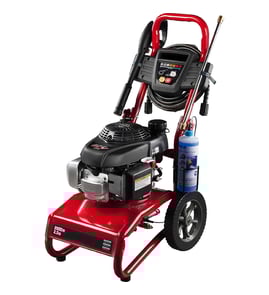



What PSI should my pressure washer be?
For the Craftsman pressure washer model 580752301, the rated working pressure is 2,300 PSI, which is a strong, typical PSI level for many home cleaning jobs. For best results and safety, match the spray tip and distance to the surface you’re cleaning (see the 580752301 owner’s manual).
What PSI means for real-world cleaning
PSI is the water pressure at the spray tip. Higher PSI removes grime faster, but it also increases the chance of damaging paint, wood, or softer materials.
Common PSI ranges and typical uses
| PSI range | Typical tasks | Notes |
|---|---|---|
| 1,300 to 2,000 | Cars, patio furniture, light siding | Lower risk of surface damage |
| 2,000 to 2,800 | Decks, fences, most home concrete | Good all-around homeowner range |
| 2,800+ | Heavy concrete, commercial cleanup | Higher risk; requires more technique |
How to use your 2,300 PSI washer safely
We recommend these operating basics (they directly affect effective pressure at the surface):
- Keep the spray nozzle about 8 to 24 inches from the surface
- Start with a wider spray pattern and increase intensity only as needed
- Work from the top down when rinsing, using overlapping strokes
- Hold the spray gun with both hands to control kickback
- Do not let the engine run 3 to 5 minutes without pulling the trigger; the thermal relief system may discharge hot water to protect the pump
- Use a water supply that can provide over 3.0 GPM and at least 20 PSI at the garden hose connection
Quick spec check for this model
These specs help you confirm you’re getting expected performance:
- Rated pressure: 2,300 PSI
- Flow rate: 2.0 GPM
- Max water supply temperature: 100°F
Why it matters
Using the right PSI (and the right technique) prevents surface damage, reduces streaking, and helps your pump last longer by avoiding overheating and unnecessary strain.
Last updated: January 2026
What kind of gas goes in a Craftsman 3000 PSI pressure washer?
For a Craftsman gas pressure washer like model 580752301, we use clean, fresh unleaded gasoline with a minimum 87 octane (87 AKI) rating. Avoid old fuel and never mix oil into the gasoline; the engine uses a separate crankcase oil supply.
Fuel type and what to avoid
Use standard pump gas that meets the minimum octane requirement. For best starting and steady power, keep fuel fresh.
- Use unleaded gasoline, 87 octane (87 AKI) or higher
- Use fresh fuel (do not store gas in the tank for long periods)
- Do not use gasoline mixed with oil (not a 2-cycle mix)
- Avoid fuel contaminated with water or dirt
- If available in your area, ethanol-free fuel helps reduce storage issues (especially for seasonal use)
Quick checklist before you fill the tank
These steps prevent hard starting, surging, and loss of pressure.
- Shut the engine off and let it cool before refueling
- Fill outdoors, away from ignition sources
- Wipe up spills before starting
- Turn the fuel valve on (if equipped) and set choke per the 580752301 owner's manual
- If the engine runs rough after refueling, drain old fuel and refill with fresh gas
Fuel guidance at a glance
| Situation | What we recommend | What to avoid |
|---|---|---|
| Normal use | Unleaded 87 AKI or higher | Low-octane fuel below 87 AKI |
| Storage between uses | Fresh fuel, run unit regularly | Leaving old gas sitting in the tank |
| Seasonal storage | Drain fuel or treat it, then run briefly | Storing untreated fuel for months |
Why it matters
Correct fuel helps the engine maintain RPM under load, which directly affects pump performance and cleaning power. Old or contaminated gasoline is one of the most common causes of “won’t start” and “engine losing power” symptoms.
Last updated: January 2026
Is it worth repairing a pressure washer?
Yes, repairing a Craftsman pressure washer model 580752301 is worth it when the problem is a wear item or a simple leak (hose, wand, nozzle, O-rings) and the total cost stays well below the price of a comparable new unit; major pump or engine failures usually push the decision toward replacement.
Quick decision checklist
- Repair if the issue is a leak at the hose, gun, wand, or fittings
- Repair if performance is poor due to a clogged nozzle or dirty filters
- Repair if it only needs routine maintenance (oil, spark plug, air filter)
- Replace if the pump was run with no water and is now damaged
- Replace if the engine has low compression or repeated power-loss problems
- Replace if repair cost is roughly half (or more) of a new pressure washer
What we see most often on model 580752301
Many “not working” complaints come from maintenance or accessory issues, not a failed pump. The 580752301 owner's manual calls out before-each-use checks like inspecting the high-pressure hose for leaks, checking inlet screens and filters, and checking the gun/nozzle extension for leaks.
Common symptoms and likely cost level
| Symptom | Most common cause | Typical fix type |
|---|---|---|
| Low pressure | Clogged nozzle, air in pump, inlet restriction | Cleaning and setup checks |
| Leaks at connections | Worn O-ring, loose fitting, damaged hose | Reseal or replace accessory |
| Surging/pulsing | Nozzle restriction, unloader issue | Cleaning or valve service |
| Won’t start | Fuel, spark plug, air filter | Tune-up items |
Parts that often make a repair economical
If the problem is external and straightforward, replacing the accessory is usually the best value.
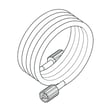
- Hose 84006753 (high-pressure hose replacement; never repair a high-pressure hose)
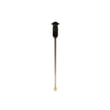
- Wand assembly 205015CGS (spray wand and connection issues)
- Generac pressure washer spray nozzle jet 21760GS (clogged or worn spray tip)
Why it matters
A pressure washer pump can be damaged quickly if it runs without water, and that kind of failure can turn into a high-cost repair. On the other hand, routine maintenance (oil checks, air filter and spark plug service) often restores performance and extends service life.
Last updated: January 2026