 Owner’s manual
 Error Codes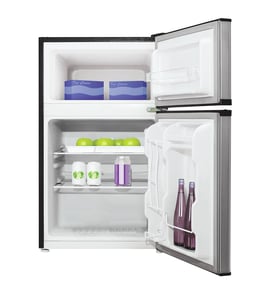

Can you still get parts for Kenmore refrigerators?
Yes. You can still get replacement parts for Kenmore refrigerators, including the Kenmore compact refrigerator model 56495493400. The best way to ensure fit is to match parts to your exact model number and use the diagrams and part lists shown with the model documentation in the owner's manual.
How we recommend finding the right part
Use your model number (56495493400) first, then narrow down by the symptom or the area of the refrigerator (door, cooling system, controls).
- Confirm the full model number from the rating label inside the cabinet
- Use the model-based parts breakdown to identify the correct part name
- Match the part by description and location (for example: door hinge area vs. compressor area)
- Compare your original part to the diagram before ordering
- Keep your serial number handy in case there are production variations
Common Kenmore refrigerator parts people replace
Even on compact refrigerators, these are the most frequently needed items:
| Part type | What it affects | Common sign it needs replacement |
|---|---|---|
| Door gasket (seal) | Temperature stability, frost, energy use | Warm temps, condensation, loose seal |
| Door hinge parts | Door alignment and closing | Door won’t close, door sits crooked |
| Thermostat/control | Cooling control | Too warm or too cold, short cycling |
| Fan (if equipped) | Air circulation | Warm spots, unusual fan noise |
Why it matters
Ordering by model number prevents wrong-part returns and helps restore proper cooling, door sealing, and energy efficiency. The manual for 56495493400 also includes door alignment guidance (hinge screw adjustment) that can solve “won’t close” complaints without replacing parts.
Helpful DIY resources
If your Kenmore refrigerator is showing an error code on a display (some models do), use our code lists to speed up diagnosis: Kenmore 106 model refrigerator error codes.
Last updated: February 2026
How many cubic feet is my Kenmore 56495493400 refrigerator?
Your Kenmore 56495493400 is a compact refrigerator; compact models in this class typically hold about 1.6 to 4.5 cubic feet total. For the exact cubic-foot capacity for your specific unit, check the specifications section in the 56495493400 owner's manual.
How to find the exact capacity
Look in the specs or features pages for any of these labels:
- "Capacity", "Total capacity", or "Net capacity"
- "Total volume"
- "Cu. ft." (cubic feet)
- A table labeled "Specifications"
If the manual lists separate compartments, add them:
- Refrigerator section cu. ft.
- Freezer/chiller section cu. ft.
Typical capacity ranges (quick comparison)
Use this to sanity-check what you see in the manual.
| Refrigerator type | Typical total capacity |
|---|---|
| Mini/desktop compact | 1.6 to 2.5 cu. ft. |
| Mid-size compact | 2.6 to 4.5 cu. ft. |
| Apartment-size | 7.0 to 10.0 cu. ft. |
Why it matters
Capacity affects what fits on shelves and door bins, how much airflow space you need between items, and whether the refrigerator is sized appropriately for a dorm, office, or small kitchen.
If you are measuring for fit instead of capacity
Capacity (cu. ft.) is different from outside dimensions. For placement, confirm:
- Cabinet width, height, and depth
- Door swing clearance
- Ventilation space around the cabinet
Last updated: February 2026
What is the average lifespan of a Kenmore 56495493400 refrigerator?
A Kenmore 56495493400 compact refrigerator typically lasts 10 to 15 years. You’ll usually reach the higher end of that range when the condenser area stays clean, the door gasket seals tightly, and the unit has good airflow around it; compressor or sealed-system issues are the most expensive failures.
Typical lifespan and what affects it
Most compact refrigerators age based on heat load and run time. These factors have the biggest impact:
- Ventilation: tight cabinets and blocked rear airflow make the compressor run hotter
- Condenser cleanliness: dust buildup raises operating temperatures
- Door seal condition: a leaking gasket causes constant cycling and frost
- Room temperature: garages and hot rooms shorten life
- Power quality: frequent outages or surges stress the compressor and control components
Quick “repair or replace” guide
Use this as a practical decision check when your Kenmore compact refrigerator starts acting up.
| What you’re seeing | Most common cause | Best next step |
|---|---|---|
| Runs constantly, warm inside | Dirty condenser, poor airflow, weak door seal | Clean, improve clearance, check gasket seal |
| Loud buzzing/clicking, won’t cool | Start device or compressor issue | Check basic airflow/cleaning first; then diagnose start components |
| Water pooling inside or under unit | Defrost drain or condensation management issue | Inspect drain path and level the refrigerator |
| Frost buildup, door hard to close | Door left ajar, gasket leak | Inspect gasket, adjust door alignment |
Maintenance that adds years (simple, high impact)
We recommend these habits for the 56495493400 to reduce wear on the compressor and improve cooling consistency:
- Vacuum dust from the rear/bottom condenser area every 6 to 12 months
- Keep 2 to 3 inches of clearance behind the unit (more is better if the space allows)
- Confirm the door closes on its own and the gasket passes the paper-strip test
- Set temperatures to a steady mid-range setting (avoid max-cold unless needed)
- Level the refrigerator so the door aligns and seals evenly
Why it matters
A compact refrigerator that runs hot or leaks air can double its run time. That extra cycling is what typically shortens compressor life and leads to early cooling failures.
For model-specific use, care, and door adjustment details, follow the owner's manual.
Last updated: February 2026





