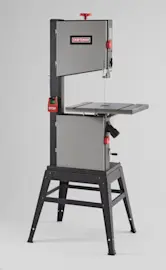
Owner’s manual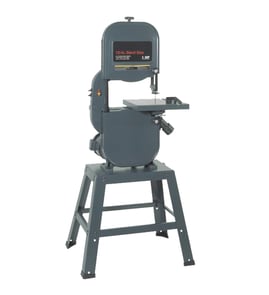

Are band saws safe?
Band saws are safe to use when they’re set up correctly and you follow the safety rules every time; they can cause severe injury if you bypass guards, use the wrong technique, or operate with a damaged switch or cord. For Craftsman model 351224000, follow the safety and operating instructions in the 351224000 owner's manual.
Key safety rules we follow on a band saw
- Disconnect power before inspecting wiring, changing adjustments, or servicing.
- Keep hands clear of the blade path; hold material firmly and feed at a moderate speed.
- Stop the saw before removing scrap from the table.
- Turn the saw off before backing material out of an unfinished cut.
- Keep blade tension and blade tracking properly adjusted.
- Do not cut stock without a flat surface unless you use a suitable support.
Built-in safety features to use (not bypass)
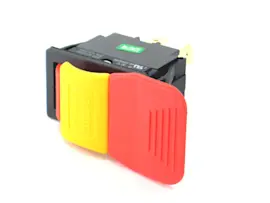
The 351224000 uses a single-pole toggle ON/OFF switch and includes a lockout feature. We recommend using it any time the saw is unattended.
| Feature | What it does | When to use it |
|---|---|---|
| ON/OFF toggle switch | Starts and stops the saw | Every cut, and anytime you step away |
| Removable switch key (lockout) | Prevents unauthorized start-up | Shops, shared spaces, around children |
| Grounding requirement | Reduces shock risk | Any time the saw is plugged in |
Setup and operating checks that prevent accidents
Before each session, we use this quick checklist:
- Confirm the blade is tensioned and tracking correctly.
- Verify the table is clean and not slippery (remove protectant and apply paste wax as recommended).
- Inspect the power cord and switch; if anything is missing, damaged, or malfunctioning, keep the saw unplugged until repaired.
- Use proper support for irregular stock; never force the cut.
Why it matters
Most band saw injuries happen when the blade is exposed to hands during feeding, clearing scraps, or backing out of a cut. Consistent habits (power disconnected for adjustments, correct blade setup, and controlled feeding) prevent the most common incidents.
If your saw is acting up (slow cutting, drifting, ragged cuts, blade slipping), fix the underlying issue before continuing; our band saw repair guide landing page walks through the most common symptoms and repairs.
You can look up replacement parts by model number on the parts list for Craftsman 351224000, or search our full catalog on Sears PartsDirect.
Last updated: February 2026
Is it a band saw or band saw?
Both are correct: band saw and bandsaw refer to the same tool. For your Craftsman 351224000 band saw, we use “band saw” as the common product name, and you will also see “bandsaw” used in manuals and woodworking references (it means a continuous loop blade running on wheels). See the owner's manual for the model’s terminology and specs.
Which spelling should I use when searching parts or help?
Use whichever gets you the best results, but these usually work best:
- Band saw (most common in parts listings)
- Craftsman 351224000 band saw (best for model-specific results)
- Bandsaw blade (common in woodworking discussions)
- Add the symptom, such as “won’t start” or “not cutting straight”
If you are searching beyond the model parts list, use Sears PartsDirect and enter 351224000.
Why you see both “band saw” and “bandsaw”
“Bandsaw” is a compound word that became common in woodworking. “Band saw” is the same term written as two words. Either way, it describes a saw that uses a continuous band blade stretched over wheels.
Quick model context (Craftsman 351224000)
From the manual, this saw is a 12-inch class band saw designed for wood and also suitable for nonferrous metals and plastics with the right blade.
| Item | What it means for you |
|---|---|
| Throat depth (90°) | 12 in capacity from blade to frame |
| Max depth of cut (90°) | Up to 7 in stock thickness |
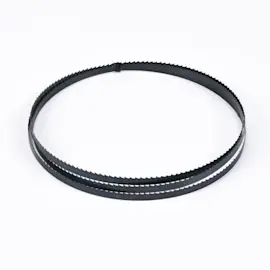
| Blade length | 89 1/2 in blades fit this saw |
| Blade width range | 1/8 in to 1/2 in |
Why it matters
Using the right term helps you find the correct manual, blade size, and troubleshooting steps faster, especially when you are matching specs like 89 1/2-inch blade length or diagnosing issues like drift or slow cutting.
Last updated: February 2026
What is the 3-tooth rule for bandsaws?
On the Craftsman band saw model 351224000, the 3-tooth rule means you choose a blade pitch (TPI) so at least three teeth are in the cut at all times. This prevents blade shocking and tooth stripping, and it helps the saw cut smoother and track better (see the 351224000 owner's manual).
How to apply the 3-tooth rule (quick method)
- Measure the material thickness at the cut.
- Pick a blade where 3 or more teeth will contact that thickness.
- If the cut is slow or rough, adjust pitch and feed pressure before assuming the motor is weak.
Practical blade pitch tips
- Thicker stock needs a coarser blade (fewer TPI) so gullets can clear chips.
- Thin stock needs a finer blade (more TPI) so teeth do not snag and strip.
- For this Craftsman saw, the manual notes typical ranges:
- Soft materials: 6 to 8 TPI
- Harder materials: 8 to 12 TPI
What happens if you break the rule
- Too few teeth in the cut (pitch too coarse): tooth “shocking,” grabbing, and stripped teeth.
- Too many teeth in the cut (pitch too fine): poor chip clearance, heat, slow cutting, and wandering.
- More vibration: can make the blade drift and reduce cut accuracy.
Quick selection table (rule-of-thumb)
| Material thickness at cut | Typical blade pitch to keep 3+ teeth engaged | What you’ll notice if it’s wrong |
|---|---|---|
| Under 1/8 in. | 14 to 24 TPI | Snagging or tooth loss with coarse blades |
| 1/8 to 1/2 in. | 10 to 14 TPI | Slow cutting if too fine |
| Over 1/2 in. | 6 to 10 TPI | Rough cut if too coarse, heat if too fine |
Why it matters on the 351224000
This model is designed for proper blade selection, correct blade tension, and appropriate feed pressure. Keeping at least three teeth engaged reduces shock loads on the blade and helps you get straighter, cleaner cuts with longer blade life.
For more cutting-performance troubleshooting, use our DIY guide: band saw cutting slowly. You can also find model-based parts and diagrams through Sears PartsDirect.
Last updated: February 2026
Where can I buy Craftsman replacement parts?
You can buy replacement parts for your Craftsman band saw model 351224000 by using the model-based parts lookup at Sears PartsDirect. For part identification and correct fit, we recommend matching the part name and reference number using the 351224000 owner's manual parts list and diagrams.
Best way to get the right part for model 351224000
Using the model number is the fastest way to avoid ordering the wrong item, especially for common band saw wear items like blades, tires, belts, guides, and switches.
- Find the full model number on the saw’s ID plate (use 351224000 exactly)
- Use the parts diagrams to identify the exact component and its reference number
- Confirm whether the item is standard hardware (often sourced locally) or a model-specific part
- Compare your old part’s measurements (belt length, tire diameter, blade length and width)
- Order the replacement part using the model-based parts list
What the manual helps you confirm before you order
The manual for this Craftsman band saw includes parts illustrations and lists, plus assembly and maintenance guidance that helps you identify what you actually need.
| What you need to confirm | Why it matters | Where to check |
|---|---|---|
| Exact part identity | Prevents wrong fit | Parts illustrations and lists |
| Blade type and size | Affects cut quality and tracking | Operation and maintenance sections |
| Hardware vs. saw-specific part | Saves time and cost | Parts list notes (standard hardware) |
Why it matters
Band saw parts are highly model-specific; even small differences in wheel size, guide style, or stand hardware can change what fits. Using the model 351224000 documentation helps ensure the replacement part matches your saw’s configuration.
Last updated: February 2026