Error Codes




Why is my Amana refrigerator leaking water from the bottom?
On the Amana ART308FFDW07 top-mount refrigerator, water leaking from the bottom is usually caused by a clogged defrost drain that overflows into the fresh food section and runs down to the floor, or by a drain pan that is cracked or out of position under the cabinet.
Quick checks we recommend first
- Look for a sheet of ice or standing water on the freezer floor; this strongly points to a defrost drain blockage.
- Check for water trails inside the fresh food compartment (often down the back wall).
- Verify the refrigerator is level (slightly higher in front helps doors close and reduces condensation).
- Inspect the drain pan underneath for cracks, warping, or being knocked off its supports.
- If you have an ice maker installed, check the fill tube and supply line connections for drips.
How to clear a clogged defrost drain (common fix)
- Unplug the refrigerator.
- Remove items from the freezer floor area and locate the drain opening (typically under or near the evaporator cover).
- Melt any ice around the drain with warm water (a turkey baster works well).
- Flush the drain until water flows freely to the drain pan below.
- Clean the drain opening so food particles or ice cannot re-block it.
Helpful reference
When a part is likely involved
If the leak happens along with warm temperatures, heavy frost, or you do not hear airflow in the freezer, the evaporator area may be icing up and contributing to drain overflow.
| Symptom you notice | Most likely area | What to do next |
|---|---|---|
| Water on floor after defrost cycles | Defrost drain / drain pan | Clear drain; inspect pan position |
| Heavy frost, weak cooling, water later | Defrost system / airflow | Check for ice buildup; consider heater/fan diagnosis |
| Intermittent dripping near back/bottom | Drain pan | Inspect pan for cracks and seating |
If you suspect airflow issues, the refrigerator evaporator fan motor WP2315539 is the fan that circulates cold air through the evaporator area.
Why it matters
A blocked drain or mis-seated drain pan can keep returning water to your kitchen floor and can also lead to ice buildup inside the freezer, which reduces cooling performance and increases run time.
Last updated: January 2026
Can you remove the drip pan from a refrigerator?
On the Amana ART308FFDW07 top-mount refrigerator, the drip pan is typically positioned at the bottom near the compressor and is often not designed to be removed for routine cleaning. In most cases, you clean it by accessing the rear lower area and wiping it out as thoroughly as possible.
How to check whether your drip pan is removable
Use these quick checks before you try to pull anything out:
- Unplug the refrigerator before reaching near the compressor area.
- Remove the lower rear access panel (if equipped) and look for a shallow pan under the compressor.
- If the pan is clipped into rails or has a clear pull path, it may slide out.
- If the pan appears integrated into the base or blocked by the compressor mount, treat it as non-removable.
- Do not force the pan; cracking it can create leaks and odors.
How we recommend cleaning a non-removable drip pan
If the pan does not slide out, cleaning in place usually solves odor and residue problems:
- Vacuum dust from the condenser area first so debris does not fall into the pan.
- Use warm water with mild dish soap on a long-handled brush or cloth.
- Wipe, then rinse with a damp cloth to remove soap film.
- Dry as much as possible to reduce future odor.
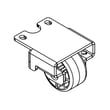
- If the refrigerator is hard to move, check the condition of the rollers such as the refrigerator roller WPW10475495.
Quick symptom guide (what the drip pan can cause)
| Symptom | Common cause near drip pan area | What to do |
|---|---|---|
| Musty smell near floor | Standing water, mold, spilled food | Clean pan area and surrounding base |
| Water on floor | Overflow, drain issue, cracked pan | Clean and inspect for cracks |
| Warm dusty odor | Dirty condenser area | Vacuum coils and base area |
Why it matters
The drip pan collects defrost and condensation water. When residue builds up, it can cause persistent odors and, if it overflows, water on the floor. Keeping the base area clean also helps airflow around the compressor.
Last updated: January 2026
How to defrost a fridge without switching it off?
You can reduce frost in the freezer of your Amana ART308FFDW07 top-mount refrigerator without switching it off by keeping the fresh-food door closed, moving freezer items into the refrigerator temporarily, and melting ice in short bursts with hot water or warm air while protecting plastic surfaces from heat.
Quick method (keep the refrigerator running)
- Turn the freezer temperature warmer for 1 to 2 hours (if your control allows it).
- Move frozen food into the refrigerator section; pack items together to stay colder longer.
- Put towels in the bottom of the freezer to catch meltwater.
- Use a bowl of hot water on a shelf and close the freezer door for 5 to 10 minutes at a time.
- Remove loosened frost with a plastic scraper; never use a knife or metal tool.
- Wipe dry, then return the freezer setting to normal.
What to avoid (prevents damage and leaks)
- Do not use sharp tools to chip ice; puncturing the evaporator can ruin the sealed system.
- Do not aim a heat gun or open flame into the freezer.
- Do not pour water directly into vents or the fan area.
- Do not block air vents when you reload food.
If frost comes back quickly
Heavy frost usually means warm, moist air is getting in or airflow is restricted.
| Symptom | Most common cause | What we do next |
|---|---|---|
| Frost only near the door edge | Door not sealing | Inspect and clean the gasket; warm and reshape it if needed |
| Frost on back wall, weak cooling | Airflow issue or fan problem | Check for blocked vents; listen for the evaporator fan |
| Frost builds in days, door closes hard | Door alignment issue | Level the cabinet and adjust rollers/feet |
If the door seal is torn, hardened, or won’t hold a paper-strip test, replacing the gasket is the lasting fix; for this model, see the refrigerator door gasket (white) W10861499.
Why it matters
Defrosting without shutting the unit down keeps food safer, but it only works well when you limit door openings and keep airflow clear; otherwise frost returns and the refrigerator runs longer and warmer.
For more help with sealing issues, use our how to fix a fridge door seal guide.
Last updated: January 2026
Why is my top freezer not freezing?
If your Amana ART308FFDW07 top-mount refrigerator freezer is not freezing, the most common causes are frost blocking airflow, an evaporator fan problem, dirty condenser coils, or a temperature sensing/control issue. Start by checking airflow and frost because they cause the fastest temperature rise.
Quick checks we recommend first
- Set the freezer control colder and confirm the door closes tightly.
- Check for heavy frost on the back freezer panel (a strong defrost-system clue).
- Press the door switch and listen for the evaporator fan.
- Make sure packages are not blocking air vents.
- Clean dust from the condenser coil area and grille.
What the symptoms usually mean
| What you notice | Most likely cause | Best next step |
|---|---|---|
| Freezer warm and fresh food warm | Airflow or sealed system issue | Verify fan operation; clean condenser area |
| Back freezer panel heavily frosted | Defrost system problem | Fully defrost; then check heater and controls |
| Temps swing, little frost | Sensor/control issue | Check thermistor and control response |
Parts that commonly fix “not freezing” on this model
- Refrigerator evaporator fan motor WP2315539: restores airflow across the evaporator.
- Fan blade WP2163777: fixes reduced airflow from a cracked or rubbing blade.
- Refrigerator defrost heater WPW10316428: clears frost so air can pass through the evaporator.
- Thermistor, refrigerator W11438736: improves temperature sensing when readings are inaccurate.
Safe troubleshooting steps
- Unplug the refrigerator.
- If the back panel is frosted over, do a full manual defrost (doors open) for 12 to 24 hours.
- Restart and confirm the fan runs and airflow returns.
- If it cools briefly then frosts up again, focus on the defrost heater and control system.
Why it matters
On the ART308FFDW07, the freezer makes the cold air and the evaporator fan moves it. When frost blocks the evaporator or the fan cannot circulate air, temperatures rise quickly even if the compressor is running.
Last updated: January 2026