Owner’s manual
 Error Codes




What is the advantage of a bottom mount fridge?
A bottom-mount refrigerator like the LG LRFWS2906V puts the fresh-food compartment at eye level and the freezer in a lower drawer, so you reach for everyday items more comfortably and can organize frozen foods in pull-out storage. See the LRFWS2906V manual for the layout and feature overview.
Key advantages you will notice day to day
- Less bending for frequently used items (milk, produce, leftovers) because the refrigerator section is on top.
- Easier visibility and access to fresh food shelves and door bins.
- Freezer drawer storage can make it simpler to sort frozen foods into sections.
- Better “grab-and-go” convenience for families who open the refrigerator more than the freezer.
- Wide French door style (common on bottom-mount designs) can improve access to large platters and bins.
Bottom-mount vs top-freezer: quick comparison
| Feature | Bottom-mount (like LRFWS2906V) | Top-freezer |
|---|---|---|
| Most-used section height | Refrigerator at eye level | Refrigerator lower |
| Bending for daily use | Less | More |
| Freezer access | Pull-out drawer | Swing door |
| Frozen food organization | Often easier to separate | Often stacked |
What to consider before choosing bottom-mount
- Freezer access is lower, so you may bend more when grabbing frozen items.
- Freezer drawers can be heavier when fully loaded.
- You will want enough clearance in front of the unit for doors and the freezer drawer to open fully.
Why it matters
Most households use the refrigerator compartment far more often than the freezer. A bottom-mount design prioritizes comfort and visibility for the items you access multiple times per day.
Last updated: January 2026
What's better, top mount or bottom mount fridge?
For the LG LRFWS2906V, a bottom-mount design is usually “better” if you want fresh-food items at eye level and a wider refrigerator section (common on French door models). A top-mount can be a better fit if you prioritize lower upfront cost and simpler layout. For model-specific features and use tips, see the LRFWS2906V owner’s manual.
Quick comparison: top mount vs bottom mount
- Top mount (freezer on top): freezer access is easiest; fresh-food section is lower.
- Bottom mount (freezer on bottom): fresh-food section is easiest to reach; freezer is lower.
- Bottom-mount French door (like LRFWS2906V): typically offers wider shelves and better organization for fresh foods.
| Feature | Top mount | Bottom mount (LRFWS2906V style) |
|---|---|---|
| Most-used items (fresh food) | Lower | Higher (more convenient) |
| Freezer access | Higher (more convenient) | Lower |
| Organization | Simple | Often more flexible (bins, drawers) |
| Typical cost | Lower | Higher |
What we recommend for most households
Choose bottom mount when you:
- Use the refrigerator section more than the freezer
- Want easier access to produce, drinks, and leftovers
- Prefer drawer-style freezer storage for organization
Choose top mount when you:
- Want a simpler, budget-friendly layout
- Use the freezer more often than the refrigerator
- Prefer fewer drawers and less compartmentalization
Why it matters
The “better” style is the one that matches how you cook and shop. Since most people open the refrigerator section far more often than the freezer, bottom-mount models like the LG LRFWS2906V can reduce bending and make daily use more comfortable.
Last updated: January 2026
Why does my LG freezer keep icing up at the bottom?
On the LG LRFWS2906V, ice building up on the freezer floor is usually caused by defrost meltwater not draining to the drain pan; the water refreezes and forms a sheet of ice. Defrosting removes the ice, but you also need to address the underlying drainage or air-leak cause.
What to do first (safe, effective steps)
- Move food to a cooler.
- Turn the refrigerator off and unplug it.
- Leave the freezer drawer open so the ice can melt.
- Use towels to catch meltwater.
- Clean up water as it melts to prevent slipping.
Check the most common causes
Bottom ice can come from either a drain issue or warm, moist air leaking into the freezer.
- Drain restriction: Food debris or ice can block the defrost drain so water backs up and refreezes.
- Drawer not sealing: A gap in the gasket or a drawer left slightly open can create excess frost that later melts and refreezes.
- Overpacked freezer: Packages can prevent the drawer from closing fully.
| Symptom you notice | Most likely cause | What to check |
|---|---|---|
| Clear ice sheet on the freezer floor | Defrost water not draining | Look for water pooling after a defrost |
| Frost on walls and food packages | Air leak at drawer/door | Inspect gasket contact and closure |
| Ice returns quickly after defrost | Ongoing drain restriction or defrost issue | Service diagnosis may be needed |
What not to do (to avoid damage)
The LG owner’s manual warns against using mechanical devices or heat sources to speed defrosting; we recommend letting the unit thaw naturally.
- Do not chip ice with knives, screwdrivers, or ice picks.
- Do not use a hair dryer or heat gun inside the freezer.
- Do not forcefully push tools into hidden drain passages.
For model-specific safety guidance, follow the LRFWS2906V manual.
When a part may be involved
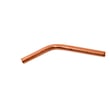
If you confirm water is backing up and refreezing, the drain path and drain tube are common areas a technician checks. If the drain tube is found cracked, restricted, or deteriorated, a compatible replacement option for this model is the refrigerator drain tube 5251JA3003D.
Why it matters
A recurring ice sheet can keep the freezer drawer from closing fully, increase frost buildup, and cause temperature swings that affect food quality and ice maker performance.
Last updated: January 2026
What is the most common problem with an LG refrigerator?
On LG refrigerator model LRFWS2906V, the most common problem we see is a cooling complaint, most often the fresh-food section running warm (sometimes while the freezer still seems OK). On this model, the LRFWS2906V owner's manual points to airflow restrictions, door closing issues, and settings or modes that can disable cooling.
What to check first on LRFWS2906V
- Confirm the unit is not in Display (Demo) Mode; “OFF” on the control panel indicates cooling is disabled.
- Verify the refrigerator and freezer set temperatures are reasonable (defaults are 37°F refrigerator and 0°F freezer).
- Make sure air vents between compartments are not blocked by food packages.
- Check that both doors close fully; on French door models, ensure the door mullion is folded in before closing the left door.
- Look for frost buildup that could restrict airflow.
Common causes and model-matched parts to consider
If the refrigerator section is warm, these are common culprits on bottom-mount LG designs and parts that match this model’s parts list:
| Symptom | What it often points to | Part to inspect (if applicable) |
|---|---|---|
| Freezer cold, refrigerator warm | Poor airflow from the evaporator area | Refrigerator evaporator fan motor EAU65058305 |
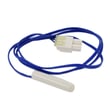
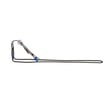
| Frost buildup, temps drift | Defrost system not clearing frost | Refrigerator defrost heater MEE63545708 |
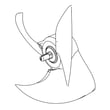
| Runs a lot, weak overall cooling | Heat not being removed at the condenser | Refrigerator condenser fan motor EAU65058502 |
Why it matters
When airflow is restricted or cooling is disabled by a mode setting, the refrigerator compartment can rise into unsafe food temperatures quickly. Addressing vents, door sealing, and fan or defrost issues early helps restore even cooling and reduces compressor run time.
Helpful DIY reading
- Diagnosing refrigerator evaporator fan problems video
- Refrigerator wont cool troubleshooting video defrost system problems
Last updated: January 2026