Owner’s manual
 View engine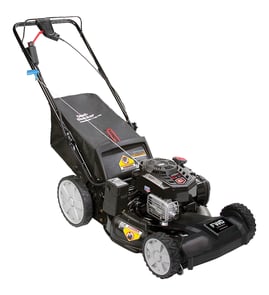


What kind of gas do I put in my push lawn mower?
For your Craftsman gas walk-behind mower model 917377682, use fresh regular unleaded gasoline; most mowers of this type run best on 87 octane fuel with up to 10% ethanol (E10). Fill the tank at the gasoline filler cap and avoid old fuel that has been sitting for weeks.
Fuel guidelines we recommend
- Use fresh gas from a clean container.
- Choose regular unleaded (typically 87 octane).
- Use E10 or less (avoid higher-ethanol blends).
- Do not mix oil into the gas (this is a 4-cycle mower).
- Keep the fuel cap area clean so dirt does not fall into the tank.
Quick do and don’t table
| Item | Use it? | Why |
|---|---|---|
| Regular unleaded (87) | Yes | Correct burn rate for small engines |
| E10 (10% ethanol) | Yes | Commonly approved for walk-behind mowers |
| E15/E85 | No | Can cause hard starting and fuel-system issues |
| Old gas (30+ days) | No | Loses volatility; can gum up the carburetor |
Why it matters
Fuel quality directly affects starting, power, and how cleanly the carburetor and fuel passages stay. Using fresh regular unleaded helps prevent no-start problems and rough running, especially after storage.
Helpful next steps
- If the mower has been sitting, drain stale fuel and refill with fresh gas.
- Add stabilizer when storing fuel or the mower for more than a few weeks.
- For model-specific operating and fueling notes, follow the 917377682 owner's manual.
- If you need maintenance or replacement items for this mower, you can shop the parts list for your model or search by model number on Sears PartsDirect.
Last updated: February 2026
What are the common problems with Craftsman lawn mowers?
Common problems on the Craftsman 917377682 gas walk-behind lawn mower include no-start conditions (fuel, spark, air), loss of power from restricted airflow or deck buildup, excessive vibration from a worn or loose blade system, and self-propel drive issues such as a worn drive belt or pulley. See the owner's manual for the model’s troubleshooting chart and maintenance schedule.
Most common symptoms and what usually causes them
- Won’t start: old fuel, fouled spark plug, dirty air filter, fuel valve OFF (if equipped)
- Starts then dies or surges: stale fuel, carburetor restriction, partially blocked fuel flow
- Loss of power: cutting too much grass at once, dirty air filter, grass buildup under deck, too much oil
- Poor cut or uneven cut: worn or bent blade, uneven wheel height settings, deck packed with clippings
- Excessive vibration: loose blade bolt, damaged blade, worn blade adapter
- Self-propel won’t move or slips: worn drive belt, idler pulley wear, drive wheel traction or engagement issues
Quick checks we recommend before replacing parts
- Disconnect the spark plug wire before working near the blade.
- Drain or replace old gasoline; fresh fuel solves many “ran last season” problems.
- Check the air filter and clean the underside of the mower deck.
- Inspect the blade and blade mounting hardware for looseness or damage.
- For drive problems, inspect the belt path and pulleys for glazing, cracking, or wobble.
Parts that commonly fix vibration or drive complaints
If you find wear or damage, these model-matched parts are common solutions:
| Symptom | Part to inspect | Example part for this model |
|---|---|---|
| Vibration, blade won’t stay tight | Blade mounting interface | Lawn mower blade adapter 532418373 |
| Self-propel slips or won’t move | Drive belt and idler pulleys | Belt, 21-in 532406712 |
| Drive engagement inconsistent | Idler pulley wear | Husqvarna lawn mower idler pulley 532166042 |
Why it matters
Most “big” mower failures start as small maintenance issues. Keeping airflow clear, fuel fresh, and the blade system tight helps prevent hard starting, poor cutting, and vibration that can damage the crankshaft over time.
For more repair and maintenance parts by model number, we list them on the parts diagram for this mower and on Sears PartsDirect.
Last updated: February 2026
How much does it cost to repair a hydrostatic transmission on a lawn mower?
Hydrostatic transmission repairs are typically a riding-mower cost category; your Craftsman 917377682 gas walk-behind mower is belt-driven, so it normally does not have a hydrostatic transmission to repair. For this model, “won’t move” problems are usually caused by the drive belt, pulleys, wheels, or linkage, not a hydrostatic unit; confirm your drive system in the owner's manual.
What you’ll usually pay (if a mower truly has hydrostatic drive)
Hydrostatic transmission work is expensive because it often involves replacing the entire transaxle or transmission assembly rather than rebuilding it.
- Minor service (fluid, purge procedure, linkage adjustments): typically lower cost
- Major repair (pump/motor failure): typically high cost
- Full replacement (common on many units): typically the highest cost
| Scenario | Typical outcome | Cost impact |
|---|---|---|
| Linkage or control issue | Adjustment or small parts | Low to moderate |
| Internal hydrostatic failure | Replace major components | High |
| Complete transmission replacement | Replace assembly plus labor | Very high |
For Craftsman 917377682: what to check instead of “hydrostatic”
If your walk-behind mower won’t self-propel, we focus on the motion-drive components that actually apply to this model.
- Inspect the drive belt for glazing, cracking, stretching, or slipping; a worn belt is the most common cause
- Check idler pulleys for wobble, binding, or noise (a seized pulley can shred a belt)
- Verify the drive cable and engagement lever move freely and fully return
- Check the drive wheels for worn internal drive features and debris buildup
- Look for loose fasteners and worn hardware that lets the belt path go out of alignment
Model-matched parts that commonly relate to self-propel issues include the belt, 21-in 532406712, husqvarna lawn mower idler pulley 532166042, and lawn mower drive wheel 532193139.
Why it matters
Misidentifying the drive type can lead to unnecessary, expensive repairs. On a belt-driven walk-behind mower like the Craftsman 917377682, restoring self-propel is usually a targeted belt and pulley fix, not a transmission replacement.
Helpful DIY guidance
If the mower runs but won’t drive, follow a step-by-step motion-drive diagnosis in our lawn mower wont move troubleshooting video motion drive failure. For ordering additional parts by model number, use the parts list for Craftsman 917377682 or search on Sears PartsDirect.
Last updated: February 2026
Is it cheaper to repair or replace a lawn mower?
For a Craftsman gas walk-behind lawn mower model 917377682, it’s cheaper to repair when the problem is routine maintenance or a simple wear part (blade adapter, belt, fasteners). Replacement makes more sense when the engine or drive system needs major work and the total repair cost approaches half the price of a comparable new mower.
A practical repair vs. replace checklist
We use these quick checks to decide:
- Repair if it’s a tune-up item (spark plug, air filter, oil change) or a single worn part
- Repair if the mower is otherwise solid (starts easily, no excessive smoke, deck is not rusted through)
- Replace if the engine has low compression, heavy knocking, or persistent oil burning
- Replace if the drive system needs multiple parts at once (belt, pulleys, wheels) and labor adds up
- Replace if safety or structural issues exist (cracked deck, bent crankshaft, unstable handle)
For model-specific maintenance intervals and adjustments, follow the owner's manual.
Typical cost comparison (rule-of-thumb)
These ranges help set expectations for a walk-behind mower like the 917377682.
| Issue type | Common examples | Usual decision |
|---|---|---|
| Routine maintenance | Oil, spark plug, air filter, blade service | Repair |
| Wear parts | Belt, blade adapter, wheel hardware | Repair |
| Drive system problems | Won’t self-propel, slipping drive | Depends on parts count |
| Major engine problems | Won’t start after diagnostics, internal damage | Replace |
Parts that often make repair affordable
If the mower is otherwise in good shape, replacing a single worn part is usually the best value. Examples from the parts list for this model include:
- Belt, 21-in 532406712 (common for self-propel drive issues)
- Lawn mower blade adapter 532418373 (common after blade impact or wobble)
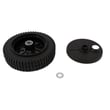
- Lawn mower drive wheel 532193139 (common when traction or engagement is poor)
Why it matters
A well-maintained mower typically lasts longer and costs less per season. The manual also notes that many “expendable” items (like blades, blade adapters, belts, air cleaners, and spark plugs) are normal-wear parts; budgeting for those repairs keeps the mower reliable and avoids bigger failures.
If you decide to repair, you can order parts from the list for model 917377682 or search by model number on Sears PartsDirect.
Last updated: February 2026
Why is my self-propelled lawn mower pulling to one side?
If your Craftsman 917377682 self-propelled mower pulls to one side, the usual causes are uneven wheel traction, a drive wheel that is dragging, or a self-propel drive system that is not releasing evenly. Start with the drive-control checks and adjustment steps in the 917377682 owner's manual.
Quick checks (fastest fixes)
- Clean packed grass and mud off both drive wheels and along the deck edge.
- Release the drive control lever and roll the mower; if it resists, push the mower forward slightly to disengage the drive wheels (a normal step for this design).
- Check both rear wheels for free spin, wobble, or a dragging hub.
- Confirm both sides are set to the same cutting height.
- If you feel vibration along with pulling, inspect the blade and mounting hardware for impact damage.
Self-propel drive items to inspect
The 917377682 drive system uses the operator presence control bar and drive control lever; cable tension affects how evenly the drive engages.
- Use the drive control adjustment button under the drive control housing to increase cable tension if the drive feels “loose” or uneven.
- If pulling happens only with self-propel engaged, inspect the drive belt and pulleys for wear, glazing, or misrouting.
| When it pulls | Most likely area | First action |
|---|---|---|
| Only with self-propel engaged | Drive cable, belt, pulleys | Adjust cable tension; inspect belt path |
| Even when pushed with drive off | Wheel, axle, debris drag | Clean; check wheel spin and wobble |
| Pulling plus vibration | Blade or adapter | Inspect and replace bent parts |
Parts that commonly fix uneven drive
- Belt, 21-in 532406712 (worn or stretched belt can cause uneven drive)
- Lawn mower drive wheel 532193139 (dragging or worn wheel/hub)
- Lawn mower blade adapter 532418373 (impact wear can add vibration and “steering” feel)
Why it matters
Pulling makes the mower harder to control, especially when turning or mowing on slopes; it also increases belt, wheel, and drive component wear.
To order replacement parts for Craftsman 917377682, use the parts list for this model or search by model number on Sears PartsDirect.
Last updated: February 2026