 Owner’s manual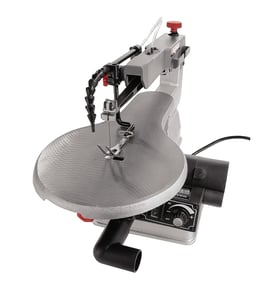


How do I know which scroll saw blade to use?
For your Craftsman scroll saw model 137216021, choose a blade based on the material (wood, plastic, or non-ferrous metal), the thickness, and the cut style you want. In most cases, smaller blade sizes cut tighter curves and finer details, while larger sizes cut thicker stock faster and straighter; confirm any blade-mount style details in the 137216021 owner's manual.
Quick blade selection guide (what to match)
- Thickness of the workpiece: thicker material needs a larger blade size and usually fewer teeth per inch (TPI).
- Detail level: intricate fretwork and tight inside cuts need a smaller blade size.
- Cut quality vs speed: higher TPI generally gives a smoother edge but cuts slower.
- Tear-out control: reverse-tooth blades help reduce splintering on the bottom face of wood.
- Material type: use blades labeled for wood, plastic, or metal (non-ferrous) as appropriate.
Common blade types and when to use them
| Blade type | Best for | What you will notice |
|---|---|---|
| Skip-tooth | General wood cutting, faster feed | Faster cutting, slightly rougher edge |
| Double skip-tooth | Thicker wood, improved chip clearing | Better control in thicker stock |
| Reverse-tooth | Plywood, veneered wood, tear-out control | Cleaner bottom surface |
| Spiral | Cutting in any direction without turning work | Wider kerf, rougher edge |
Practical starting points (most common situations)
- 1/8 to 1/4 inch wood (craft plywood, thin hardwood): small blade size, higher TPI for clean curves.
- 3/8 to 3/4 inch wood: mid-size blade, moderate TPI for balanced speed and finish.
- Over 3/4 inch wood: larger blade size, lower-to-moderate TPI; cut slower to avoid blade drift.
- Plastics: moderate TPI; keep feed rate steady to prevent melting.
- Non-ferrous metal (if your blade is rated for it): very high TPI; use light pressure and let the blade do the work.
Why it matters
The right blade reduces burning, wandering cuts, and broken blades. It also improves accuracy on tight-radius cuts and leaves a cleaner edge that needs less sanding.
For replacement parts and diagrams for model 137216021, start with the parts list for this model, or search by model number on Sears PartsDirect.
Last updated: February 2026
How do I change the blades on a scroll saw?
To change the blade on your Craftsman 137216021 scroll saw, unplug the saw, release blade tension, remove the old blade from the upper and lower clamps, then install the new blade with the teeth pointing down (it cuts on the downstroke) and re-tension it. See the 137216021 owner's manual for your exact clamp and tensioning steps.
Step-by-step: blade change basics
- Unplug the scroll saw before touching the blade or blade clamps.
- Raise the hold-down foot or guard (if equipped) so you can access the blade path.
- Release blade tension using the tension knob/lever.
- Loosen the upper and lower blade clamp screws; slide the blade out.
- Insert the new blade into the lower clamp first, then the upper clamp.
- Set blade direction: teeth face forward and point down toward the table.
- Tighten both clamps, then re-apply tension until the blade is firm and tracks straight.
Blade direction and clamp setup (quick check)
Most scroll saw blades are pinned or pinless; either way, the cutting teeth must be oriented correctly.
| What to check | Correct setup | What happens if wrong |
|---|---|---|
| Tooth direction | Teeth point down toward the table | Saw burns wood, wanders, or won’t cut well |
| Clamp grip | Blade fully seated and centered in clamps | Blade slips, twists, or pops out |
| Tension | Firm, not floppy | Excess breakage (too tight) or drifting (too loose) |
After you install the new blade
- Spin the upper wheel by hand (with the saw unplugged) to confirm the blade clears the table insert and guides.
- Make a short test cut on scrap wood to confirm tracking and cut quality.
- Recheck clamp tightness after the first minute of cutting.
Why it matters
Correct blade orientation and tension on the Craftsman 137216021 improves cut accuracy, reduces blade breakage, and helps prevent the blade from slipping out of the blade holders during tight curves.
For replacement parts and diagrams for your model, start with the parts list for Craftsman 137216021, or search by model number on Sears PartsDirect.
Last updated: February 2026
What size blade for 16 scroll saw?
For a 16-inch scroll saw like Craftsman model 137216021, the blade size is typically a 5-inch scroll saw blade; the key fit detail is whether your saw uses pin-end blades or plain-end (pinless) blades. Confirm the exact blade type and mounting style in the 137216021 owner's manual.
How to choose the right blade for your Craftsman 137216021
Use these checks to match the blade to the blade clamps and holders on your saw:
- Blade length: Most 15-inch and 16-inch scroll saws use 5-inch blades.
- End type: Choose pin-end if your saw has blade holders designed for pins; choose plain-end if it uses clamps that grip the blade ends.
- Blade width and thickness: Narrower blades turn tighter; thicker blades track straighter in thicker stock.
- Teeth per inch (TPI): Higher TPI for thin material and cleaner cuts; lower TPI for thicker wood and faster cutting.
- Tooth direction: Standard tooth blades cut on the downstroke; reverse-tooth blades reduce bottom tear-out.
Quick blade selection guide (common starting points)
| Material and goal | Typical blade choice | Why it works |
|---|---|---|
| 1/8 to 1/4 inch wood, fine detail | #2 to #5, higher TPI | Tight turns, smoother edges |
| 1/2 to 3/4 inch wood, general cutting | #5 to #9, medium TPI | Balanced speed and control |
| Thick hardwood, straight cuts | Wider blade, lower TPI | Better tracking, less wandering |
| Plastics (slow feed) | Higher TPI | Reduces chipping and grabbing |
Why it matters
Using the wrong end type (pin-end vs plain-end) is the most common reason a blade will not mount correctly. Using the wrong TPI or blade thickness can cause burning, rough edges, blade breakage, and excessive vibration.
Ordering tips
If you are shopping by size, start with 5-inch blades and then filter by pin-end or plain-end based on the 137216021 owner's manual. If you do not see what you need in the model parts list, search by model number on Sears PartsDirect.
Last updated: February 2026